
Fine motor skills
Fine motor skills are what the hand needs for drawing and writing: precise movement, pressure control and hand–eye coordination. Children with low muscle tone, sensory processing differences or simply less drawing experience often tire quickly when writing and avoid crayons.
The worksheets here start with wide paths and big shapes, and each level asks for a little more precision. Short, regular sessions of a few minutes work best — praise the effort, not a perfect result.
Worksheet types
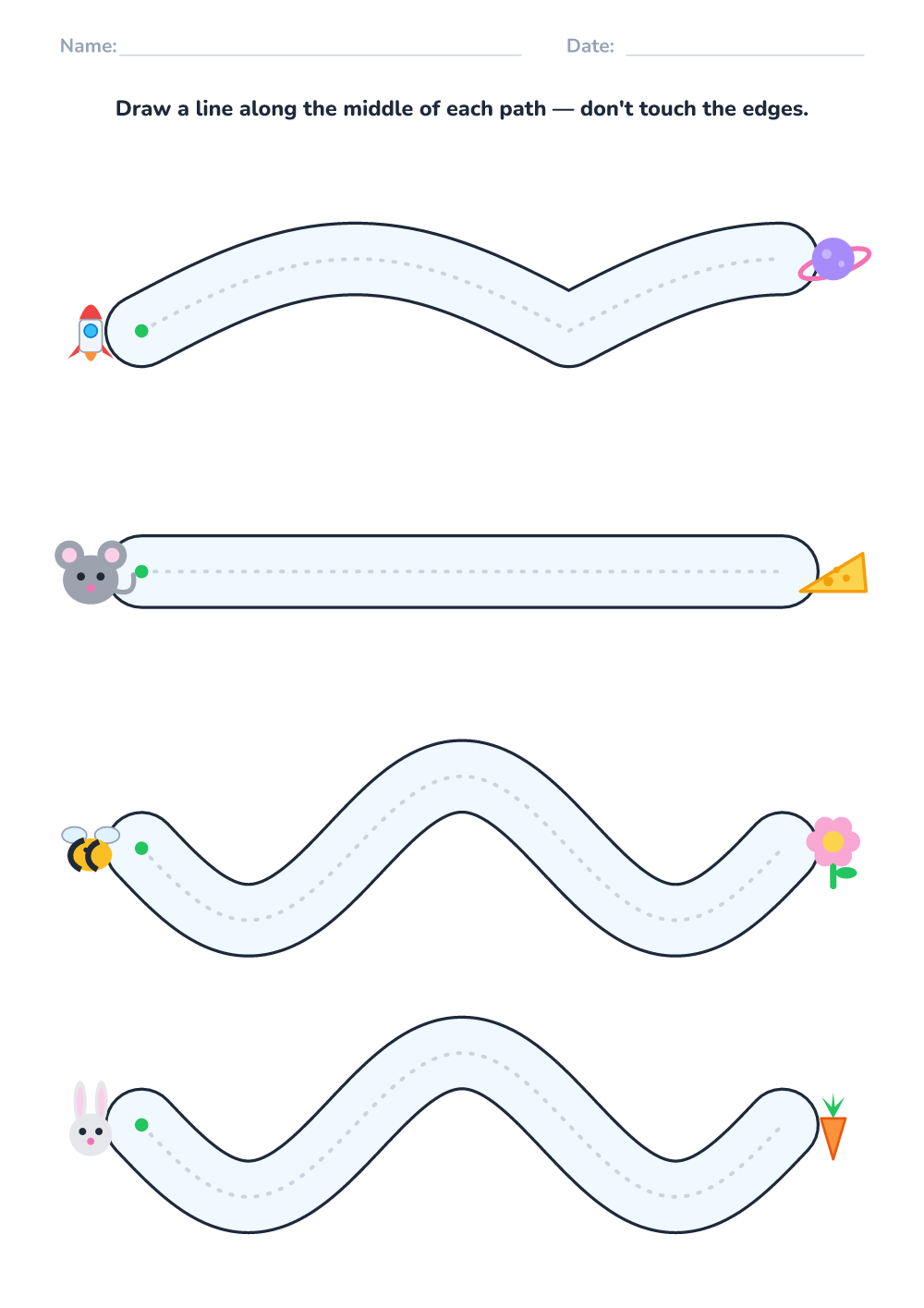
Pencil control worksheetPrintable pencil-control worksheet: draw a line along the middle of each path. Builds precision, pressure control and hand–eye coordination. A4.12 worksheets
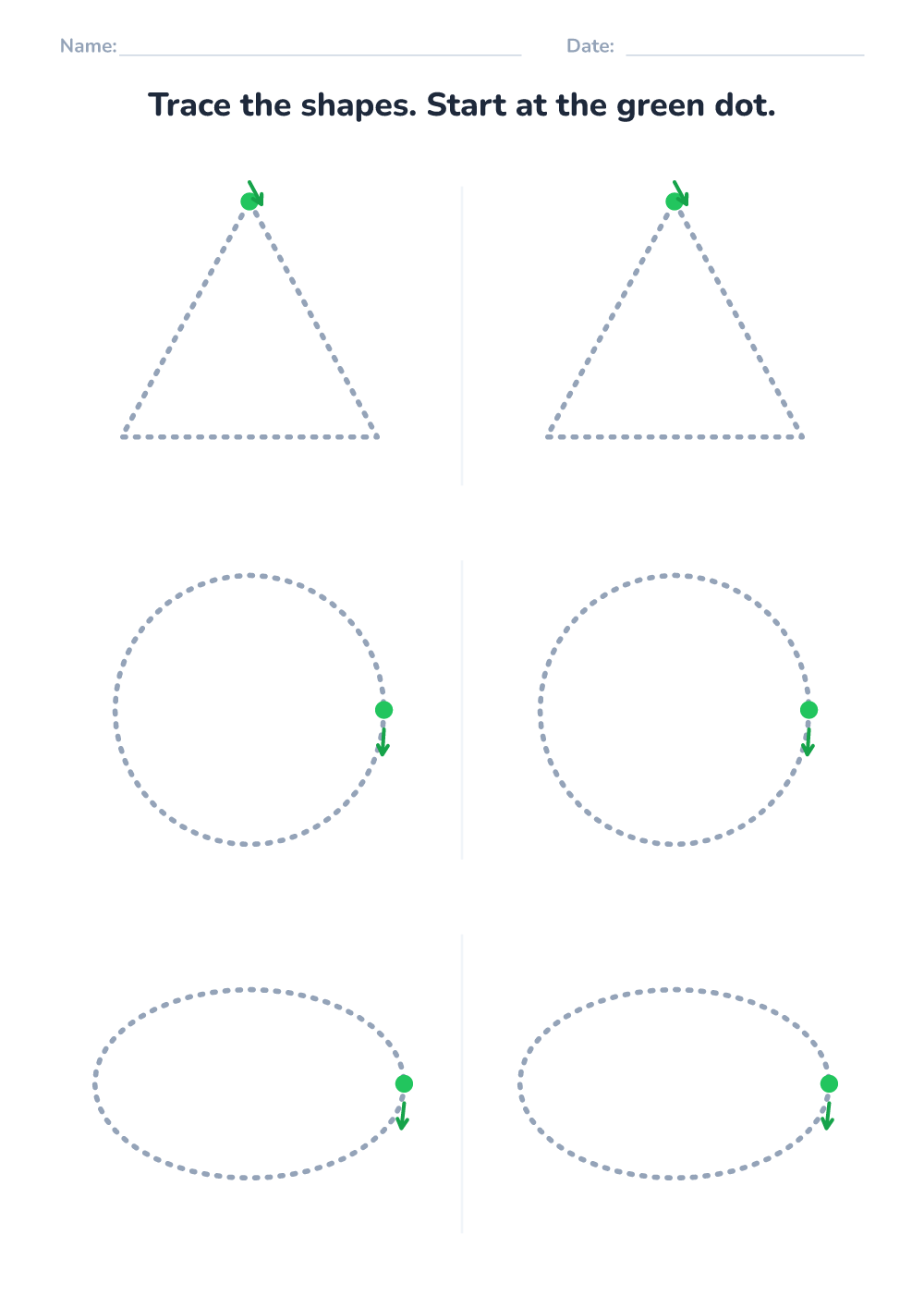
Shape tracing worksheetShapes to trace and then draw independently. An arrow shows where to start. Supports pre-writing skills. A4.12 worksheets
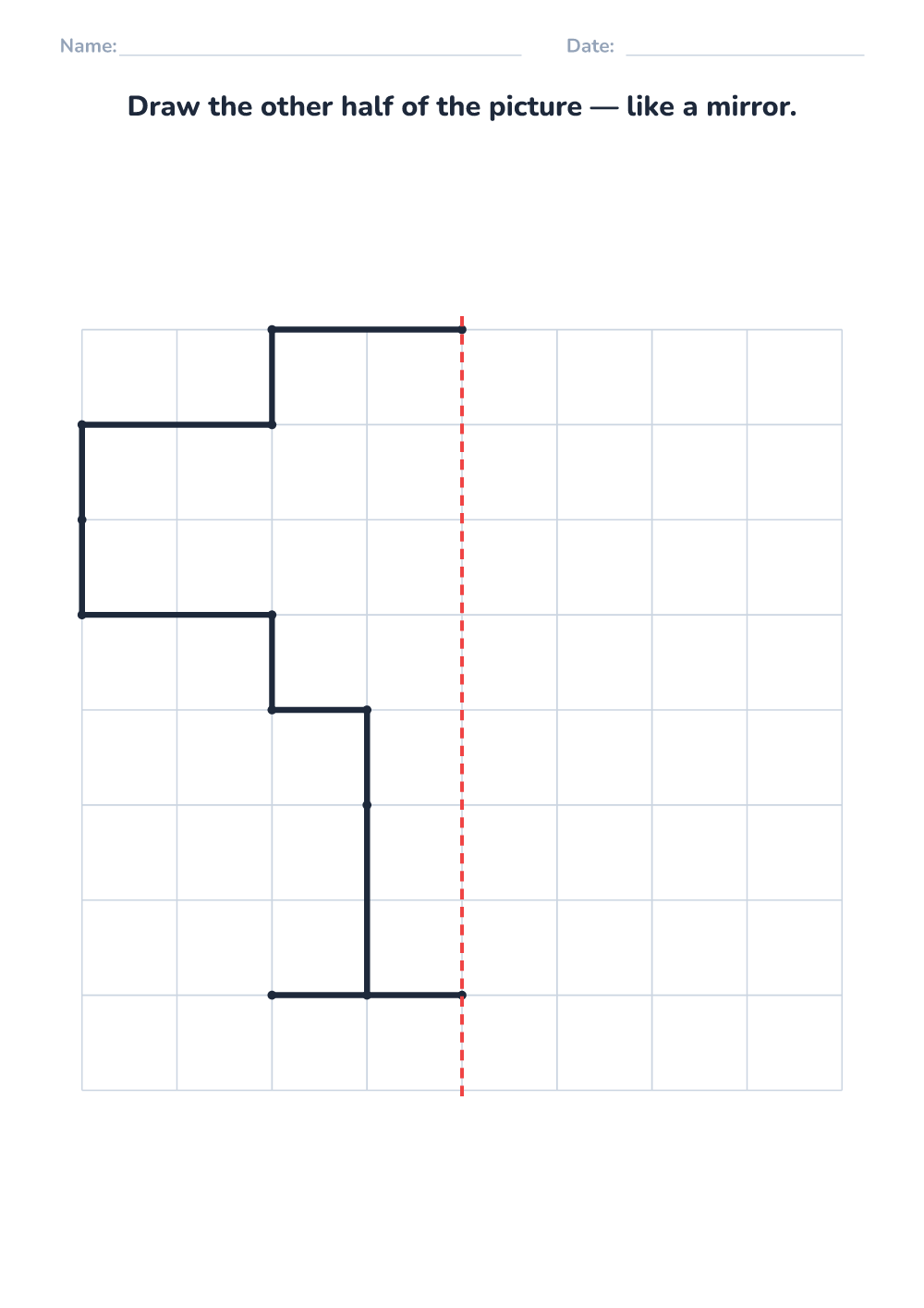
Symmetry drawing worksheetDraw the other half of a picture on a grid. Practises visual-motor coordination, spatial orientation and motor planning. A4.12 worksheets
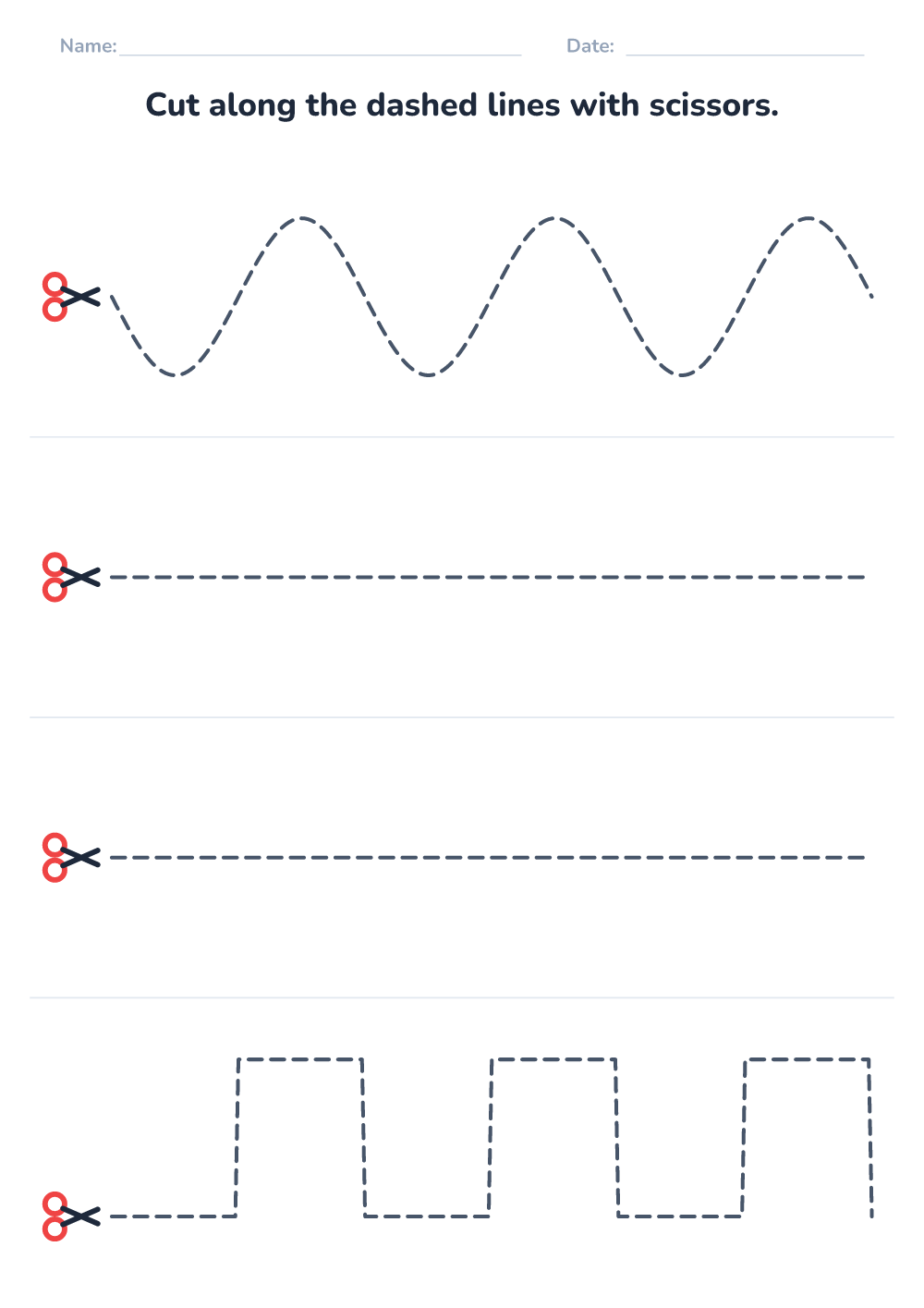
Scissor cutting practiceStrips to cut along straight, wavy and zigzag lines. Practise bilateral coordination and precision. A4.12 worksheets
Also useful
Domande frequenti
What age are these worksheets for?
The easiest sheets suit children from about 3. Skill level matters more than age — start easy and move on when your child copes comfortably.
Crayon or pencil?
Thick triangular crayons or wax crayons are best at first. They give more control and tire the hand less than a thin pencil.
When should I talk to a specialist?
If your child clearly avoids drawing, tires very quickly, grips very hard or struggles with everyday tasks like buttons or cutlery, an occupational therapist or your child's teacher can advise you.