
Emotions worksheet
Worksheets for recognising and naming emotions from facial expressions. Support social and emotional skills. A4.
Type
Level
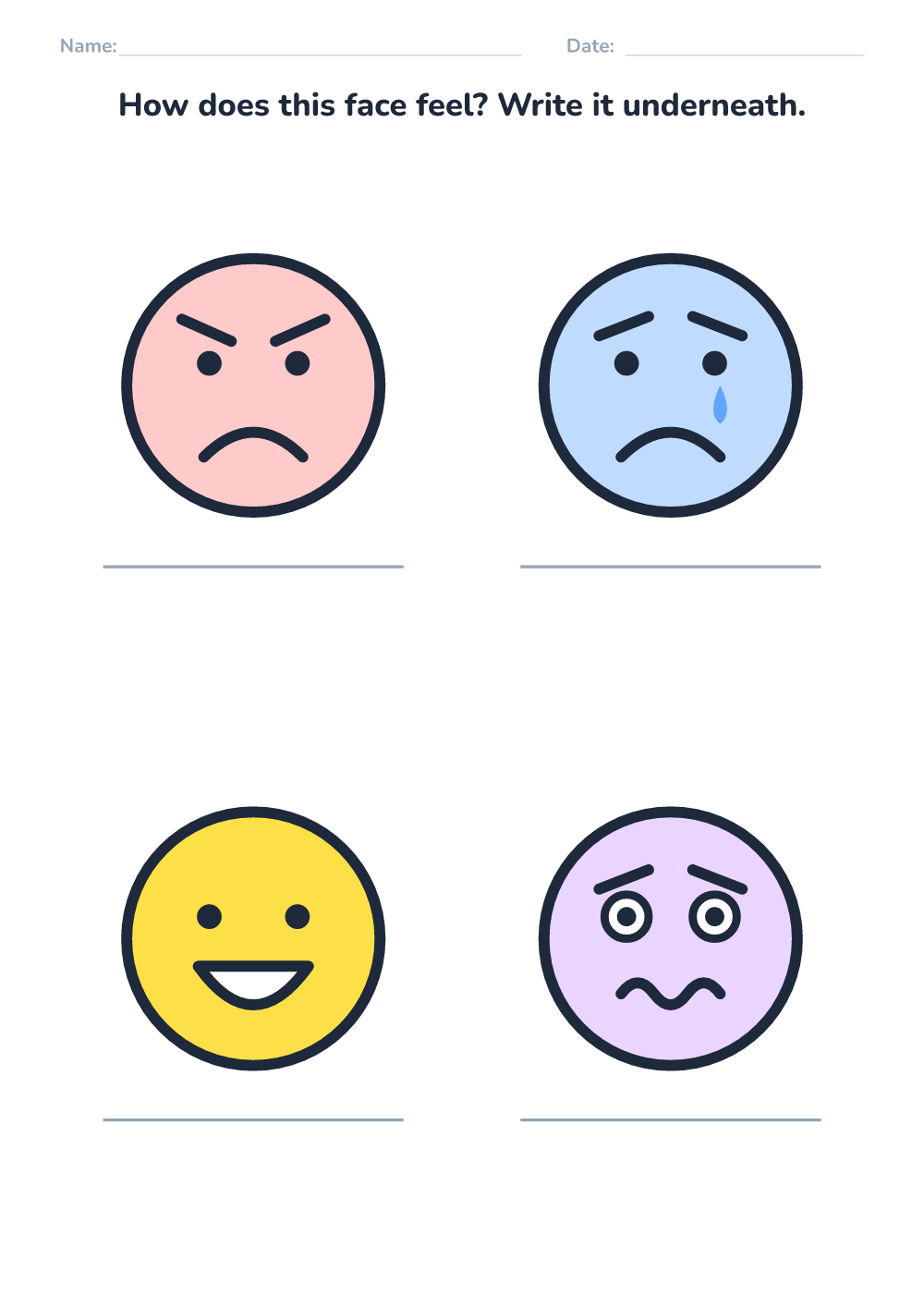
Emotions worksheet — name the feeling (easy) #368
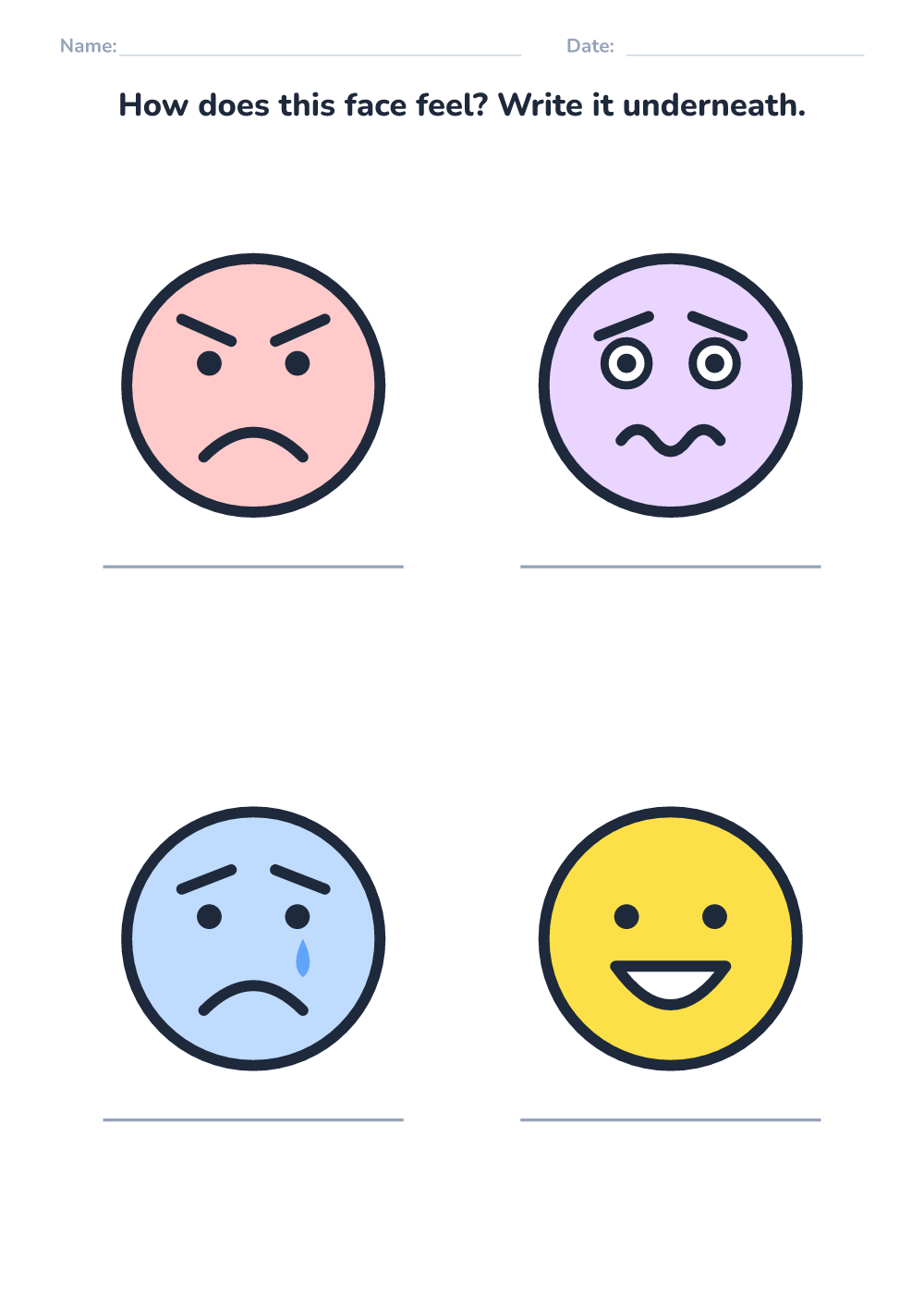
Emotions worksheet — name the feeling (easy) #854
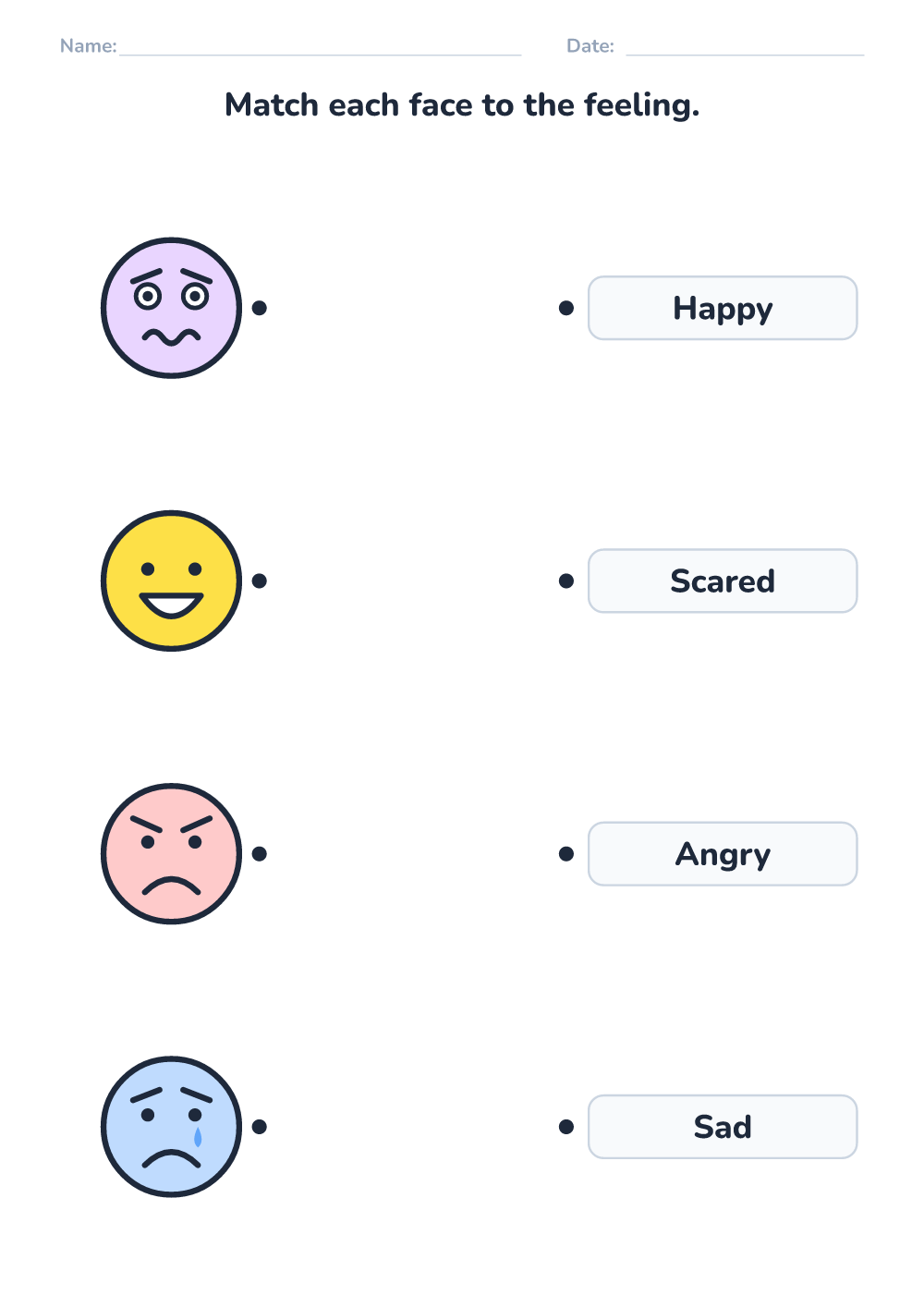
Emotions worksheet — match face and word (easy) #255
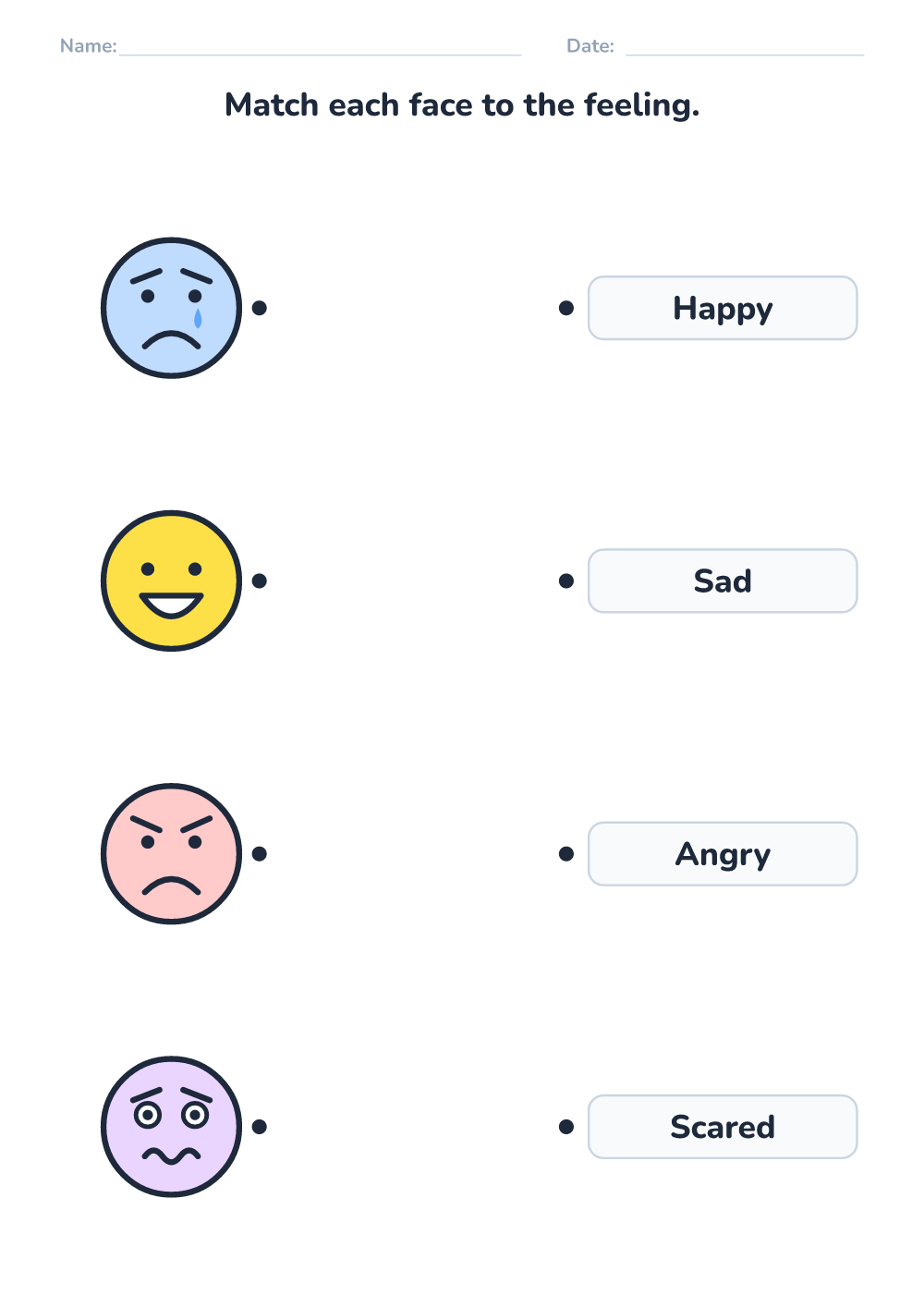
Emotions worksheet — match face and word (easy) #304
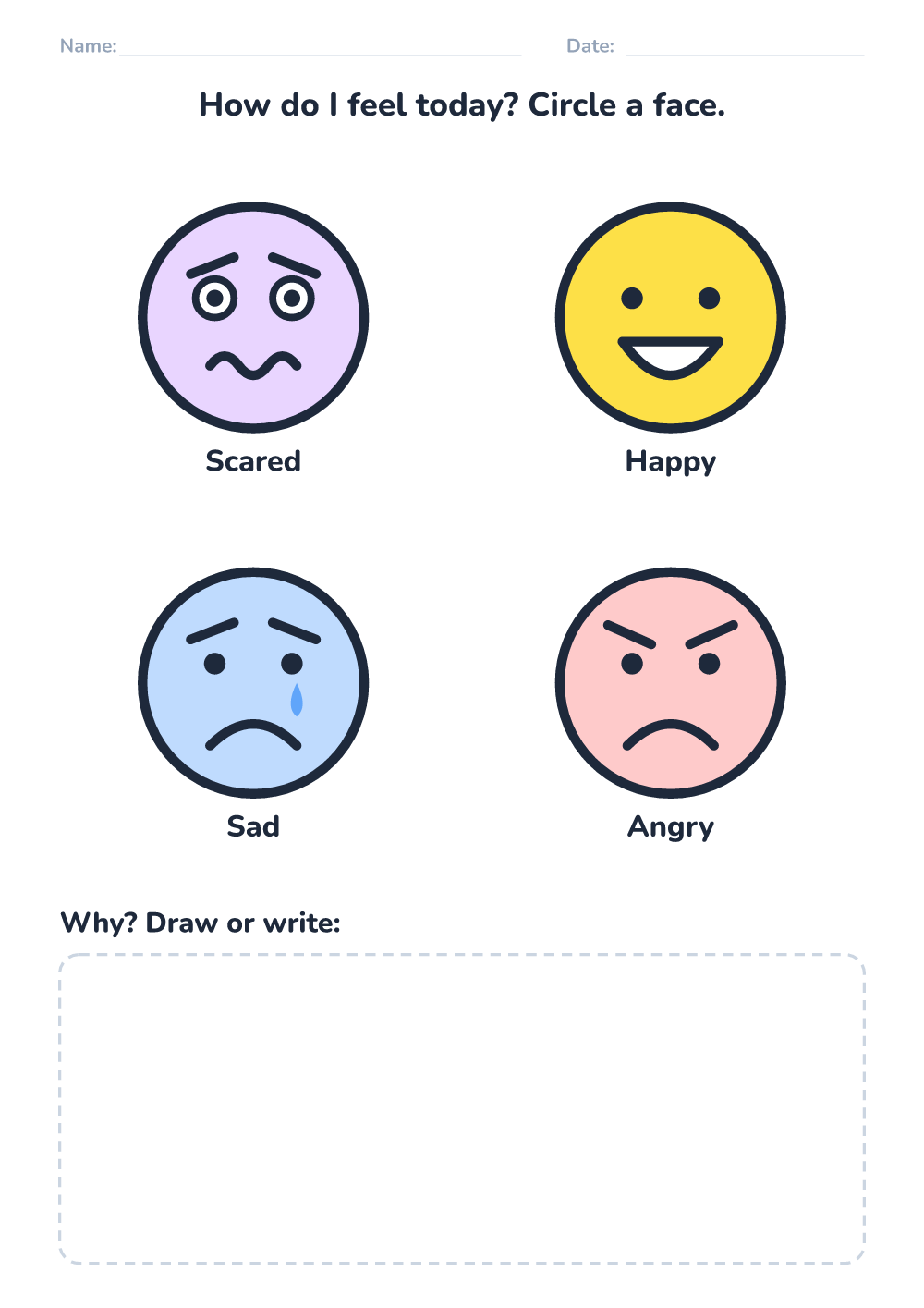
Emotions worksheet — how I feel today (easy) #246
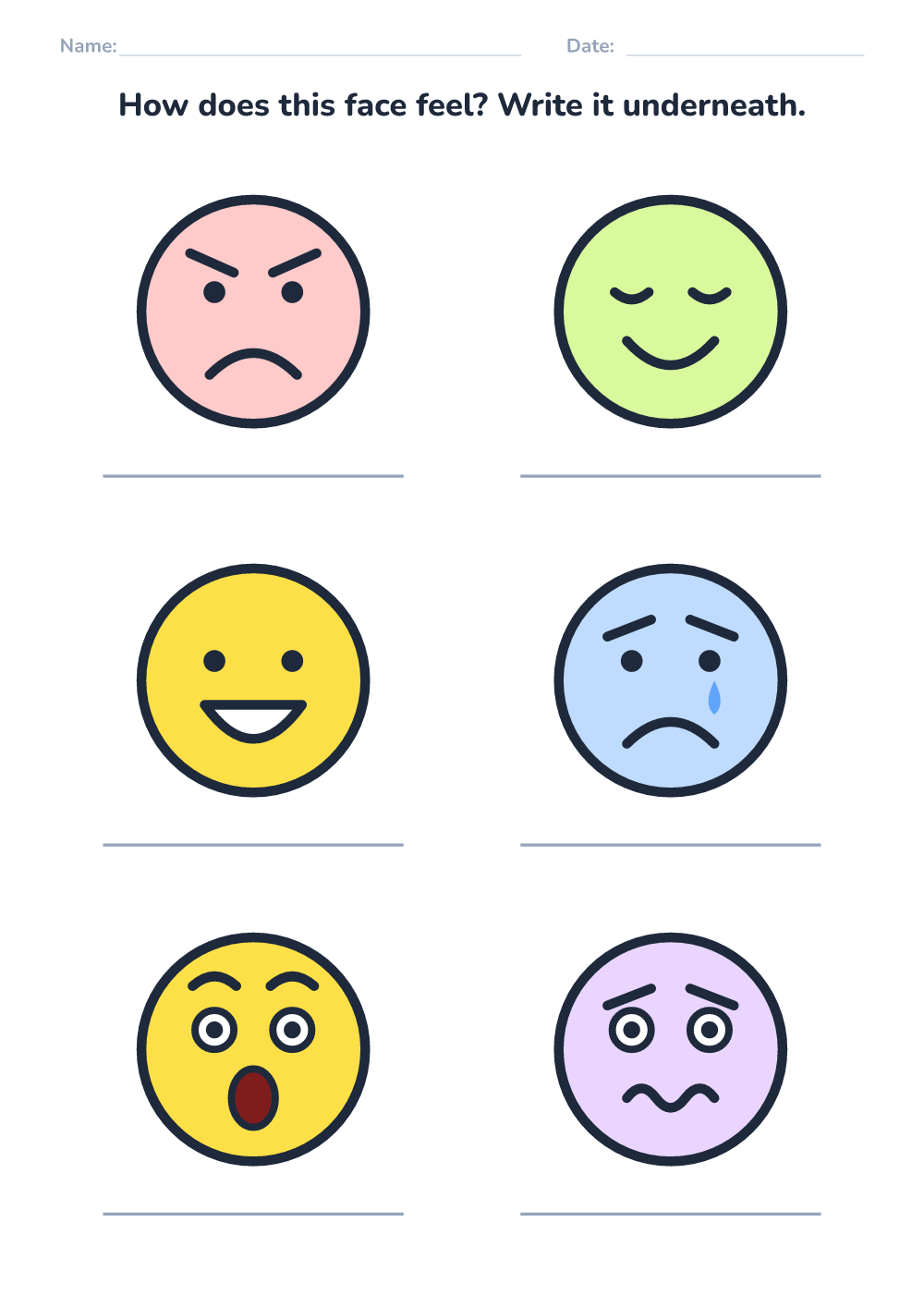
Emotions worksheet — name the feeling (medium) #811
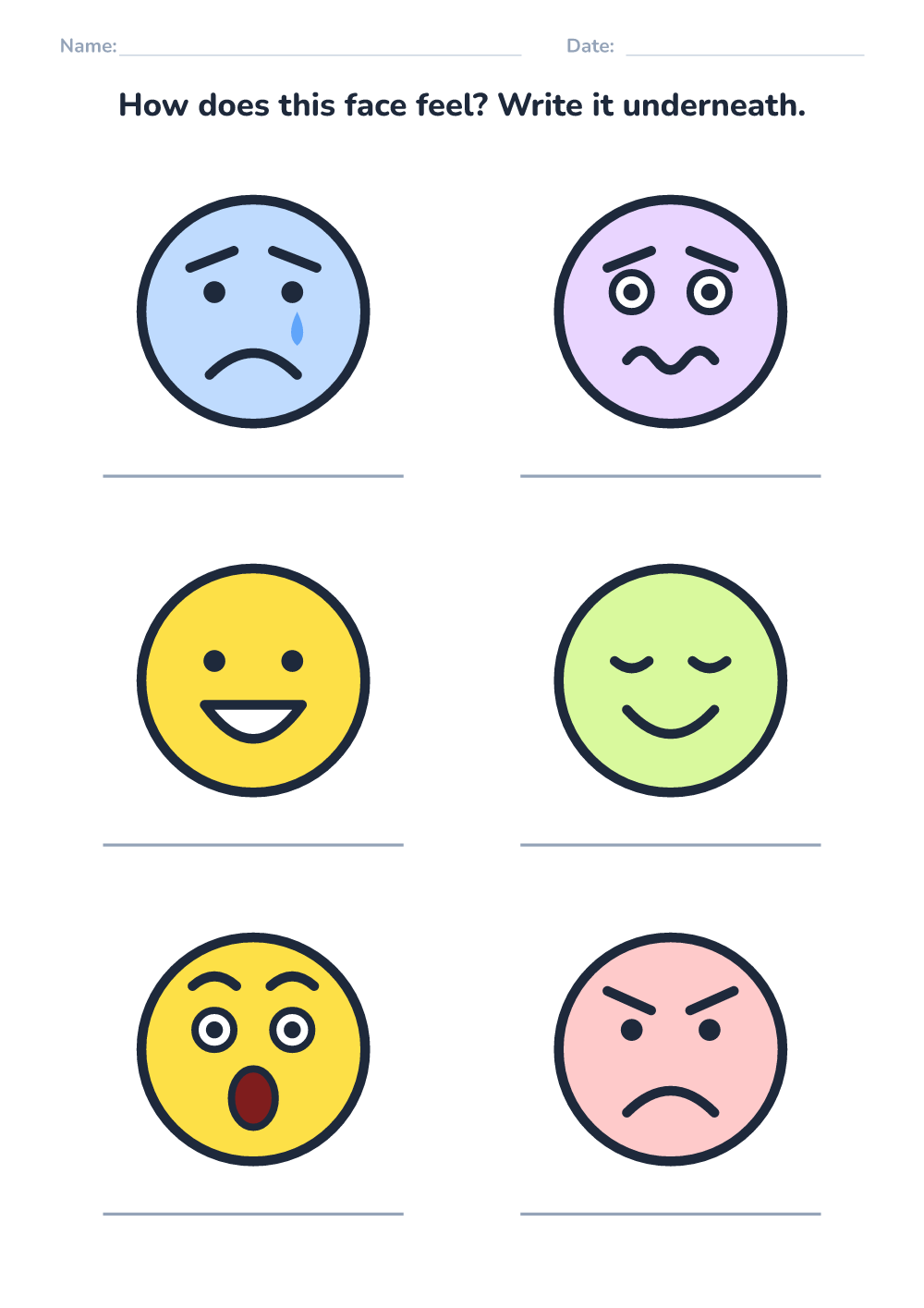
Emotions worksheet — name the feeling (medium) #106
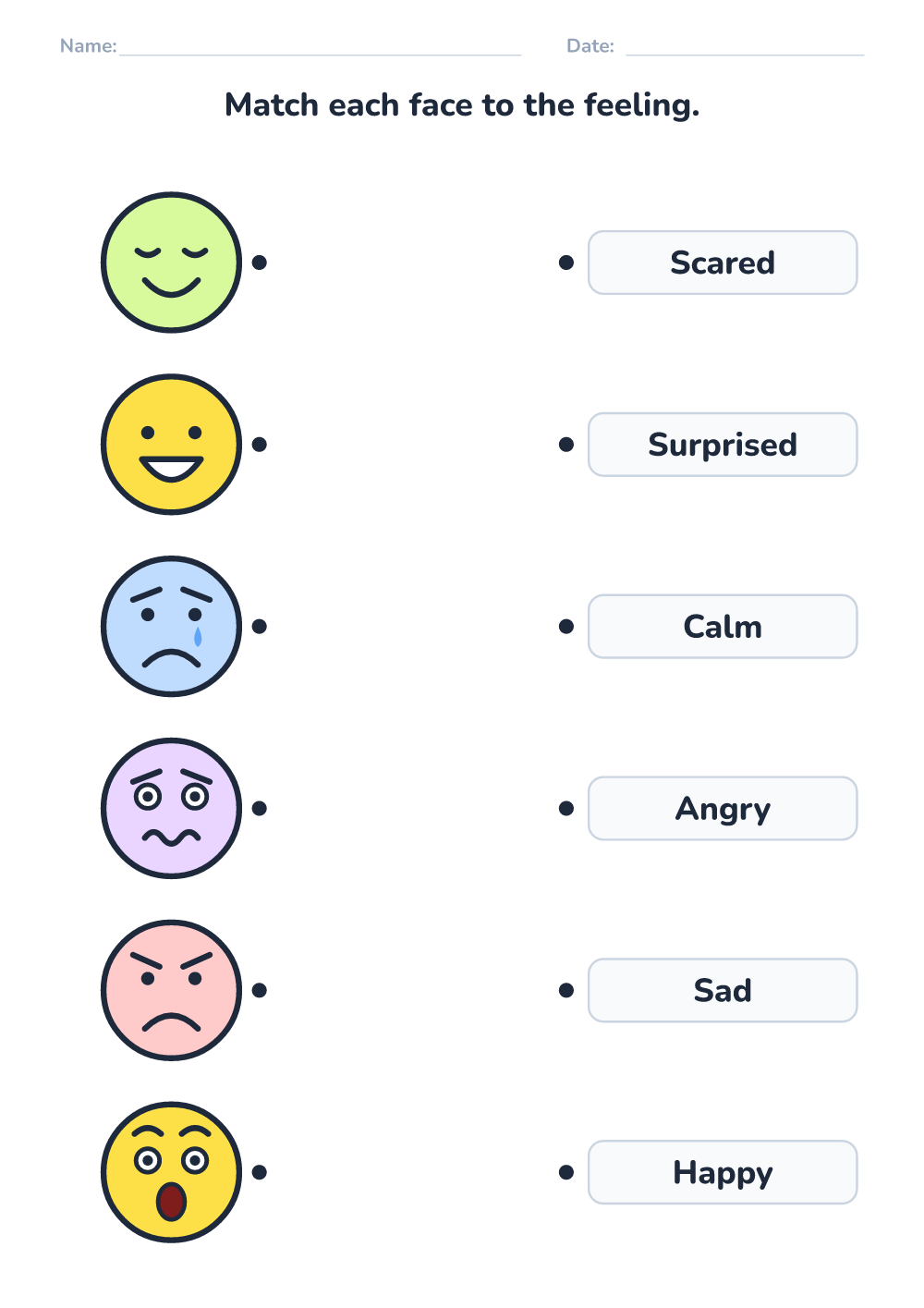
Emotions worksheet — match face and word (medium) #217
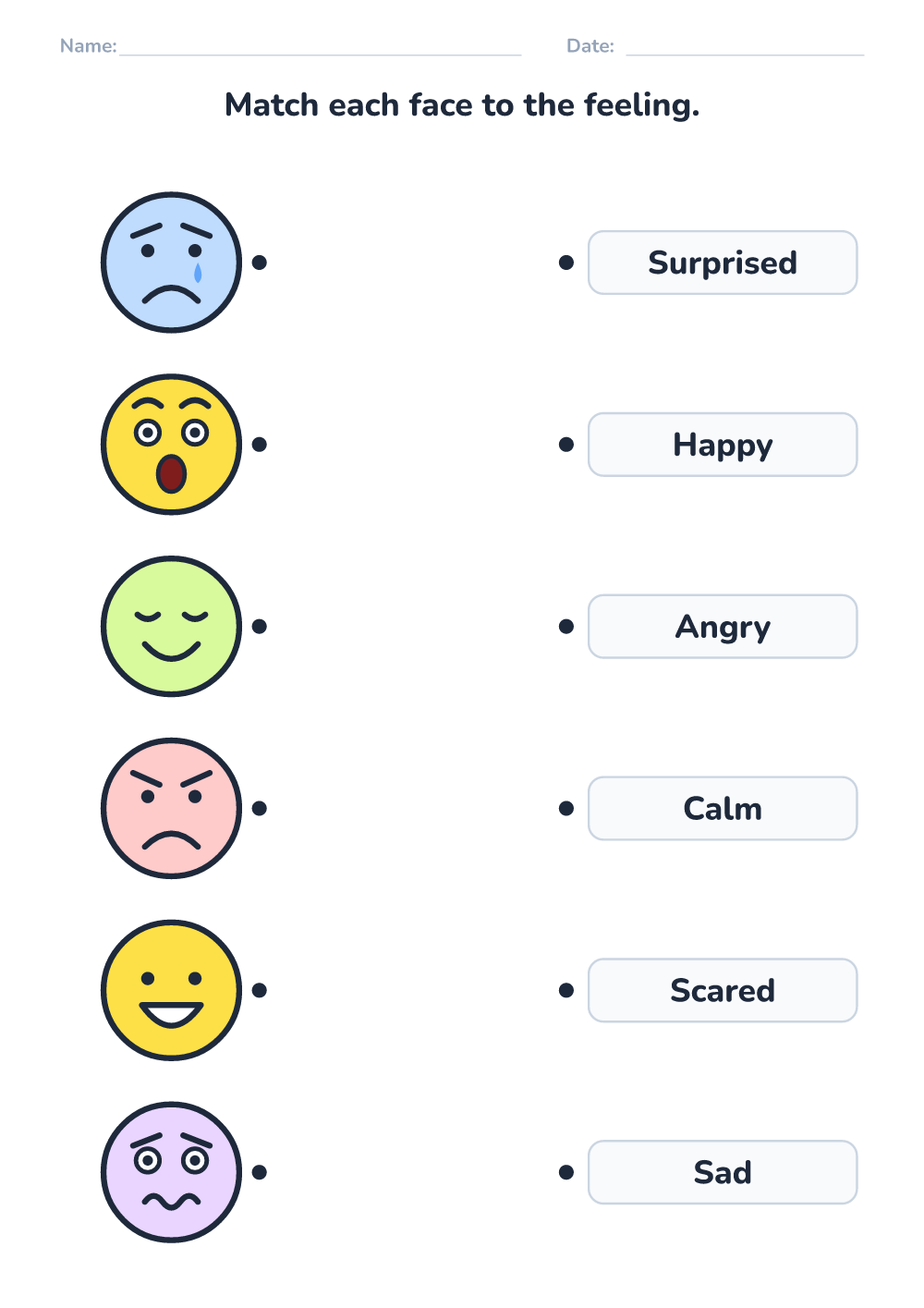
Emotions worksheet — match face and word (medium) #38
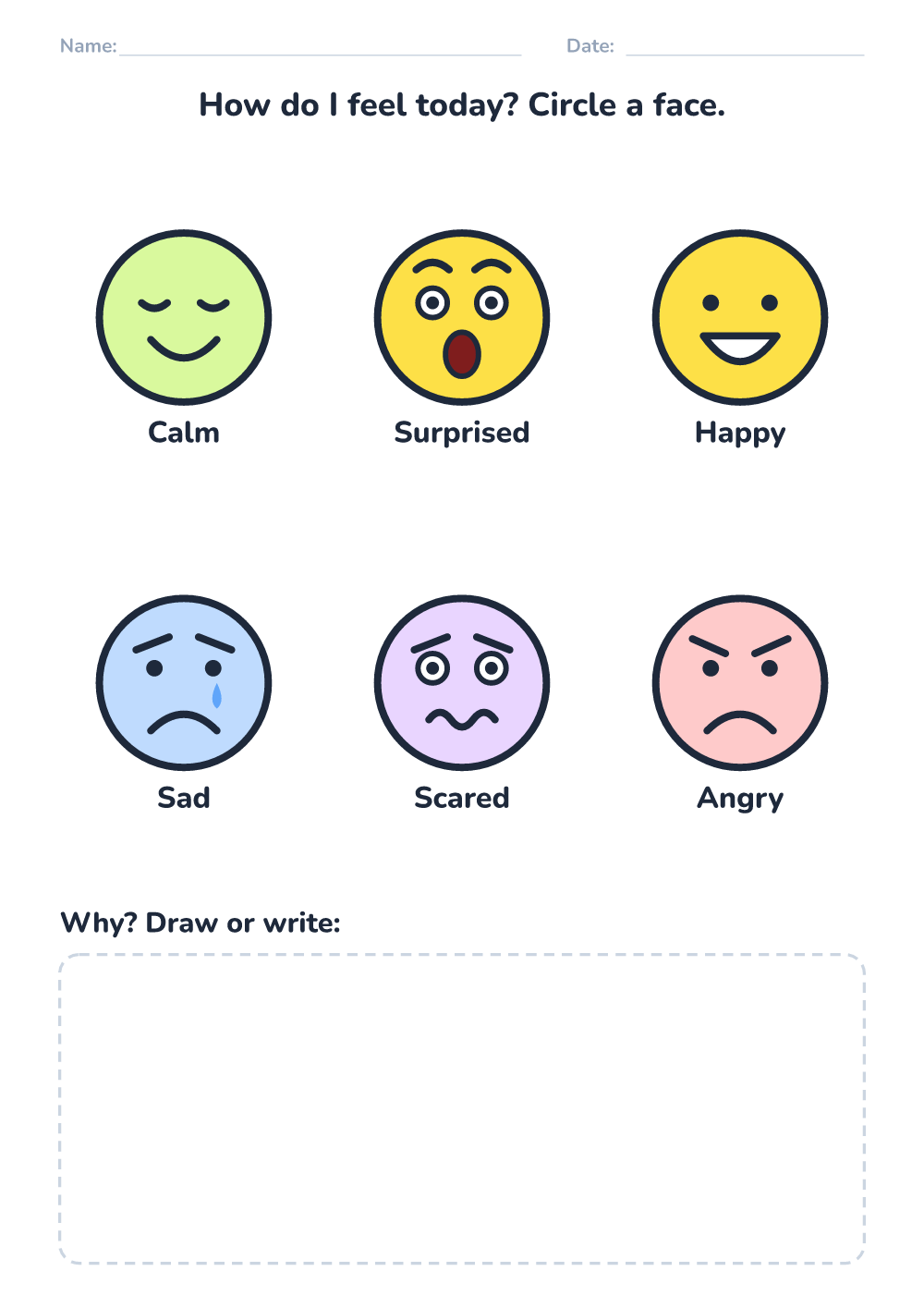
Emotions worksheet — how I feel today (medium) #376
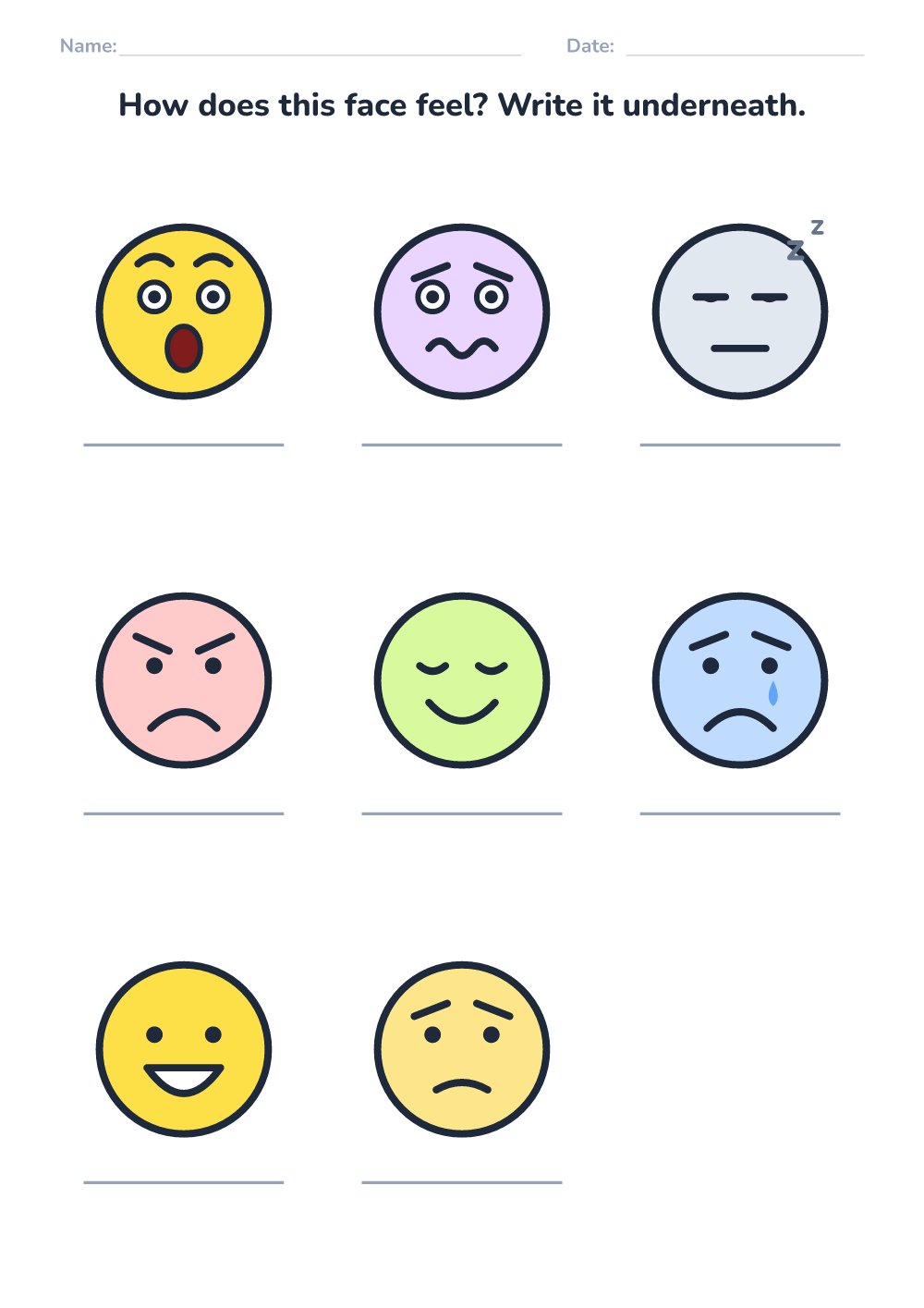
Emotions worksheet — name the feeling (hard) #963
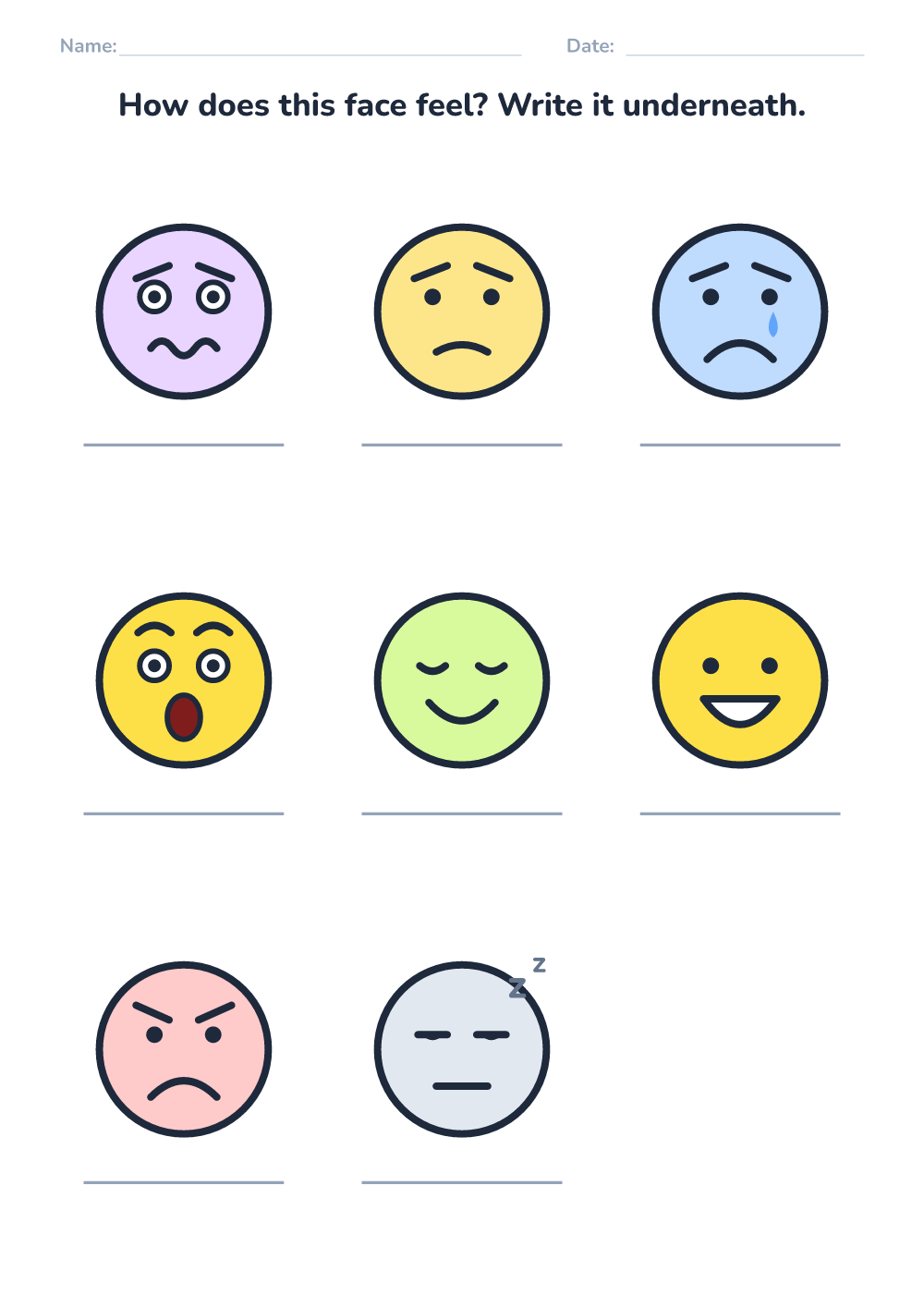
Emotions worksheet — name the feeling (hard) #45
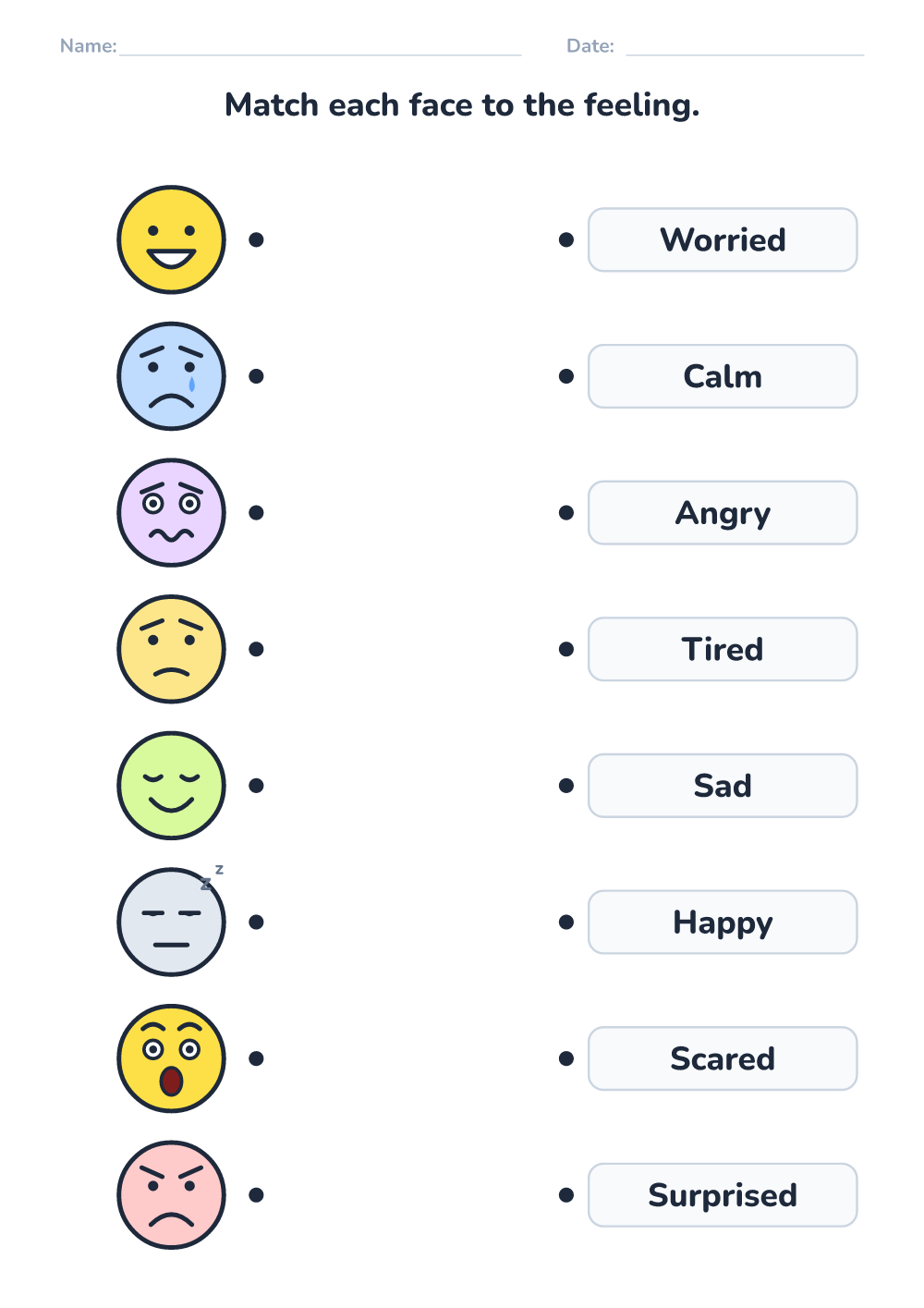
Emotions worksheet — match face and word (hard) #928
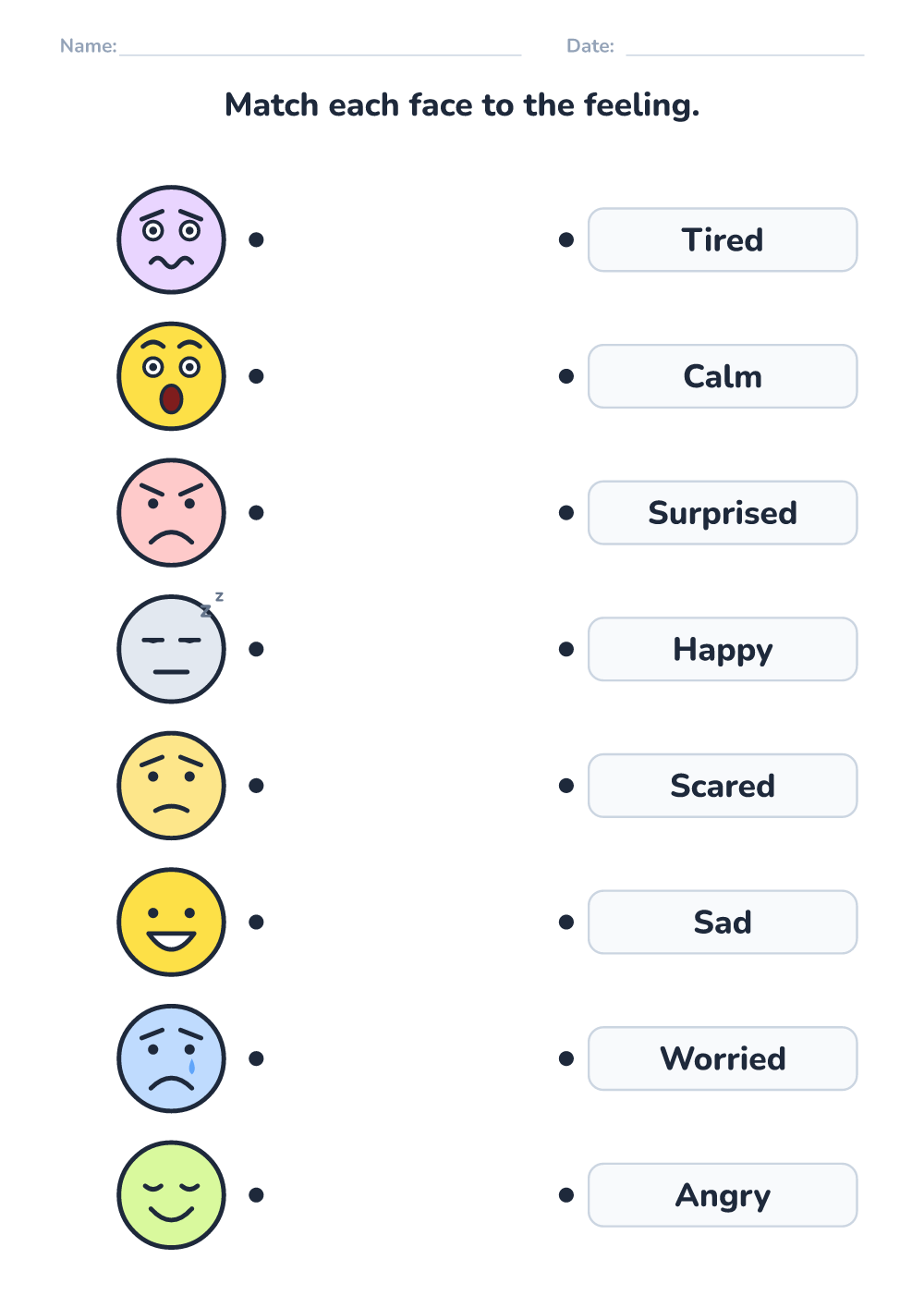
Emotions worksheet — match face and word (hard) #223
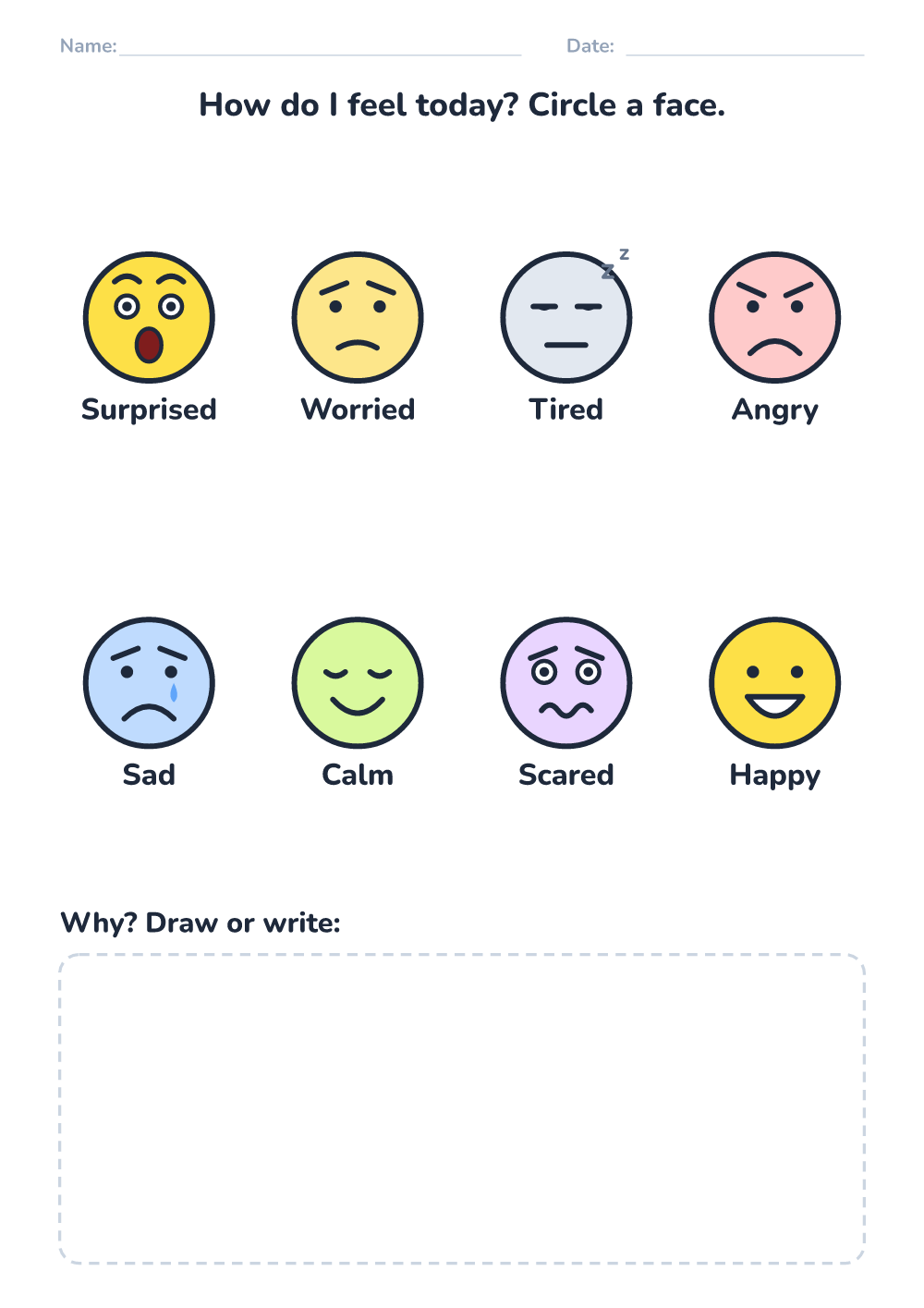
Emotions worksheet — how I feel today (hard) #747
Tips for parents & teachers
- 1Make faces in front of a mirror so the child sees how the face changes.
- 2Link emotions to real situations: 'When did you last feel happy?'.
- 3Use the 'How I feel today' sheet every morning or after school.
Frequently asked questions
How do I introduce a visual schedule?
Start with one short routine (for example, the morning). Go through the pictures together and tick off each step. After a few days many children start using the schedule on their own.
Does a communication board replace speech?
No — research shows that augmentative and alternative communication (AAC) often supports speech development. A speech and language therapist can help choose the right system.
Can I change the pictures?
Yes. The first–then version includes cut-out pictures you can attach with Velcro and swap during the day.