
Dyslexia
Children with dyslexia, or at risk of it, often mix up letters that look alike (b, d, p, q, m, n, u) and swap their order. It is not laziness — the brain simply needs more practice to fix the direction and shape of letters.
These worksheets train visual perception and letter discrimination through game-like tasks: searching, comparing and finding a path. They work best combined with saying letters aloud and writing them with big movements (in the air, on a board, in sand).
Worksheet types
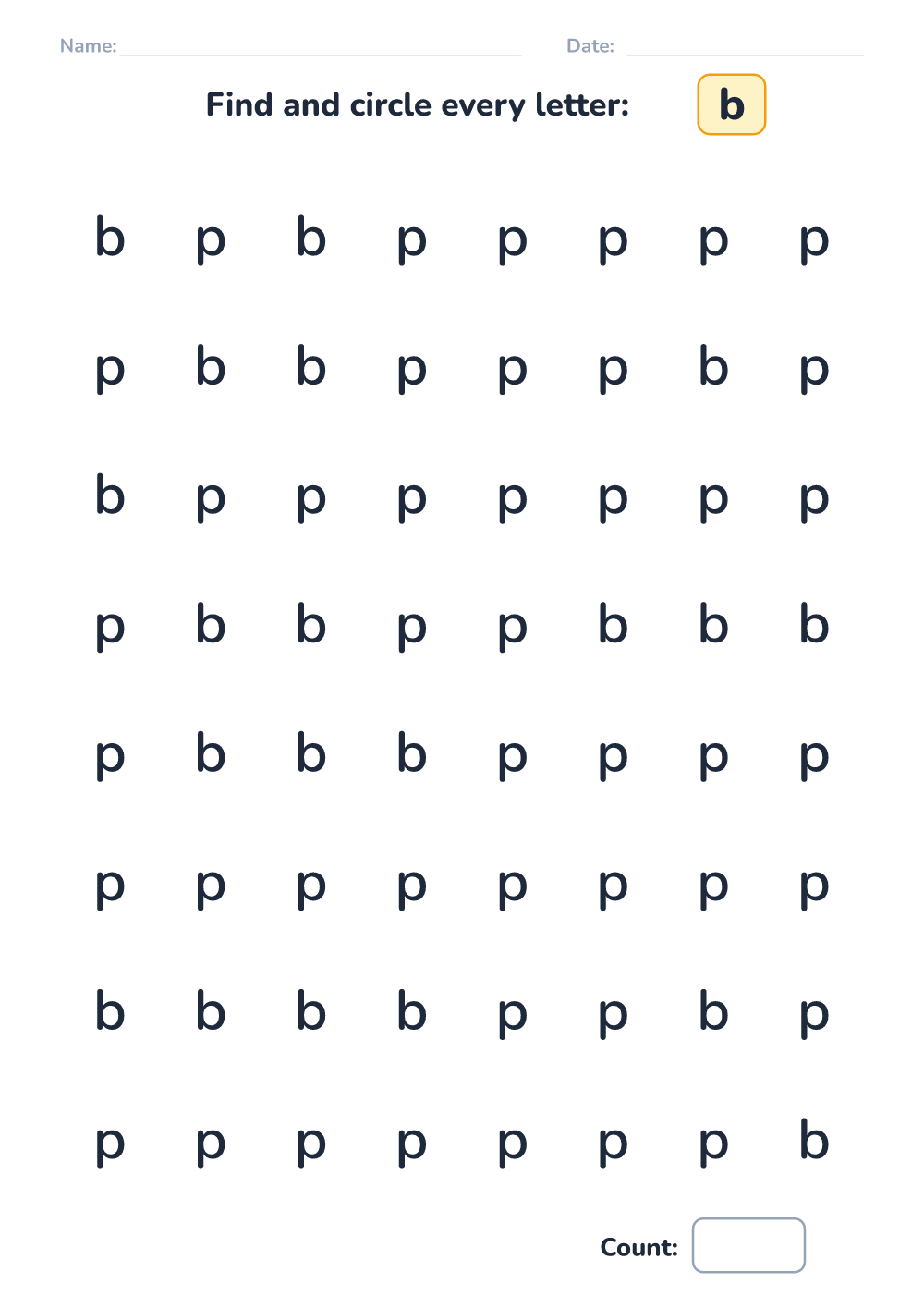
Letter discriminationFind letters that look alike (e.g. b–d, p–q, m–n). Trains visual perception and letter discrimination, helpful for children with dyslexia. A4.12 worksheets
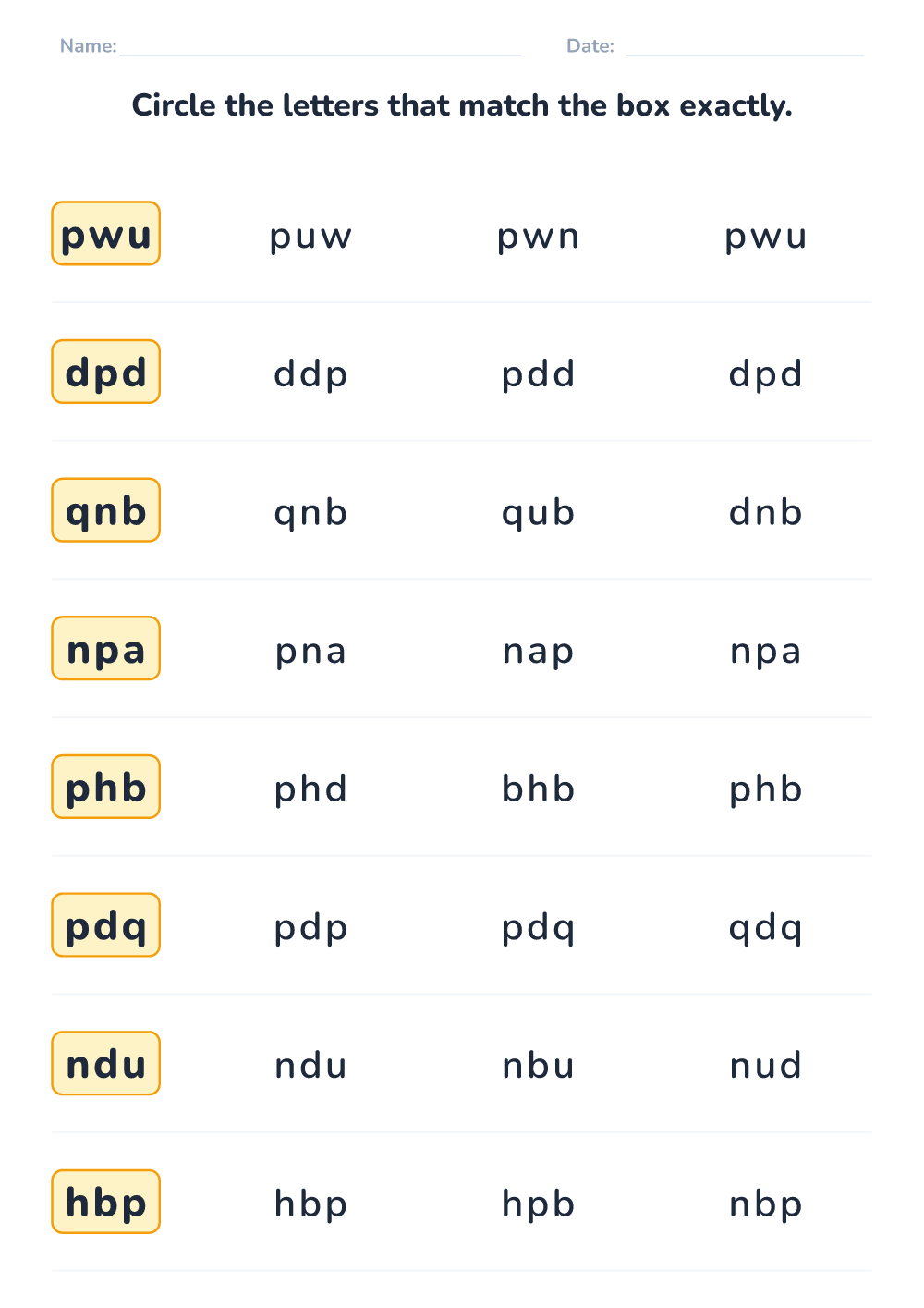
Letter sequence matchingCompare letter strings and pick the identical one. Practises visual analysis, attention to letter order and observation. A4.12 worksheets
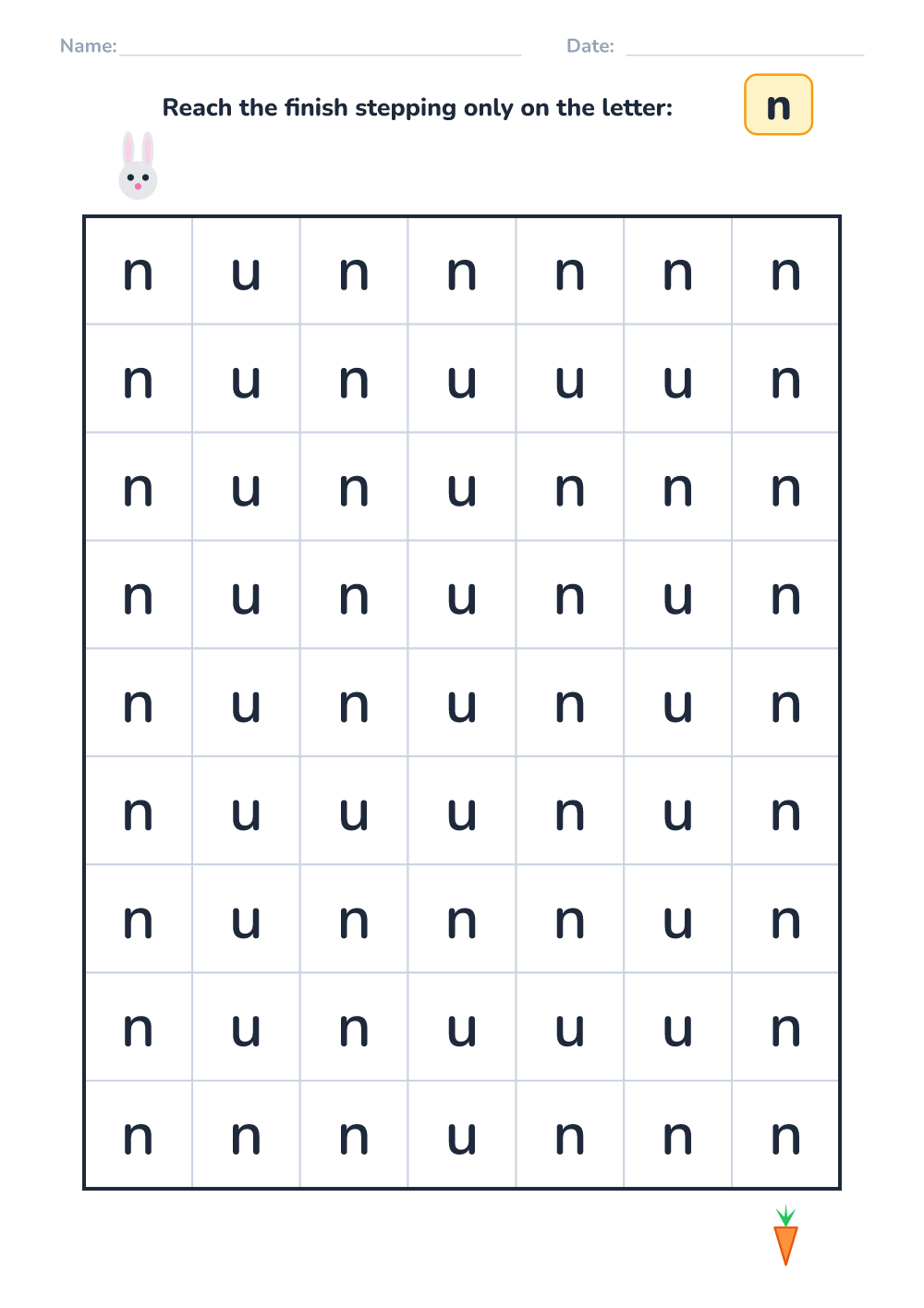
Letter mazeA maze where you may only step on one letter. Combines letter discrimination with path planning. Answer key included. A4.12 worksheets
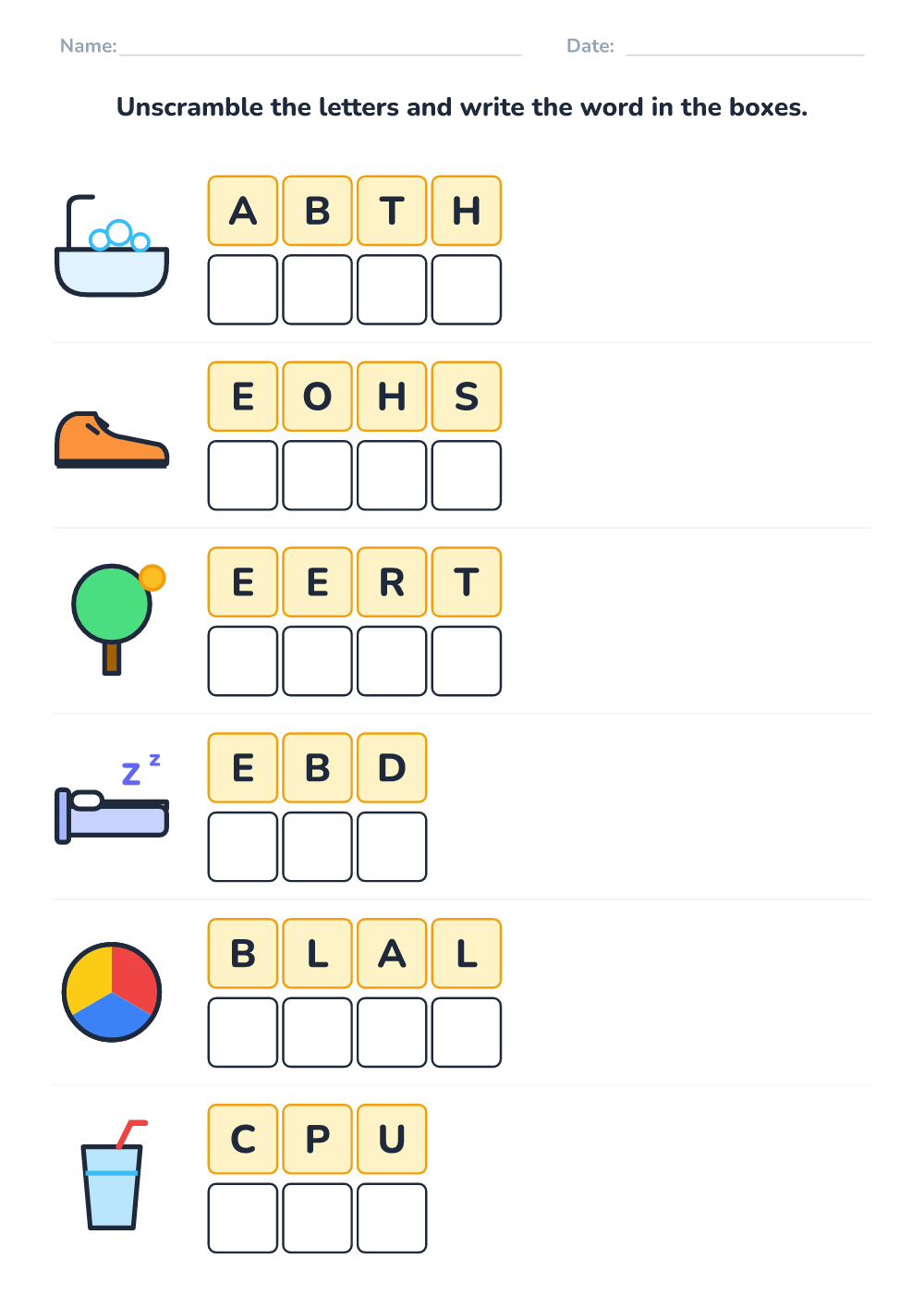
Scrambled wordsUnscramble the letters to spell the picture's name. Practises building words and spelling. Answer key included. A4.12 worksheets
Also useful
Frequently asked questions
Will these worksheets help with dyslexia?
They are extra practice for visual perception and letter discrimination. The best results come from regular work planned with a teacher or specialist.
Why does my child mix up b and d?
These letters differ only in direction. Such mistakes are common until about age 7–8; if they persist or come with other reading and writing difficulties, ask your school about an assessment.
How often should we practise?
Little and often: 5–10 minutes a few times a week works better than long, tiring sessions.