
Memory and visual perception
Visual perception and visual memory underpin reading, writing and maths: a child needs to notice differences between similar shapes and remember what they saw. These activities are short puzzles, so they also work well for children who lose motivation quickly.
Start with the easy level and a few large pictures. Name the pictures aloud — combining seeing and speaking makes remembering easier.
Worksheet types
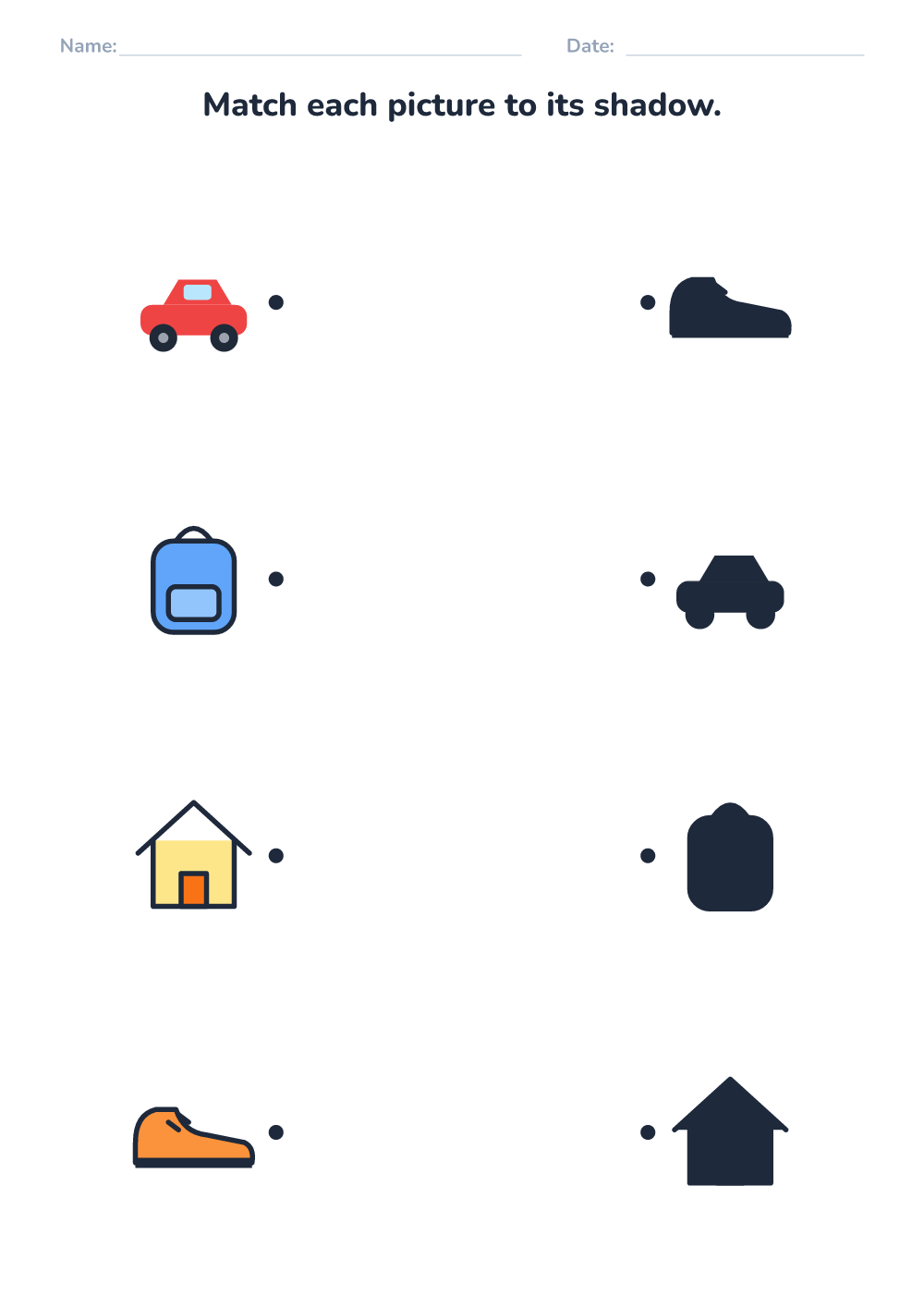
Match the shadowMatch each picture to its shadow. Builds visual perception and shape recognition. Answer key included. A4.12 worksheets
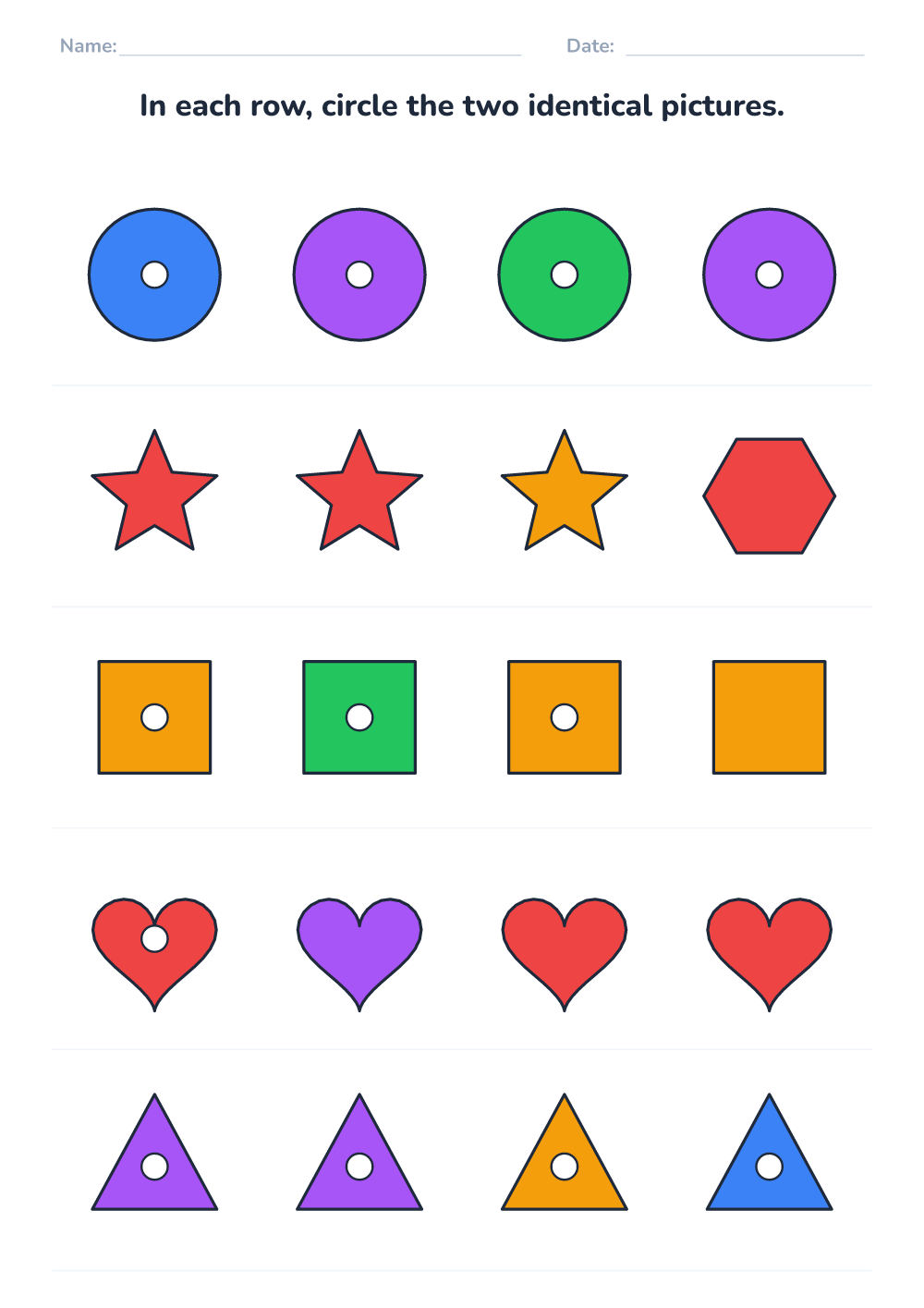
Find the matching pairFind the two identical pictures among similar ones. Trains attention to detail. Answer key included. A4.12 worksheets
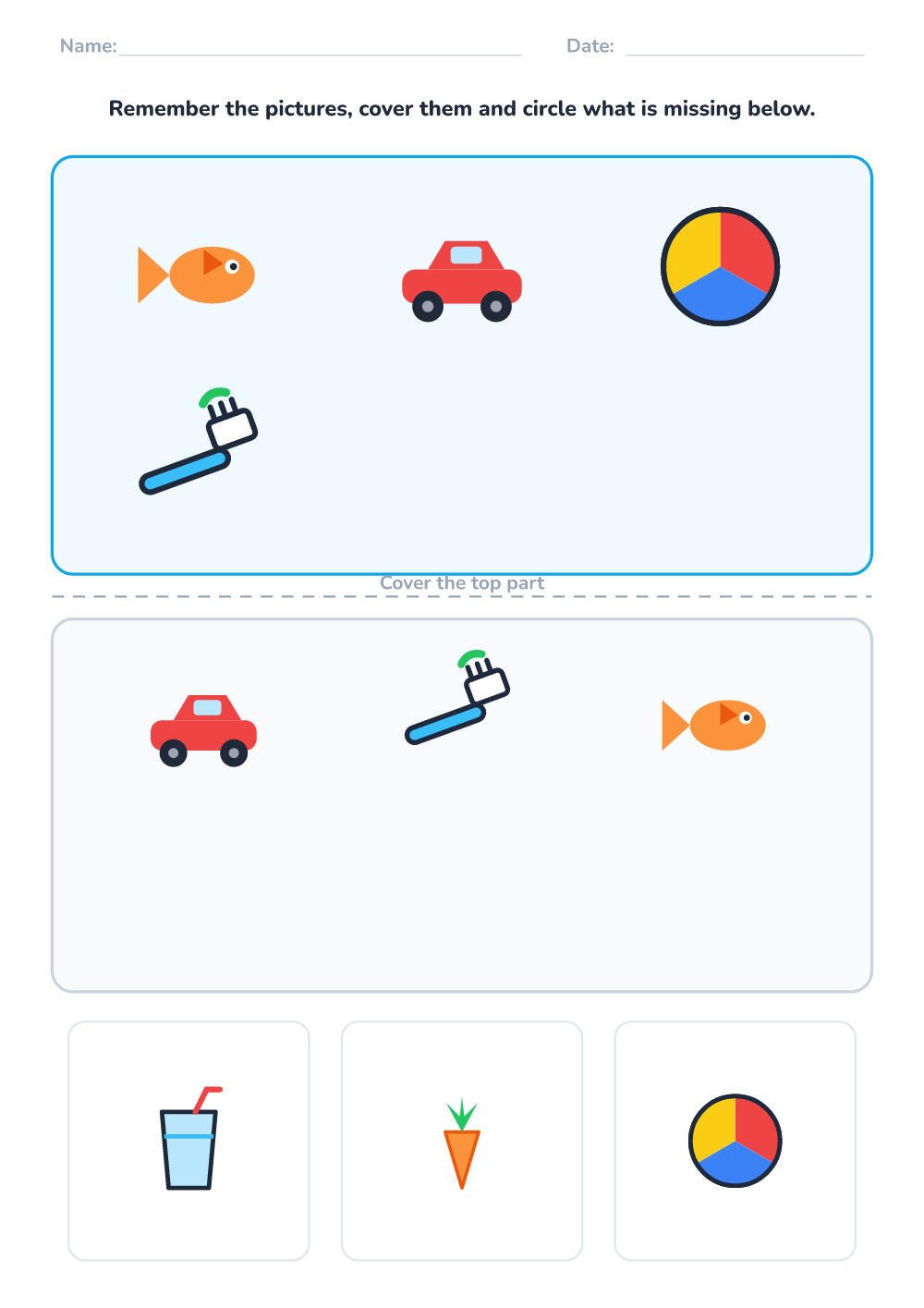
What is missing?Memorise the pictures at the top, cover them and find what is missing below. Trains visual memory. Answer key included. A4.12 worksheets
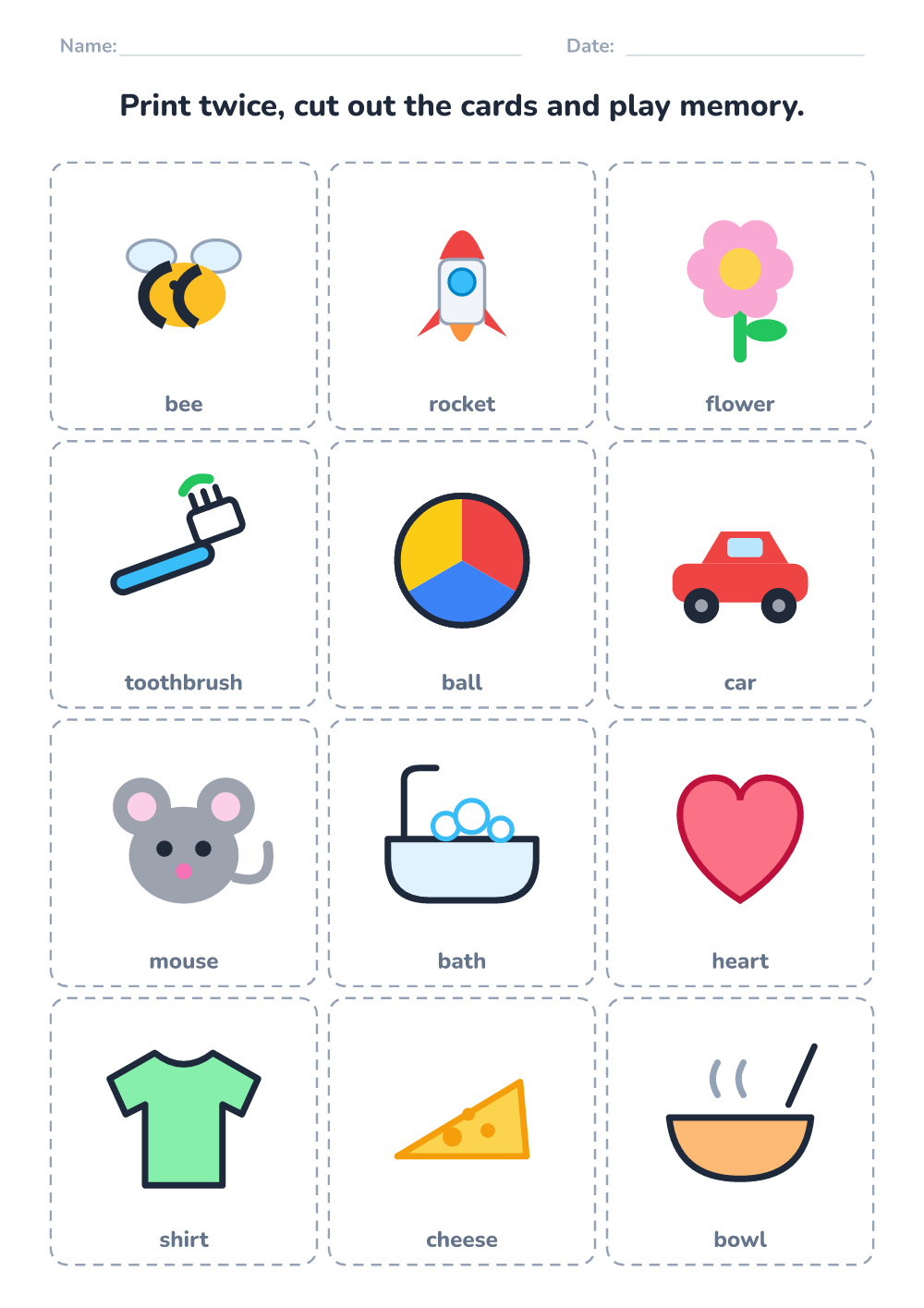
Memory game to cut outMemory game cards to print and cut out. Practise memory, patience and turn-taking. A4.12 worksheets
Also useful
Frequently asked questions
How long should my child look before covering the pictures?
Start with 20–30 seconds. When it gets easy, shorten the time or add more pictures (higher level).
How do we play the memory game?
Print the sheet twice, cut out the cards and lay them face down. Players turn over two cards — if they match, they keep the pair.
Who are these activities for?
Preschoolers and early primary children, especially those with reading difficulties, ADHD or autism who benefit from short, concrete tasks.