
Dyscalculia and counting
Children who struggle with maths often recite numbers without really knowing how much a number is. Concrete practice helps: counting pictures, comparing groups, recognising dot patterns on dice and ten frames, and finding where a number sits on a line.
There are three levels: up to 5, up to 10–20 and up to 100. Before writing a digit, encourage touching each item and saying numbers aloud. Many sheets include an answer key.
Worksheet types
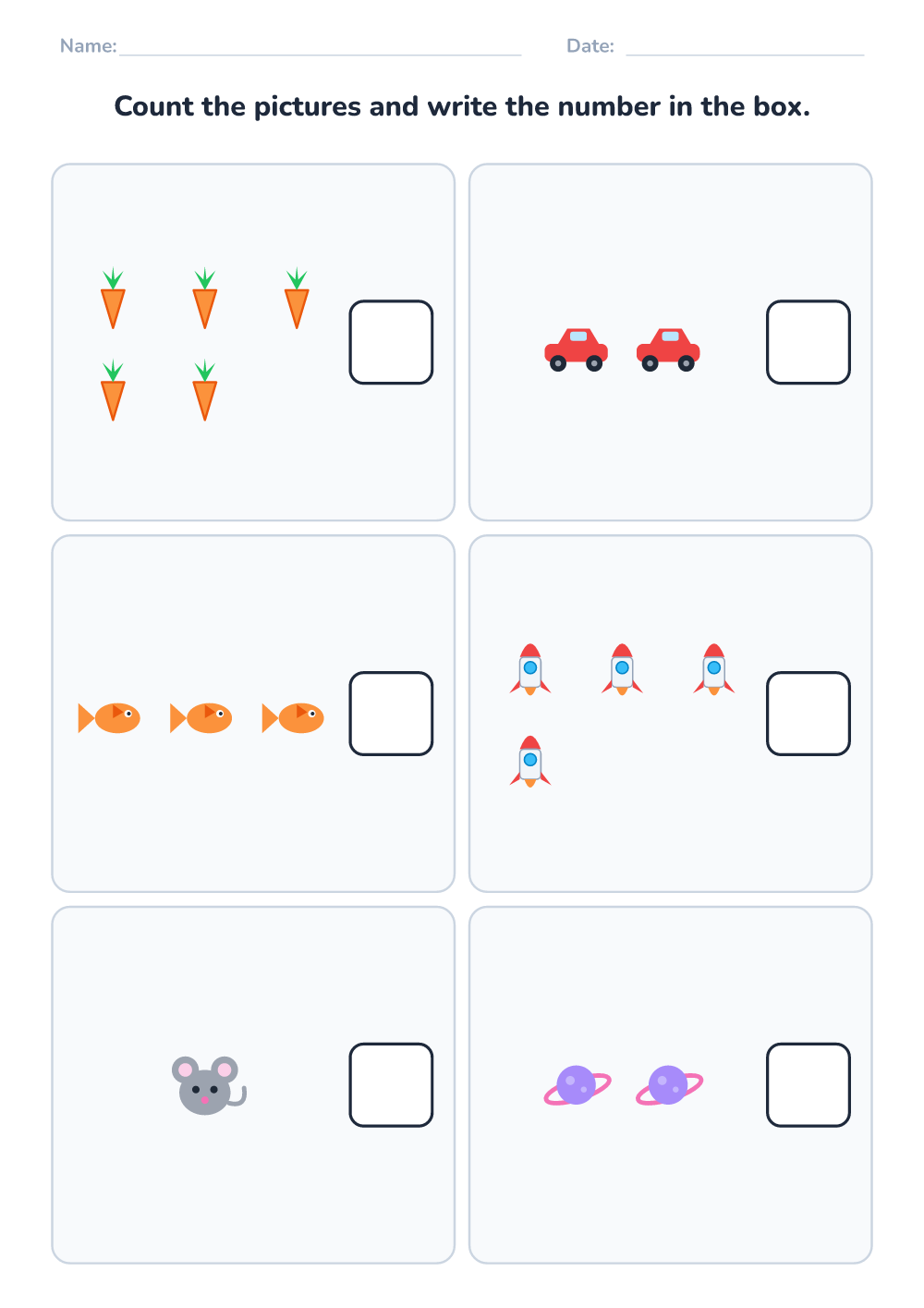
Count and writeCount the pictures in each box and write the number. Practises counting and writing digits. A4.12 worksheets
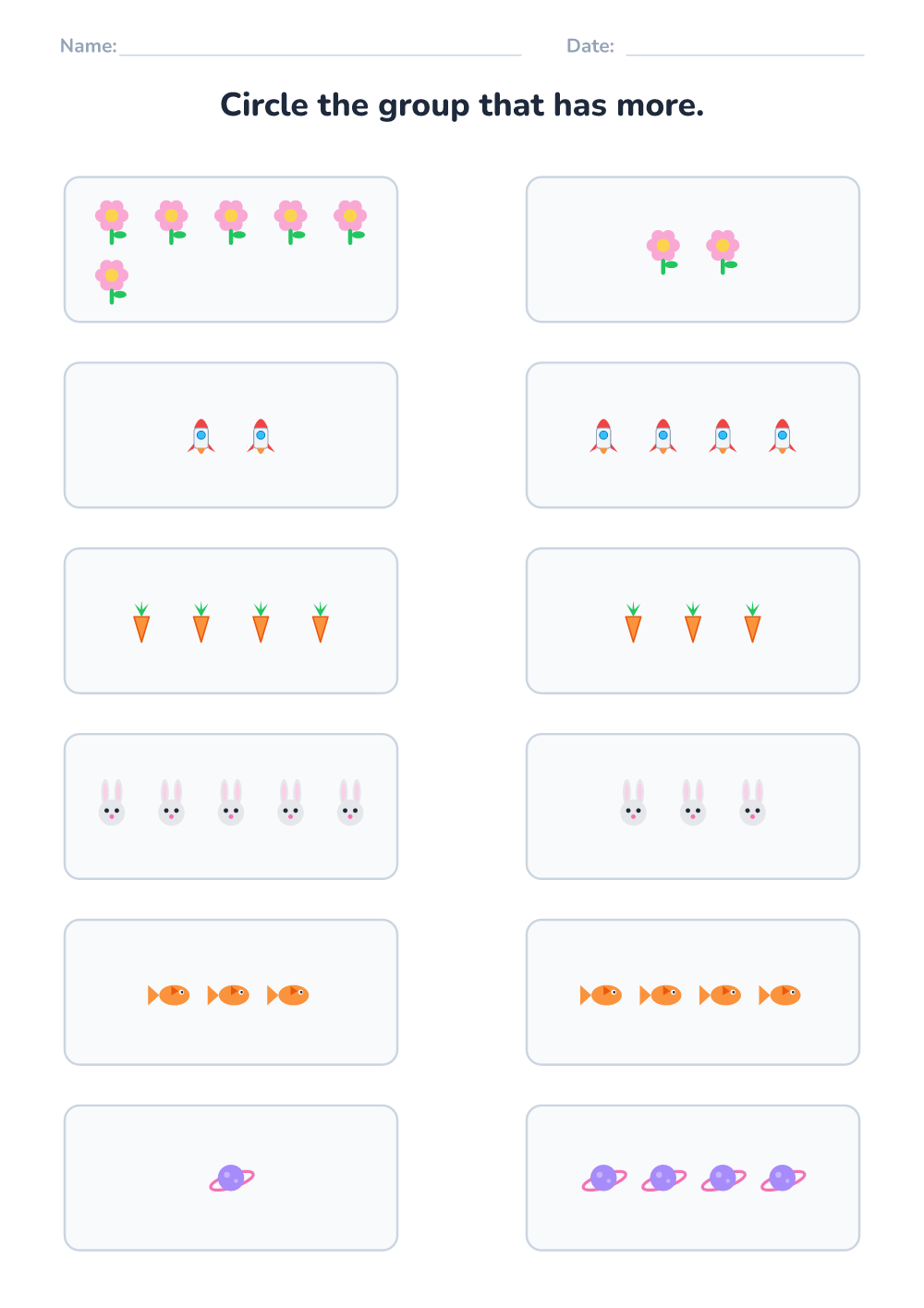
Which is more?Compare amounts and numbers: circle the bigger group or write >, < or =. Answer key included. A4.12 worksheets
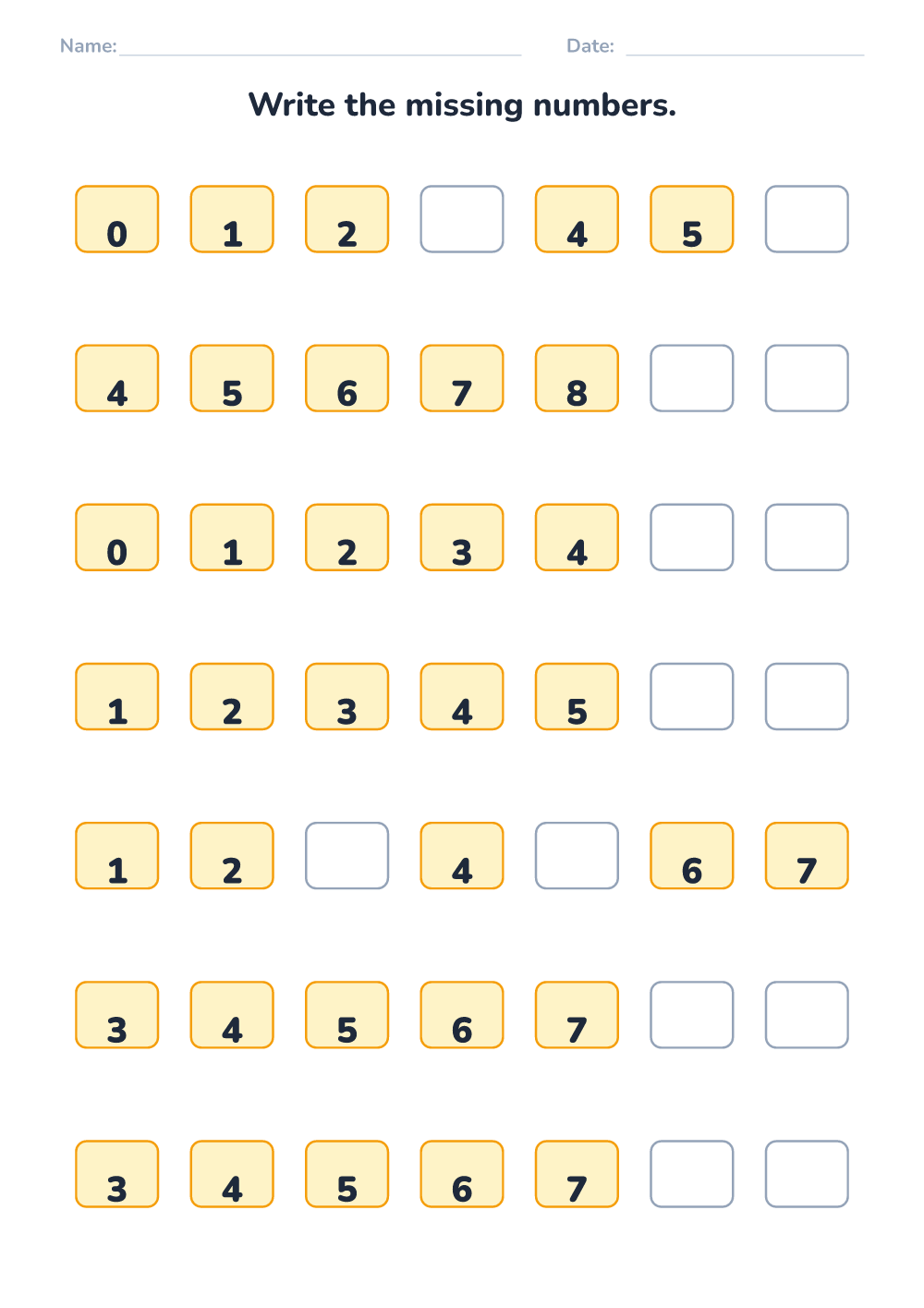
Missing numbersFill in missing numbers in sequences and on a number line, including counting in 2s, 5s and 10s. Answer key included. A4.12 worksheets
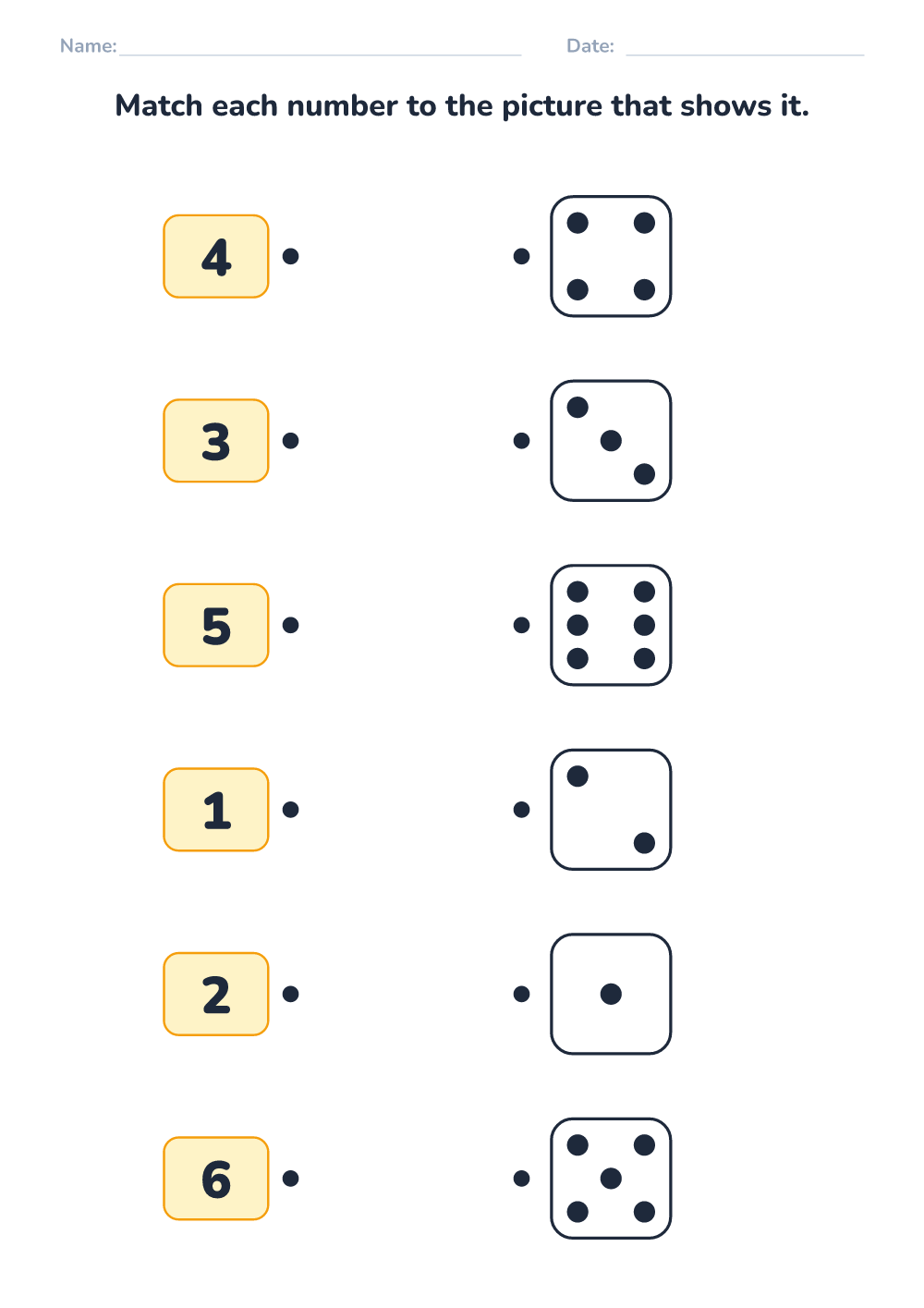
Match numbers and dotsMatch each number to a dice face or ten frame. Helps children see what a number means. Answer key included. A4.12 worksheets
Also useful
Frequently asked questions
What is dyscalculia?
A specific learning difficulty with numbers and maths, despite typical overall development. It is assessed by an educational psychologist or specialist, usually once a child has had some years of schooling.
Can my child count on their fingers?
Yes. Fingers, blocks and counters are natural tools. As understanding grows, children drop them on their own.
How often should we practise?
Short and daily (5–10 minutes) works better than long and weekly. Bring counting into daily life: stairs, shopping, laying the table.