
Pencil control worksheet
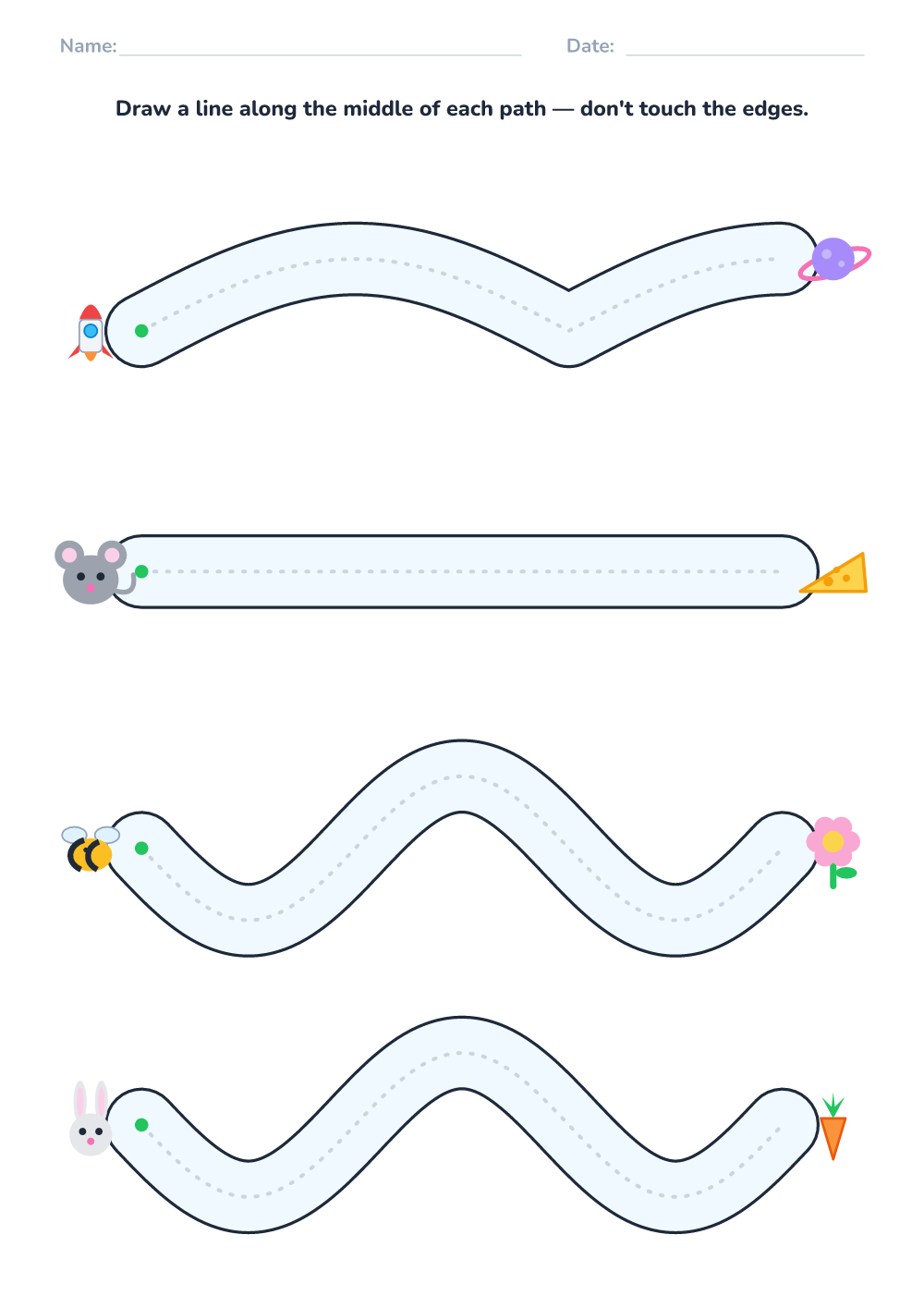
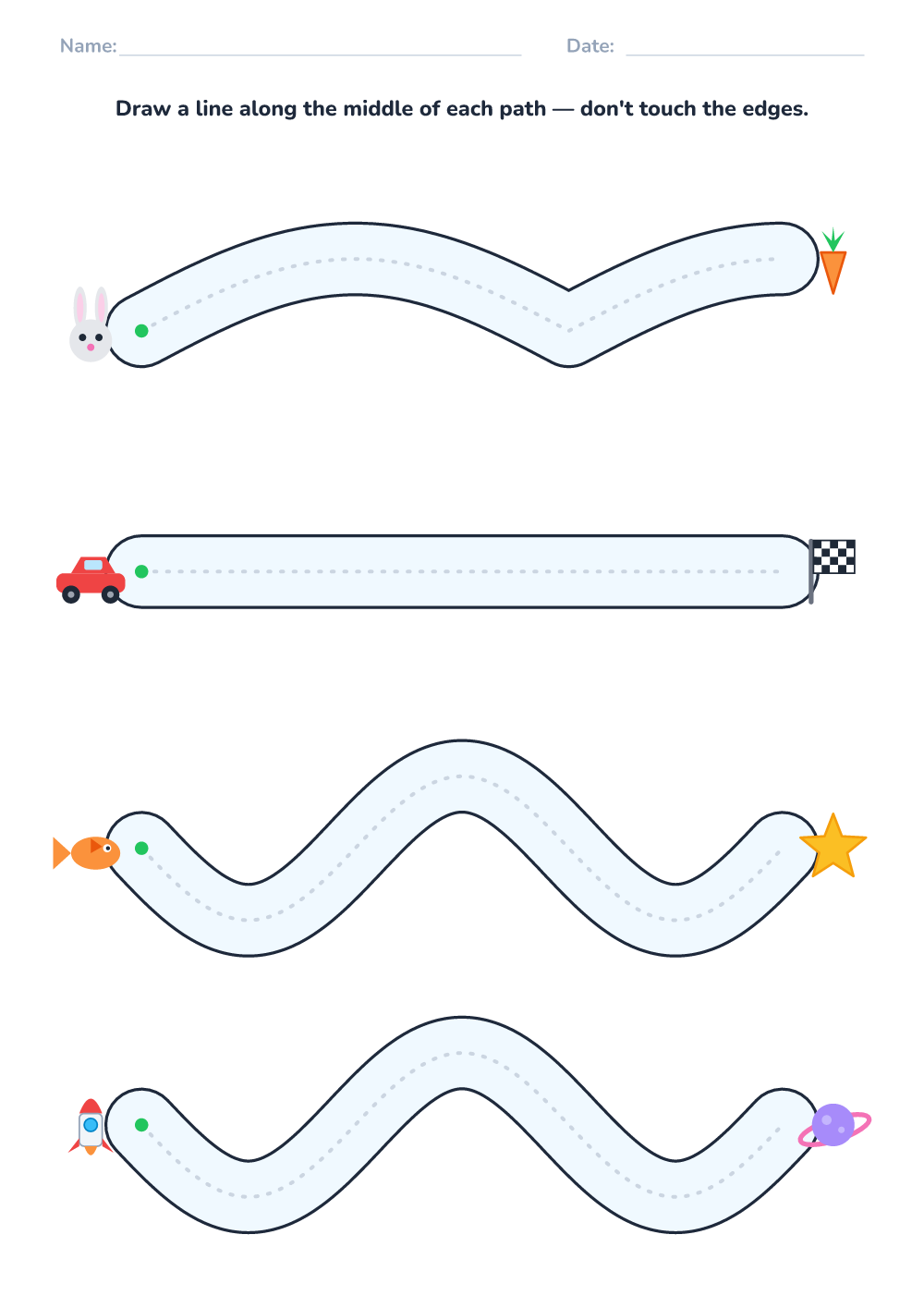
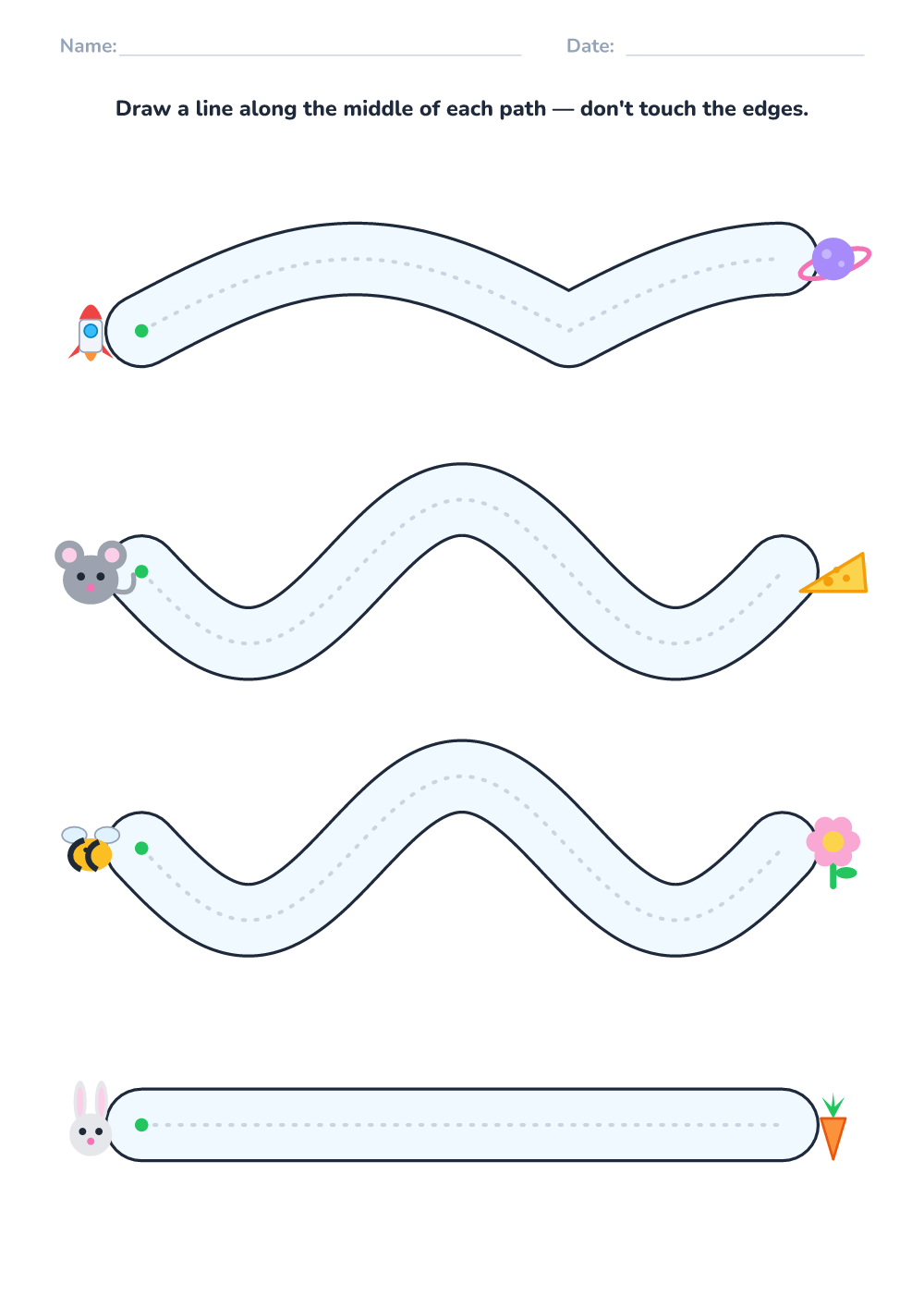
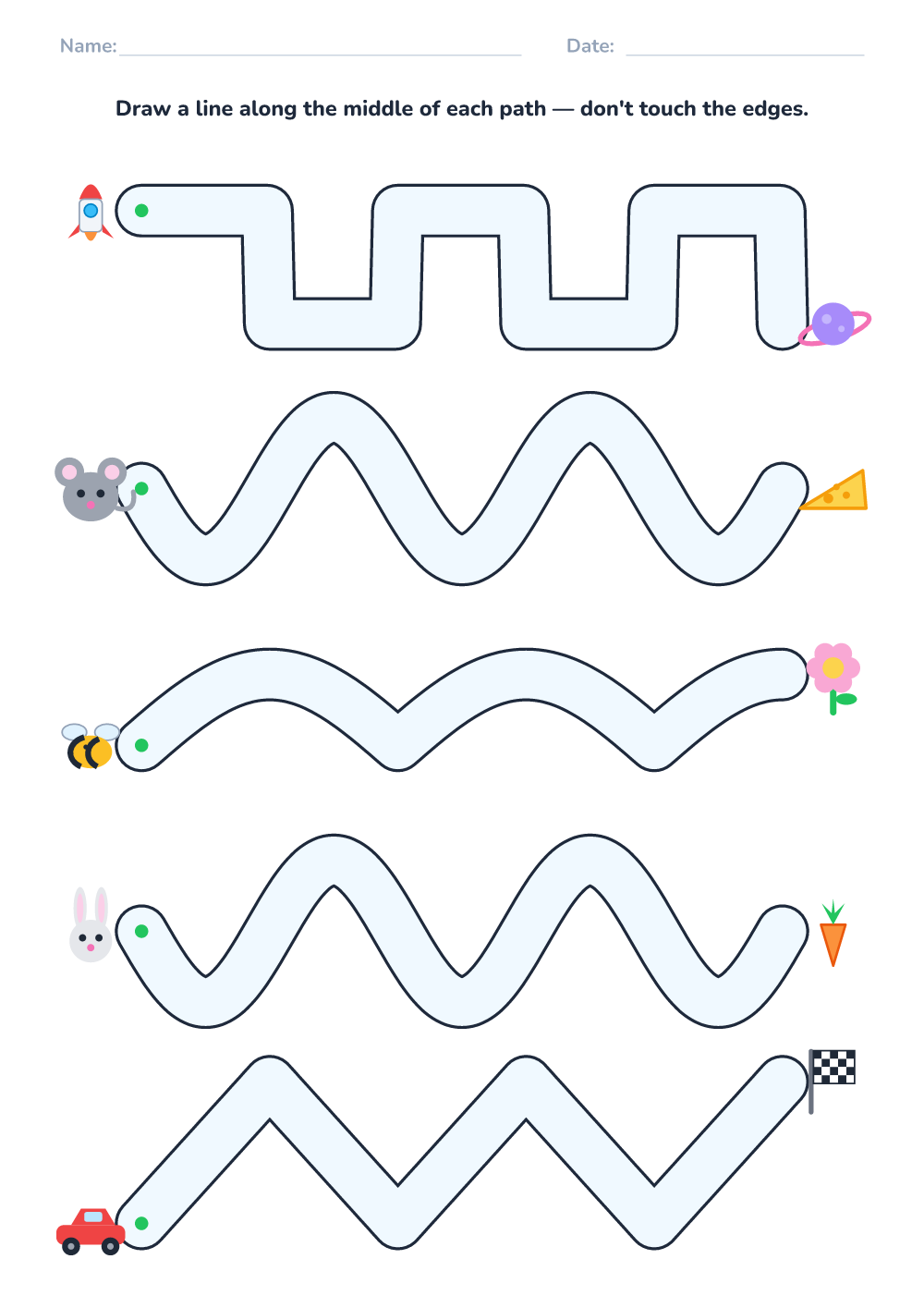
Printable pencil-control worksheet: draw a line along the middle of each path. Builds precision, pressure control and hand–eye coordination. A4.
Level








More about Pencil control worksheet worksheets
These pencil control worksheets are simple A4 sheets with paths to trace, loops and zigzags that help children practice steady hand movements and early penmanship. Kids often enjoy the clear goals, playful shapes and adding color or stickers as they follow each line, which turns practice into a little game.
Regular tracing supports concentration, fine motor coordination and visual planning, and it brings elements of logic and problem solving into a playful activity. All worksheets are free to download and ready to print on A4; they can support children with additional learning needs as supplementary practice, and do not replace work with specialists.
Tips for parents & teachers
- 1Set your printer to A4 and print at 100 percent or choose fit to page to keep the right scale.
- 2Start with thick paths and chunky crayons, then move to thinner lines as control improves.
- 3Demonstrate the first move and let the child try independently, praising effort as well as progress.
- 4Use short daily or every-other-day sessions of 5–10 minutes when the child is fresh and attentive.
- 5Consider laminating pages and using dry erase markers for repeated practice without reprinting.