
Letter maze
A maze where you may only step on one letter. Combines letter discrimination with path planning. Answer key included. A4.
Level
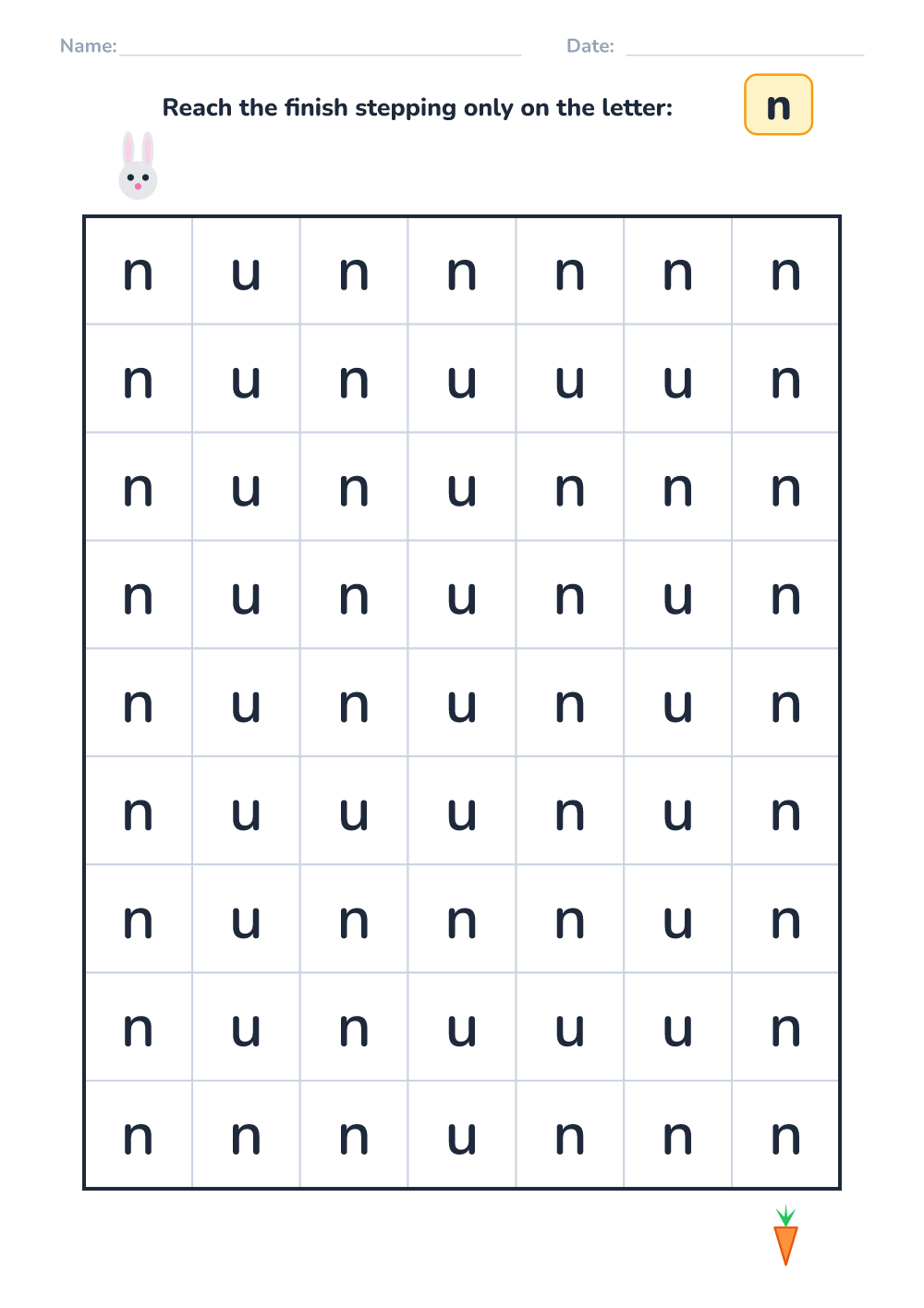
Letter maze n (easy) #29
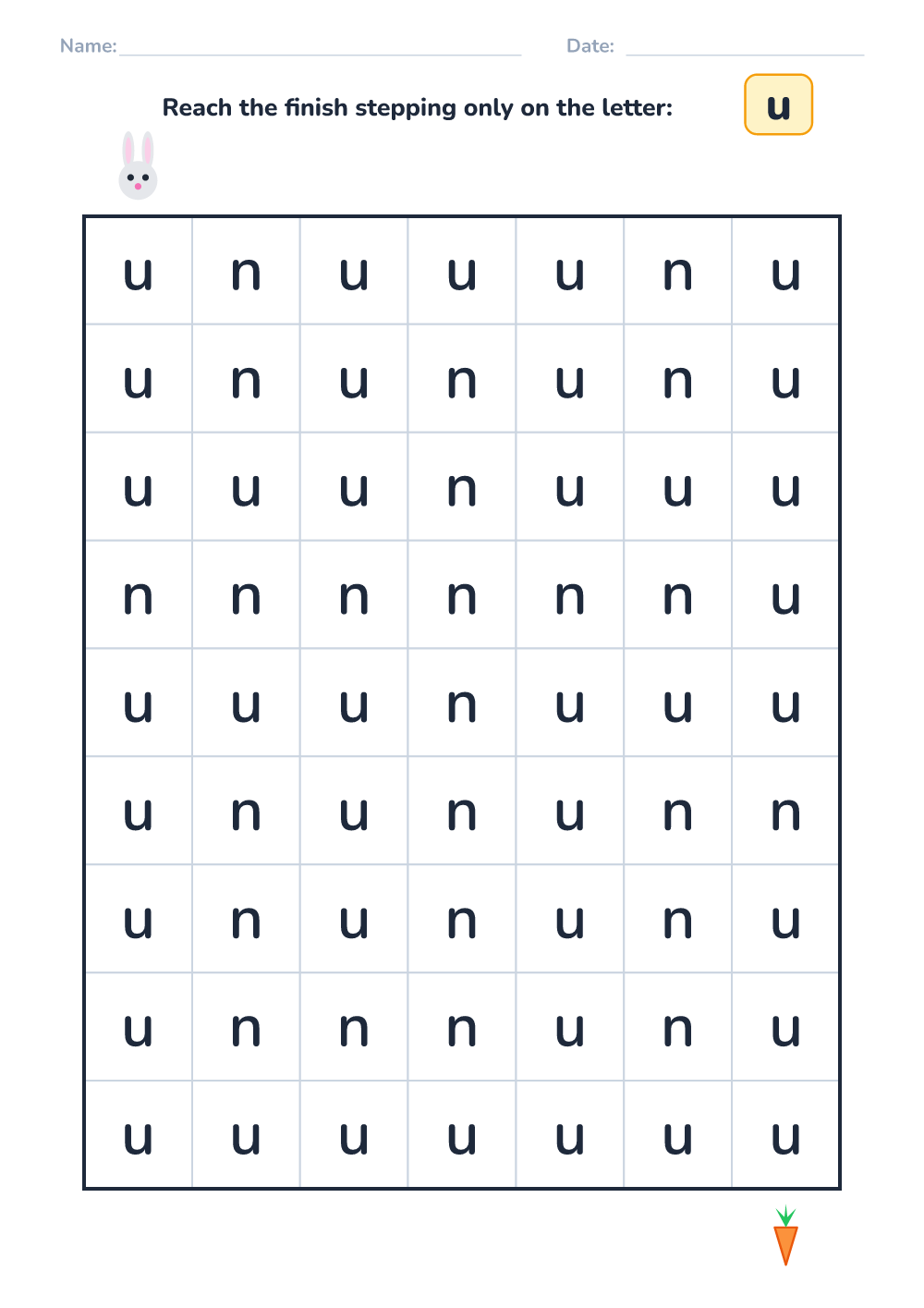
Letter maze u (easy) #321
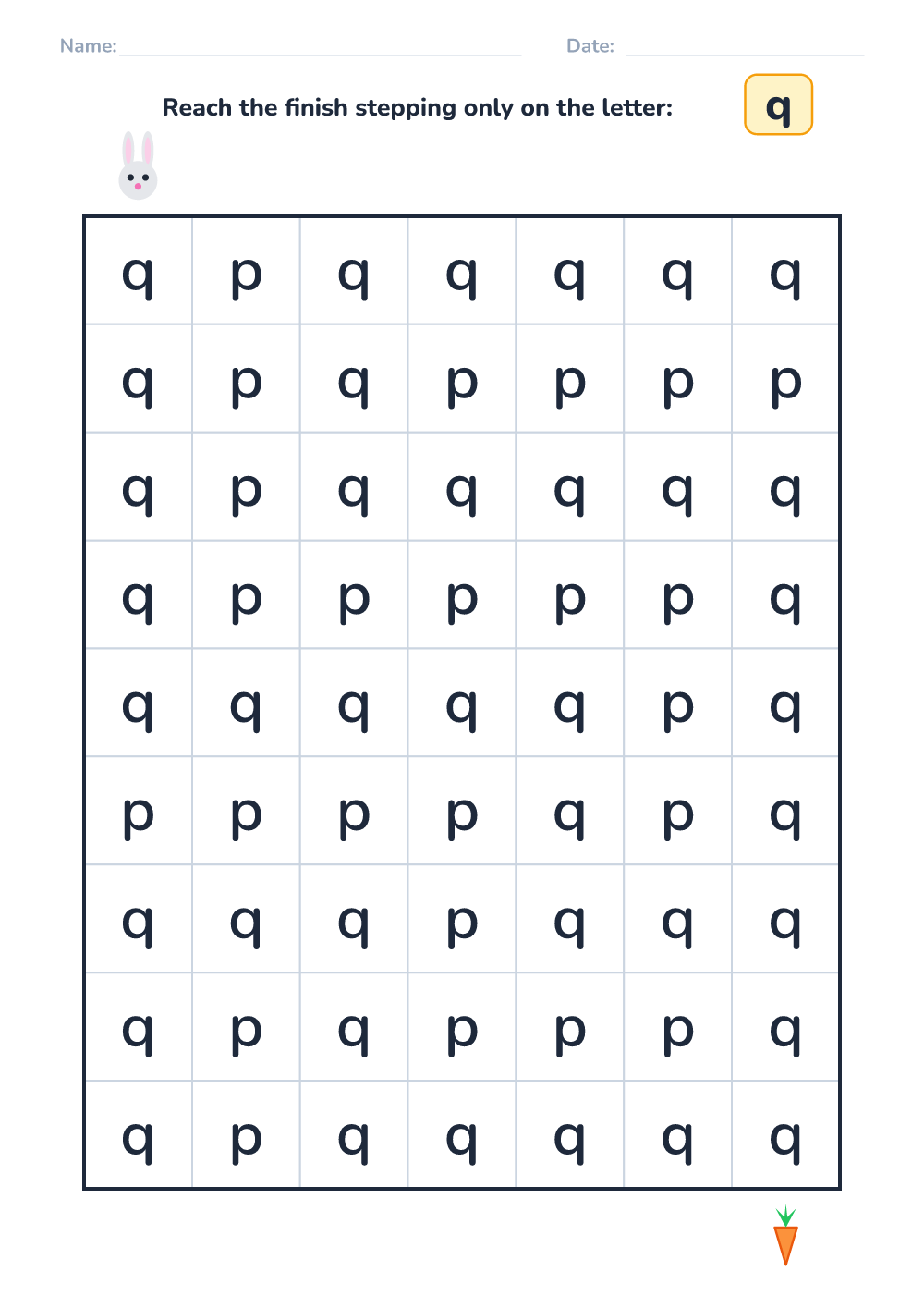
Letter maze q (easy) #971
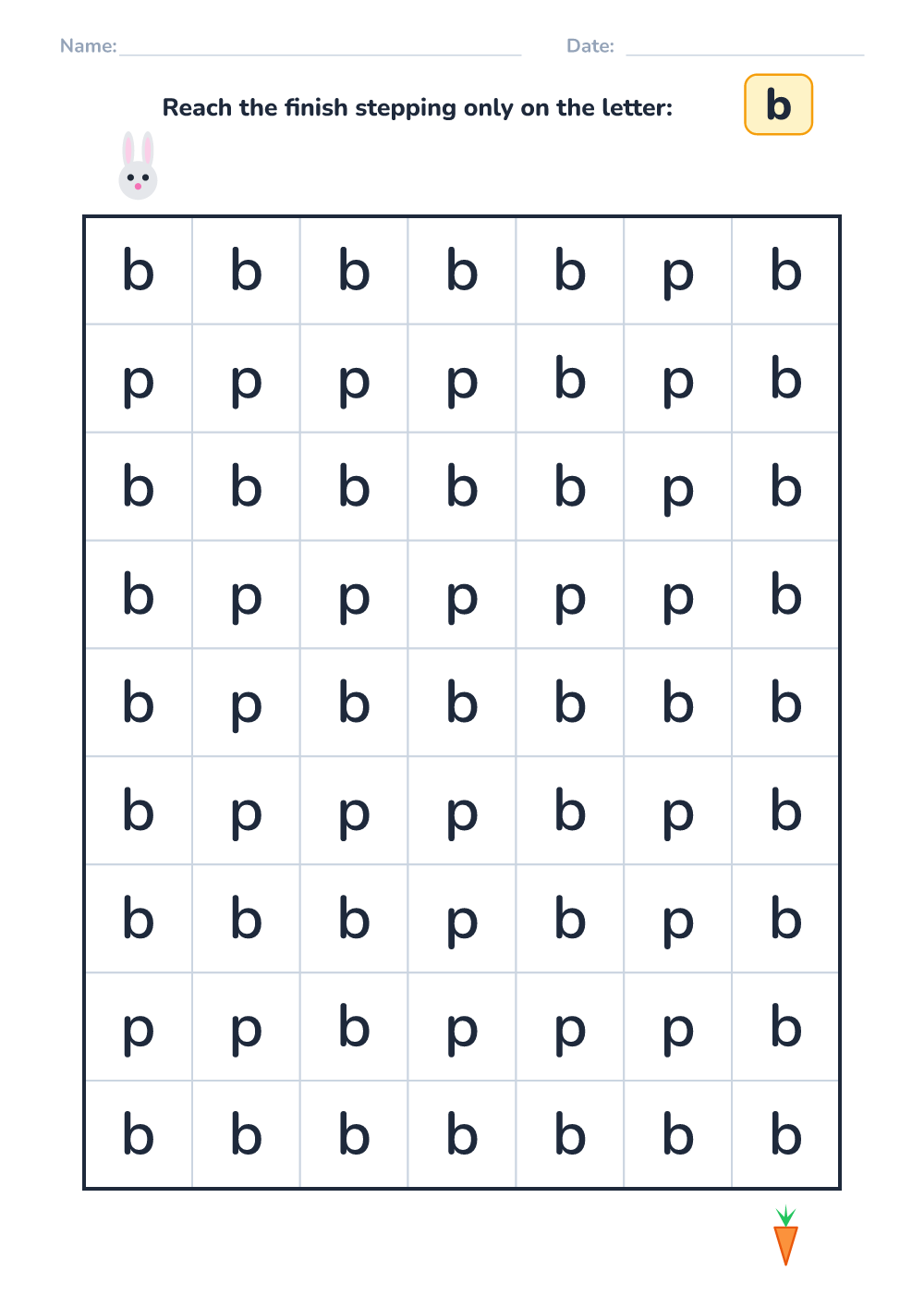
Letter maze b (easy) #516
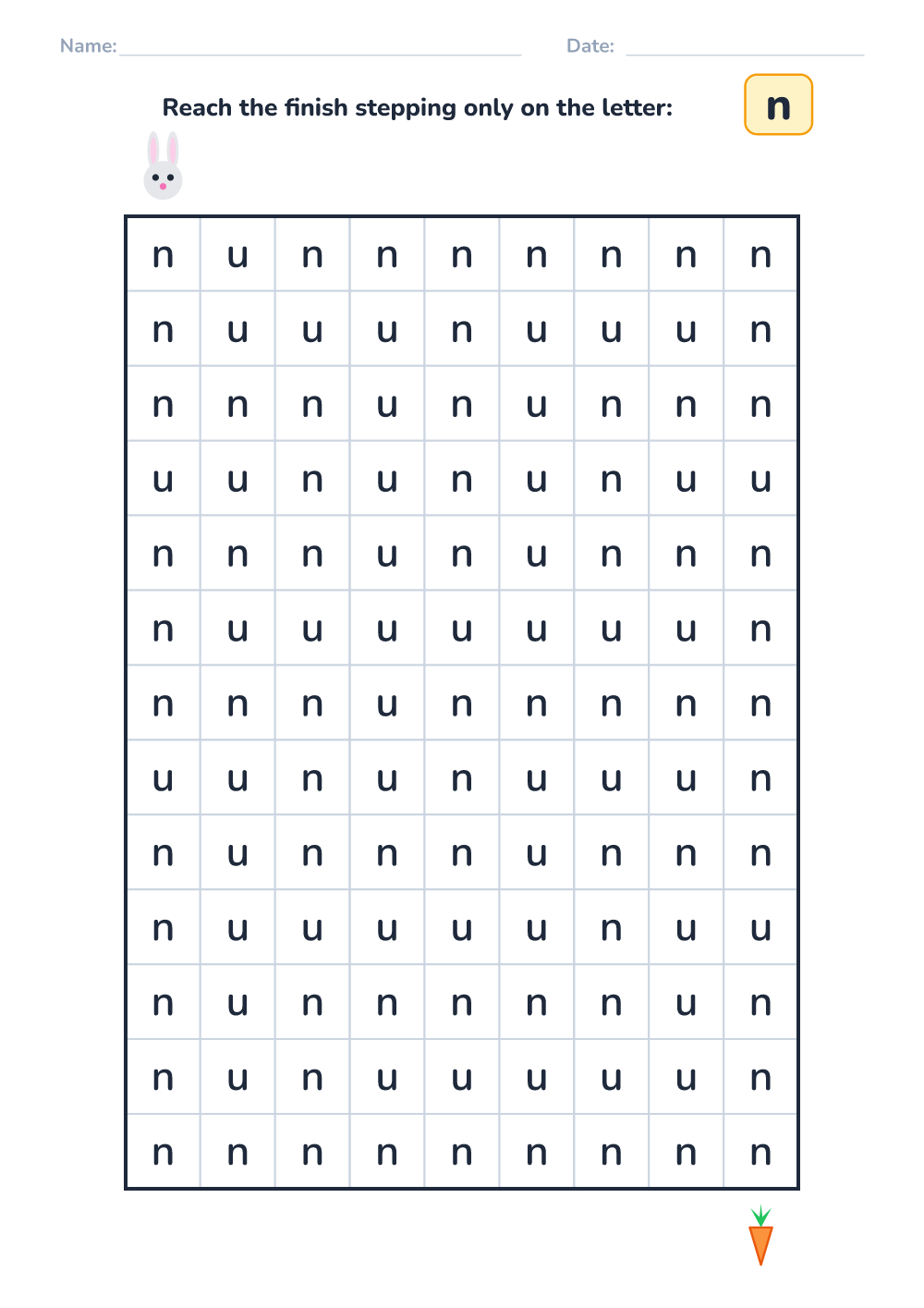
Letter maze n (medium) #216
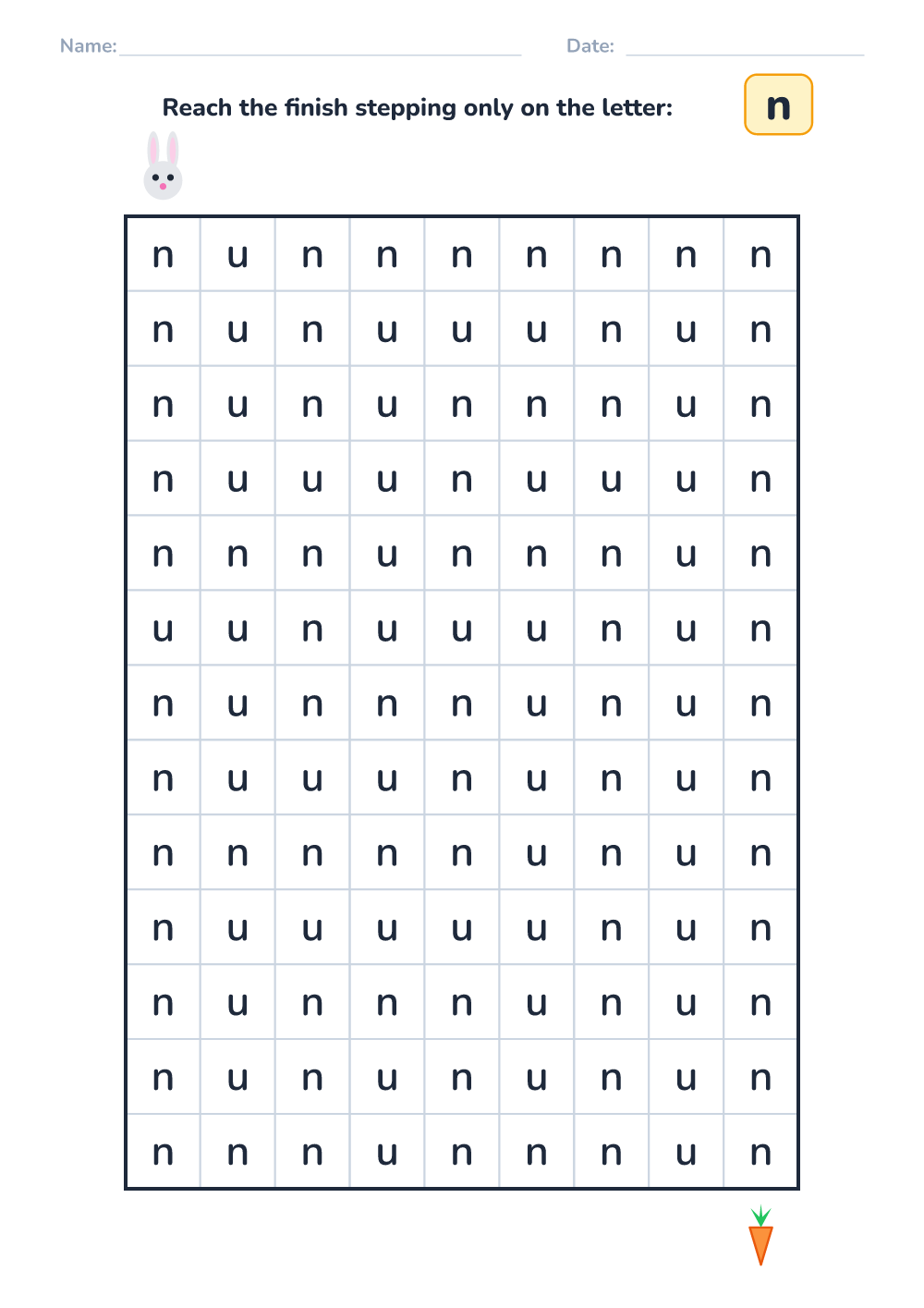
Letter maze n (medium) #753
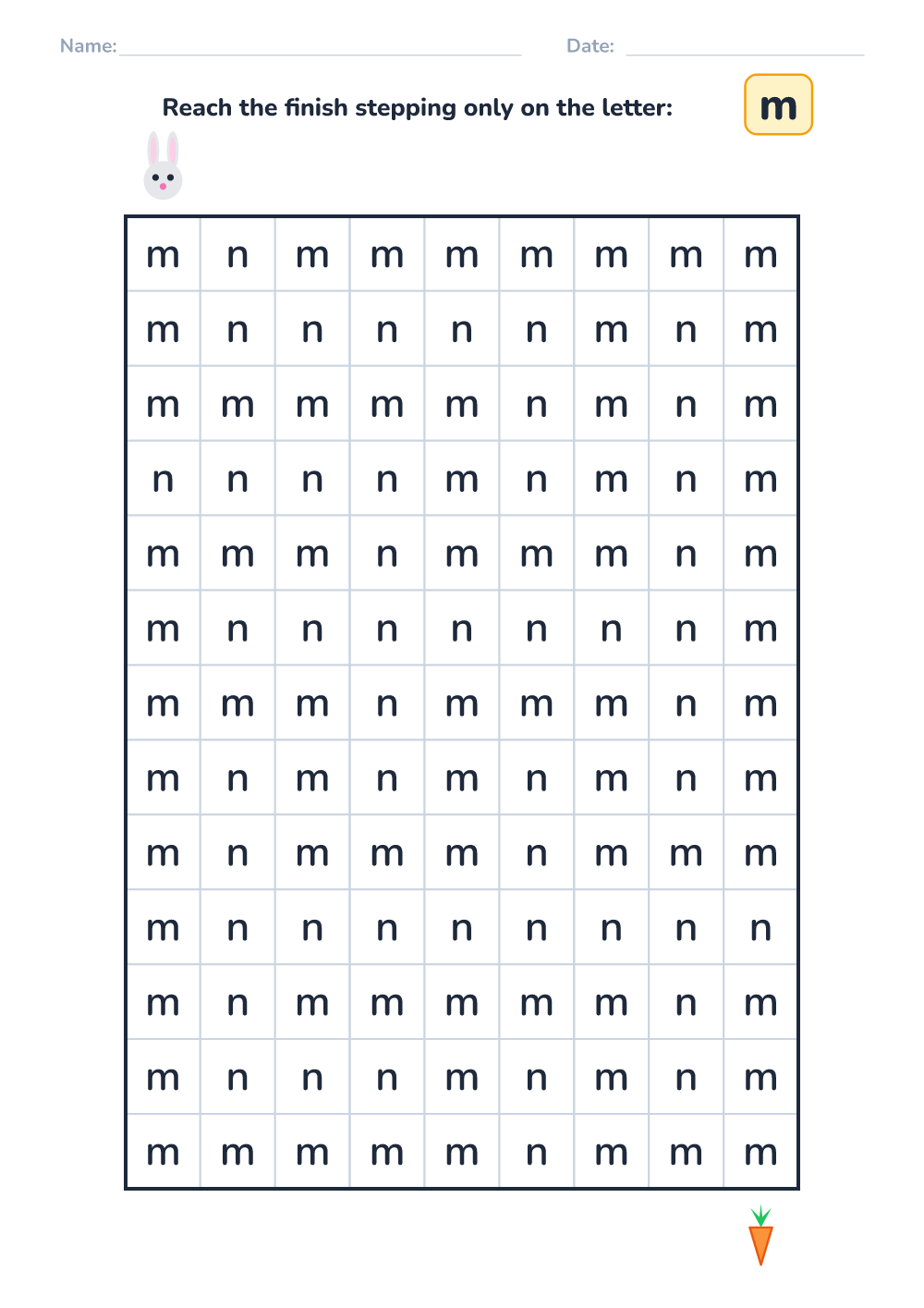
Letter maze m (medium) #112
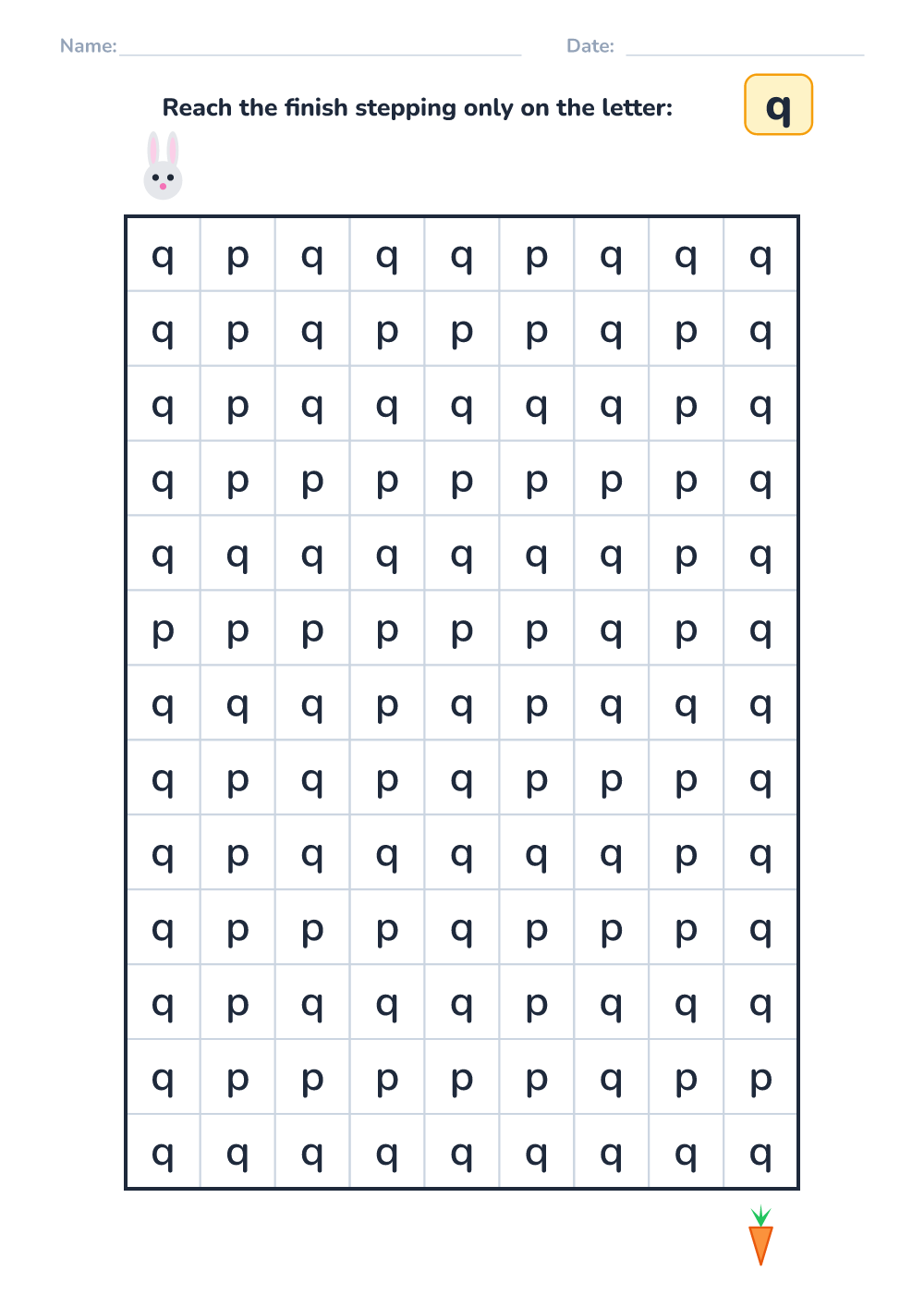
Letter maze q (medium) #541
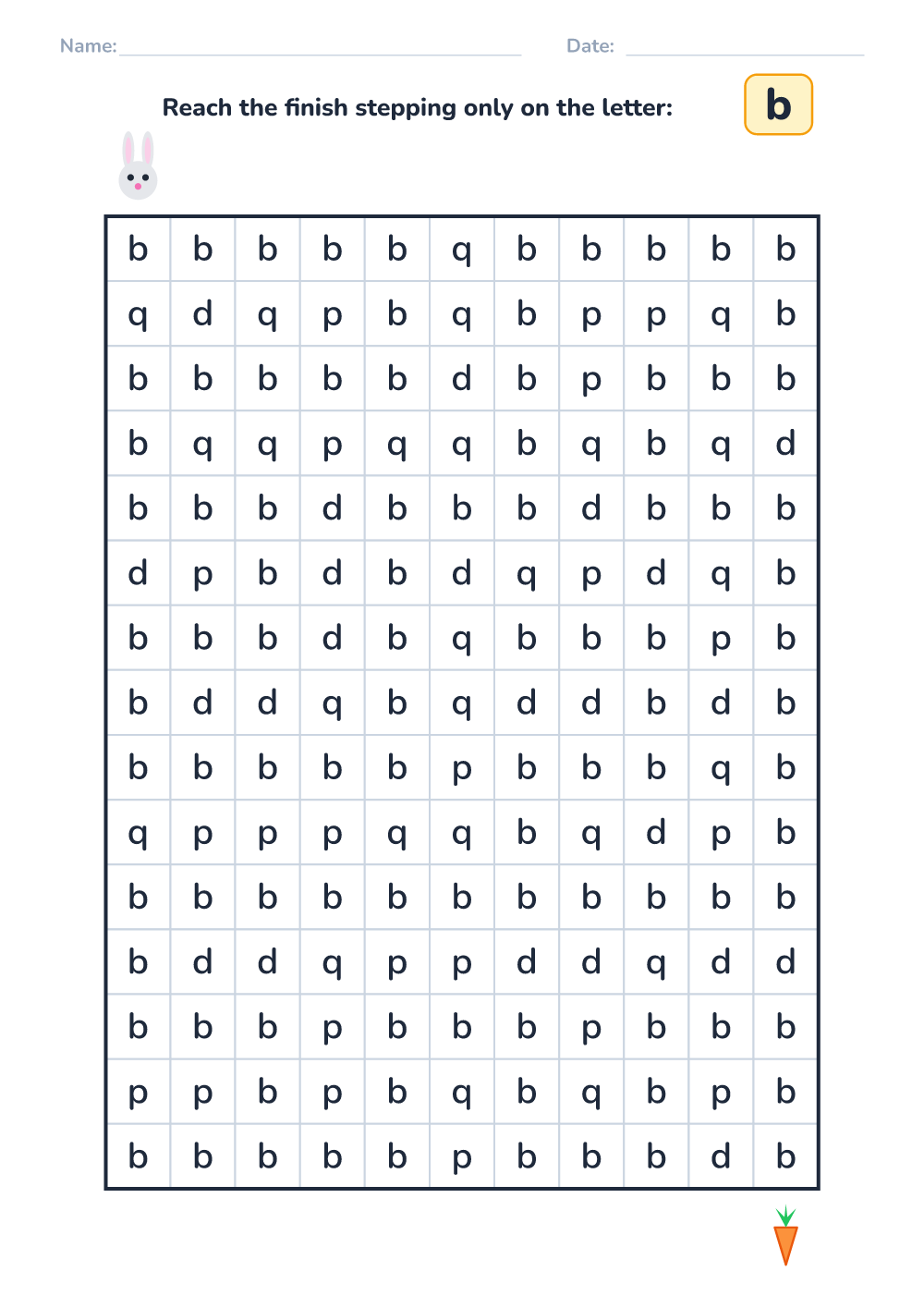
Letter maze b (hard) #911
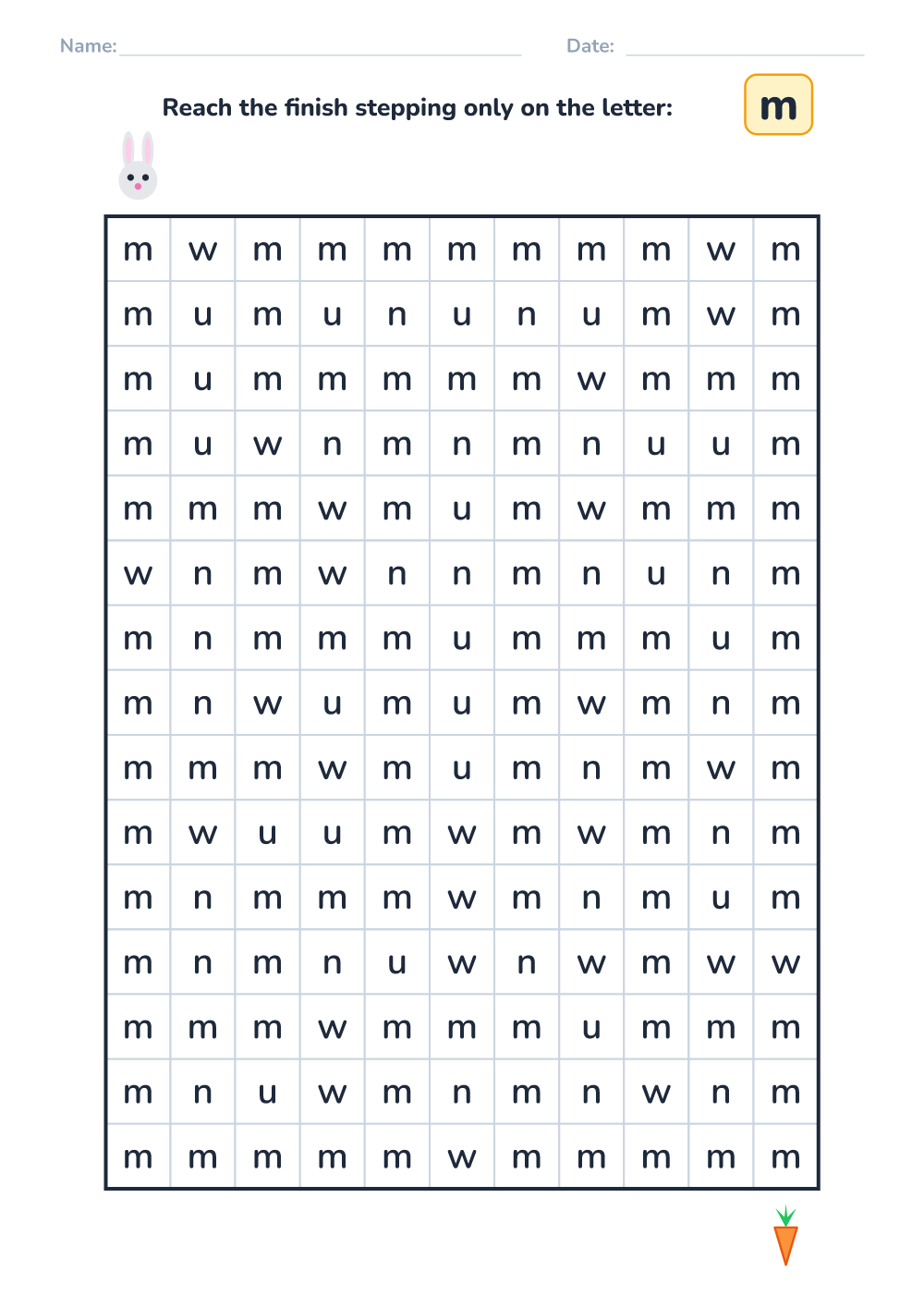
Letter maze m (hard) #770
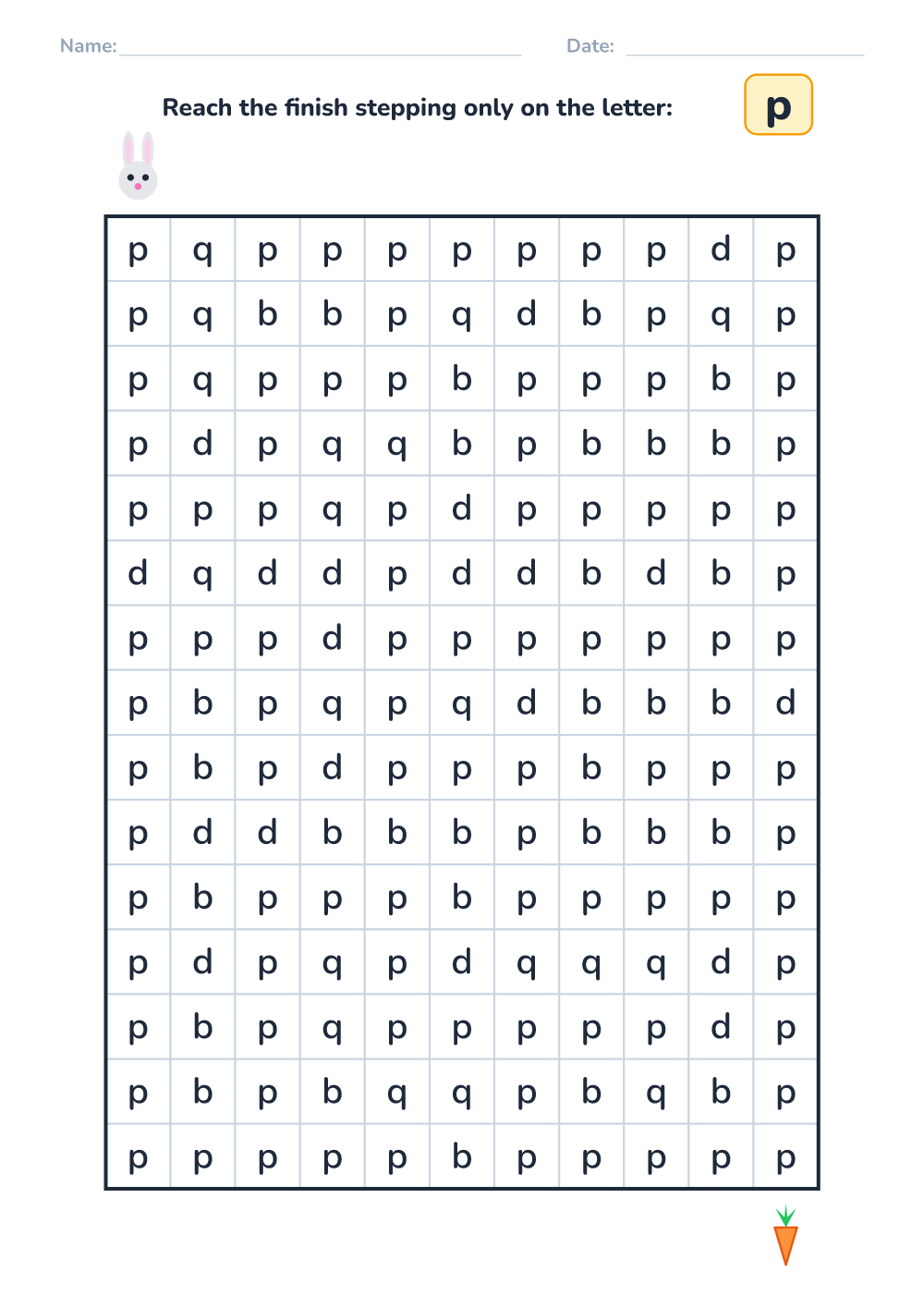
Letter maze p (hard) #637
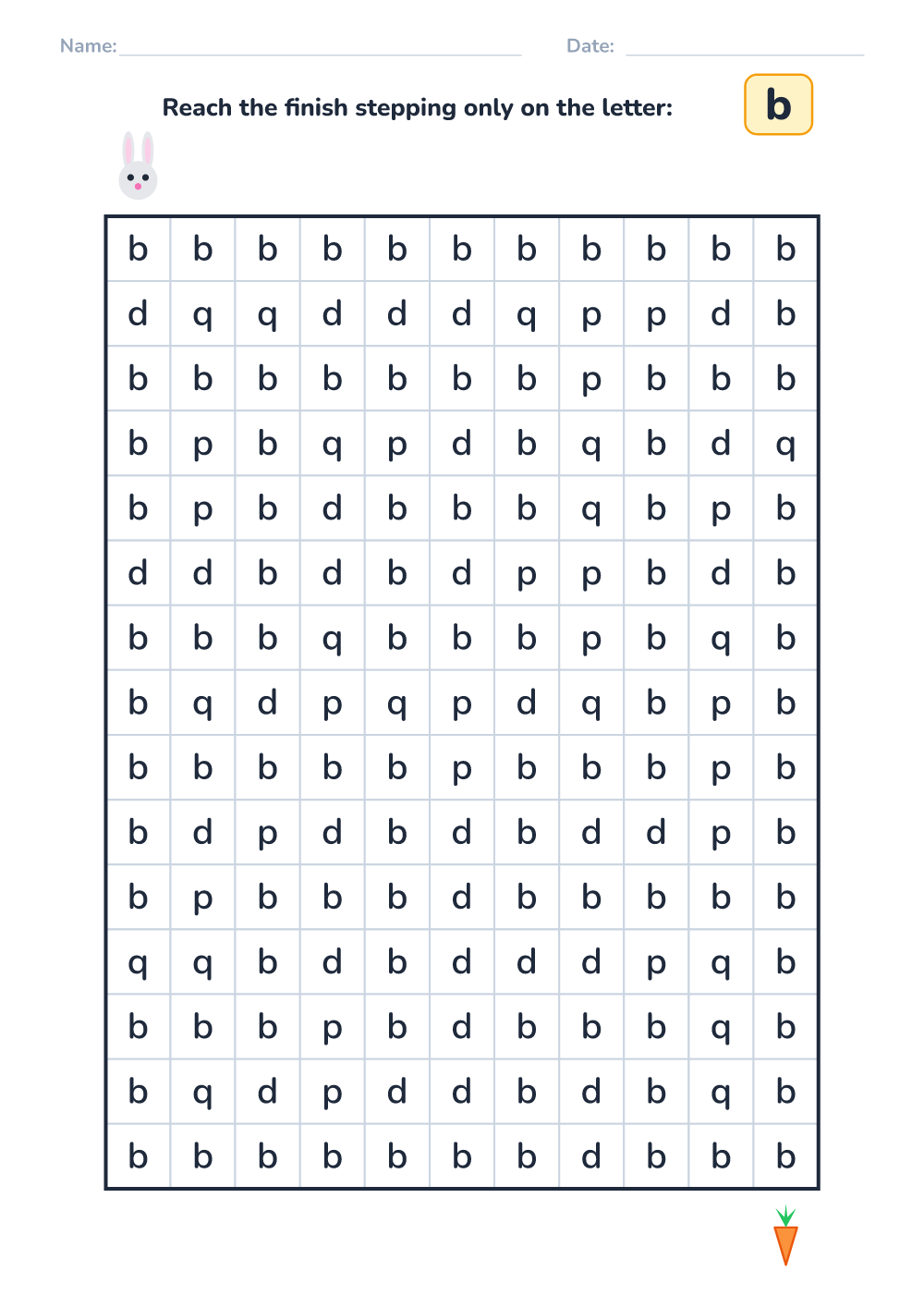
Letter maze b (hard) #608
More about Letter maze worksheets
Letter mazes are printable A4 pages where a child follows a path to find or connect letters, turning letter practice into a playful puzzle. The clear visual goal and immediate sense of completion make these sheets engaging and motivating for many kids.
Besides fun, letter mazes help build concentration, fine motor control and visual discrimination that supports reading and writing practice, while also encouraging planning and logical choices. All worksheets are free and formatted for A4 printing, useful at home or in class as a gentle complement to work with specialists.
Tips for parents & teachers
- 1Print at 100 percent on A4 and choose high contrast for clear letters
- 2Let the child trace the path with a finger first, then use a pencil to draw the route
- 3Use colored pencils or stickers as simple motivation
- 4Start with easy mazes and slowly increase similarity between letters
- 5Keep sessions short, around 5 to 15 minutes, to preserve focus
Frequently asked questions
What age are these suitable for?
They work well for preschoolers and early primary students, and can be adjusted to different skill levels.
Do I need special paper or printer settings?
No special supplies are needed beyond a regular printer and A4 paper; print at actual size for best results.
How can I help a child who is unsure where to start?
Show an example, have them trace the path with a finger, then let them try with a pencil while offering gentle encouragement.
Can these worksheets replace therapy?
They are practice materials meant to complement, not replace, work with specialists such as therapists or educational professionals.
When should I consult a specialist?
If letter recognition or reading difficulties persist despite regular practice or affect daily activities, consider seeking an assessment and advice from a specialist.