
Symmetry drawing worksheet
Draw the other half of a picture on a grid. Practises visual-motor coordination, spatial orientation and motor planning. A4.
Level
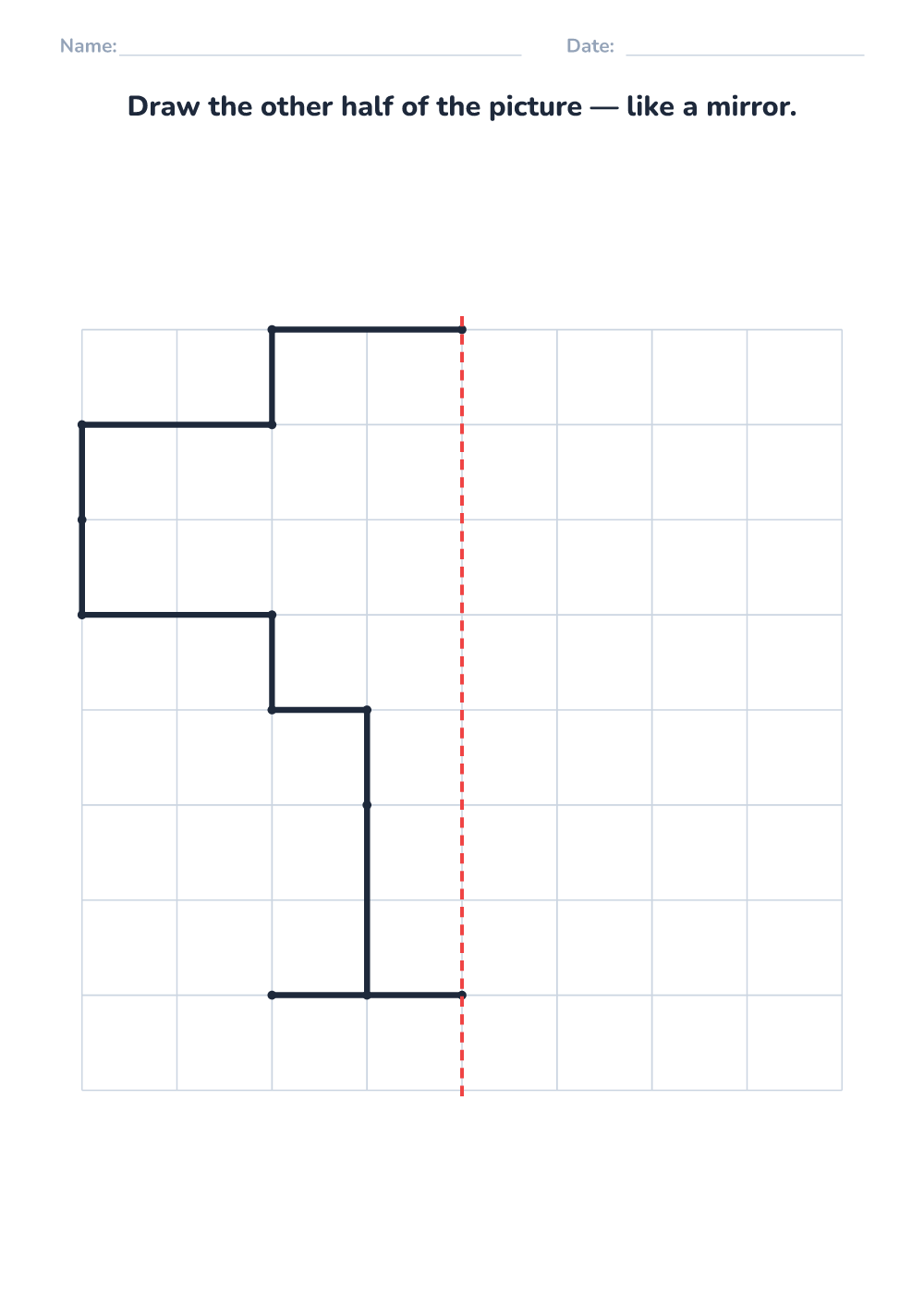
Symmetry drawing worksheet (easy) #54
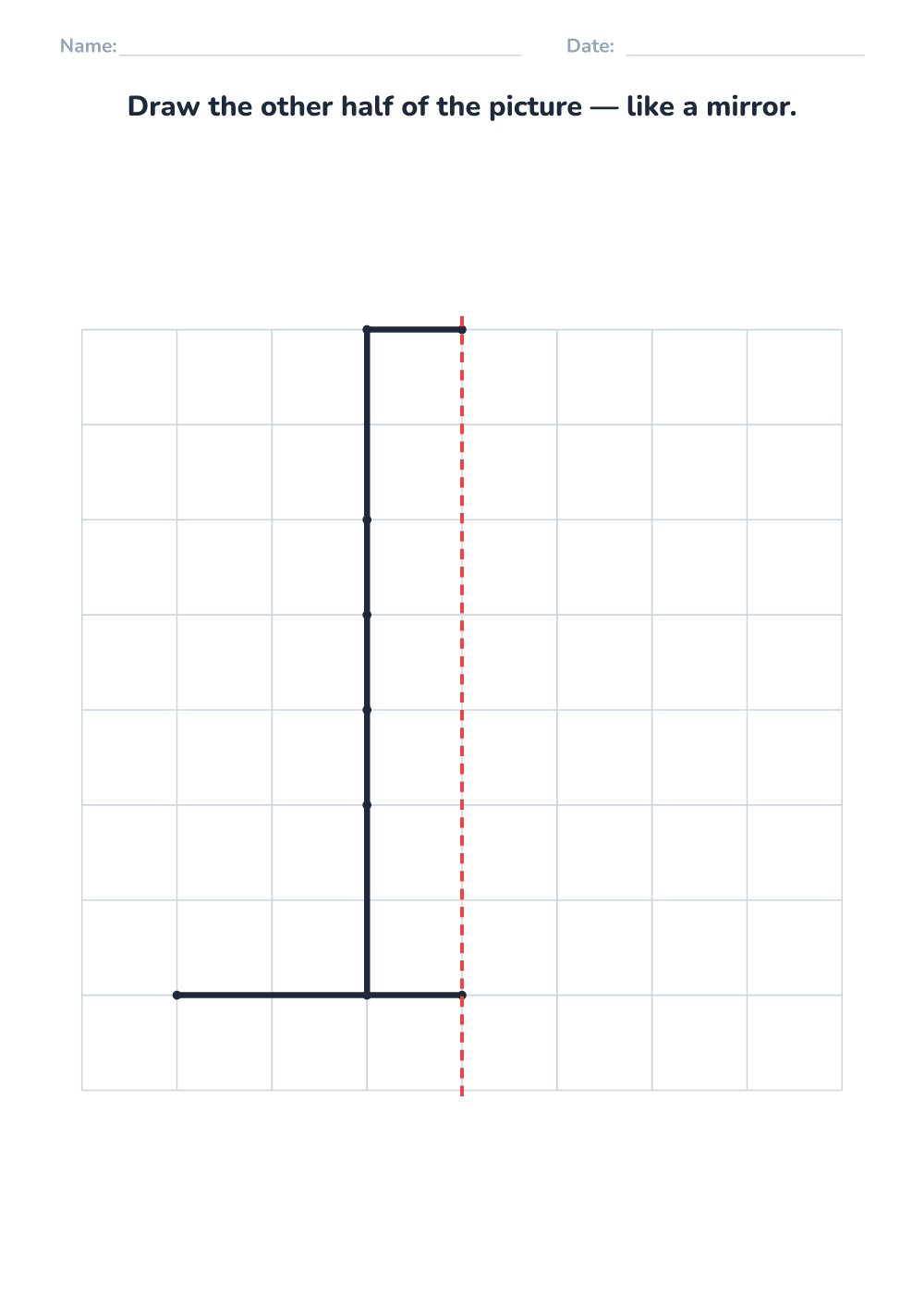
Symmetry drawing worksheet (easy) #651
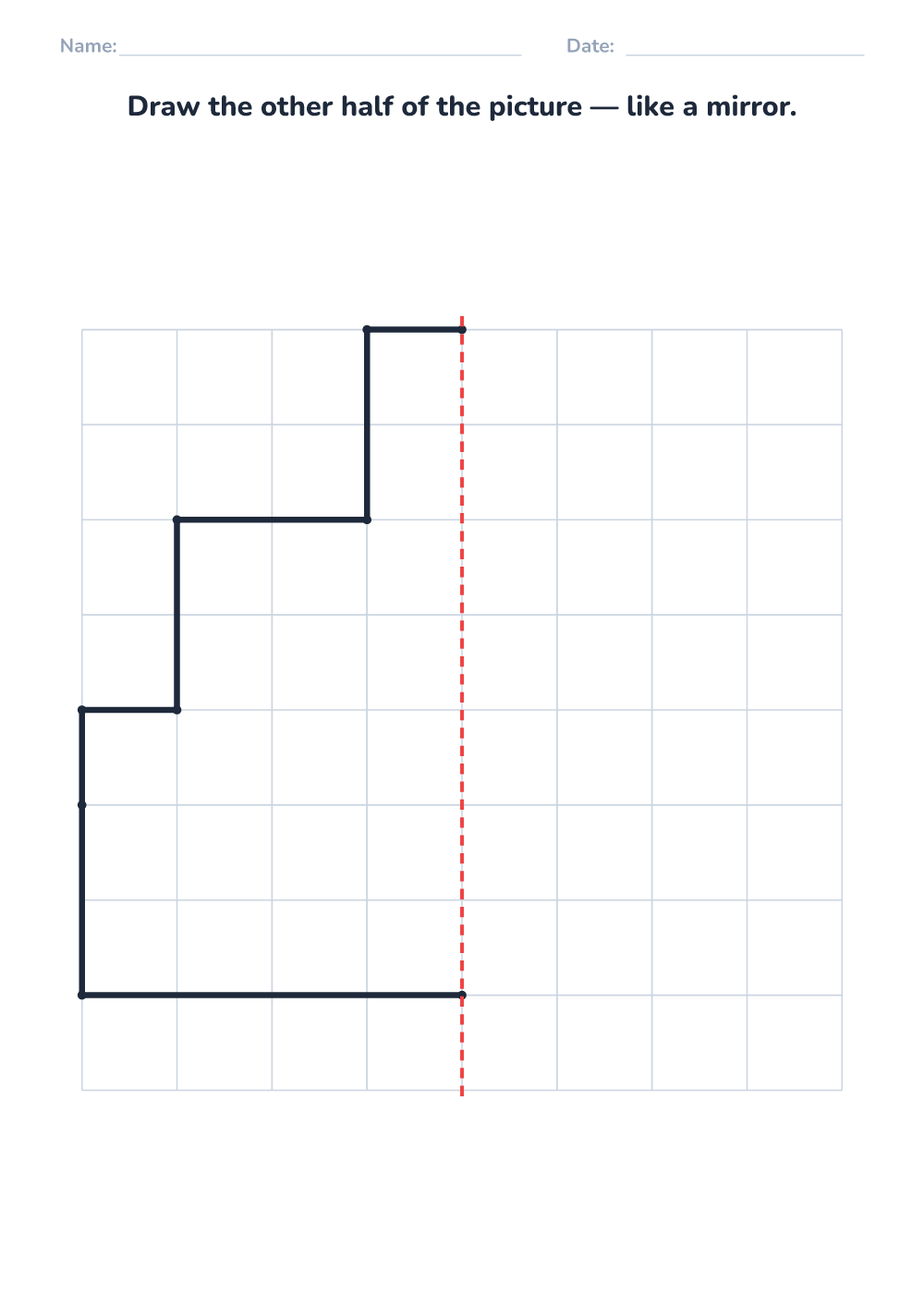
Symmetry drawing worksheet (easy) #214
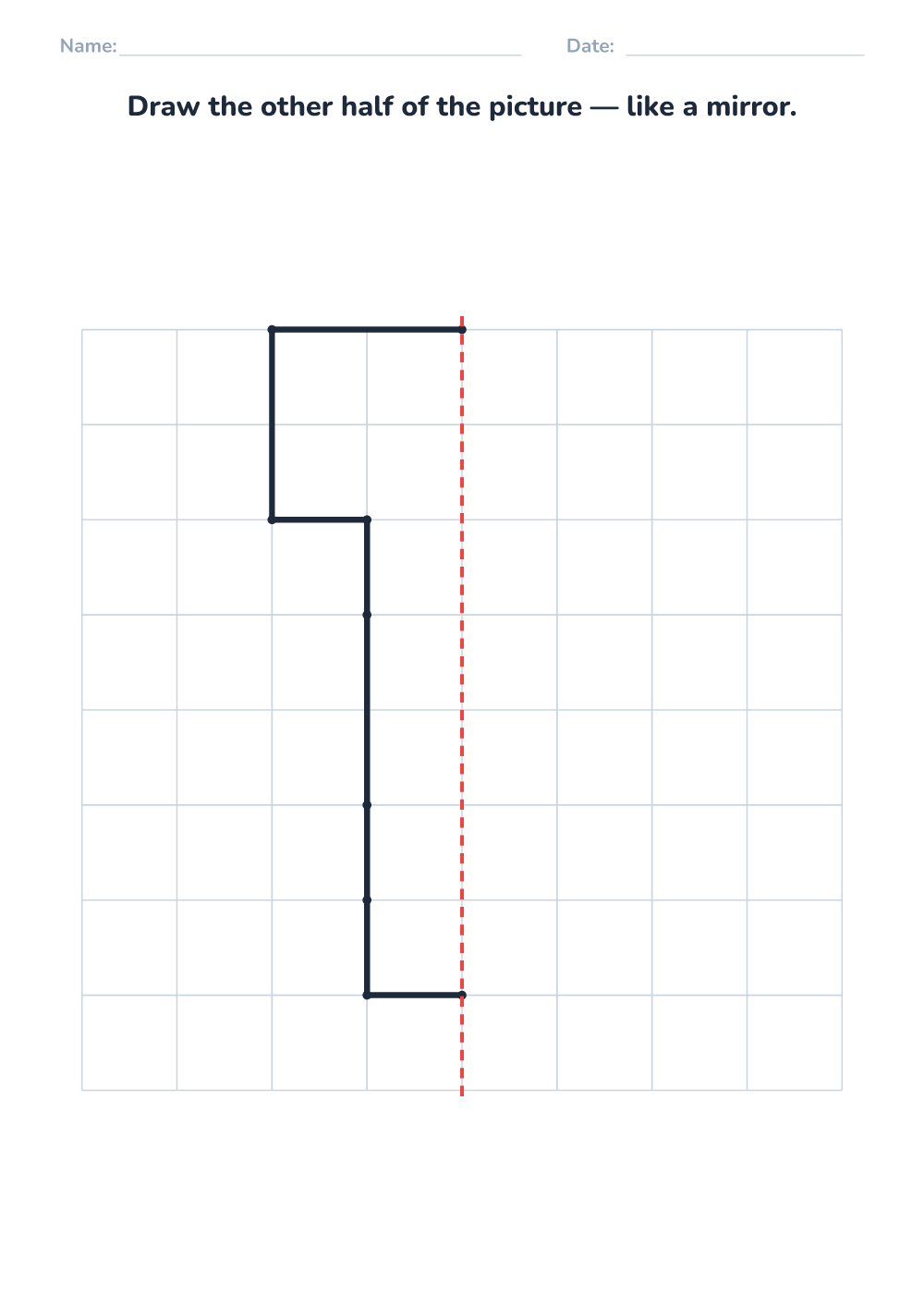
Symmetry drawing worksheet (easy) #668
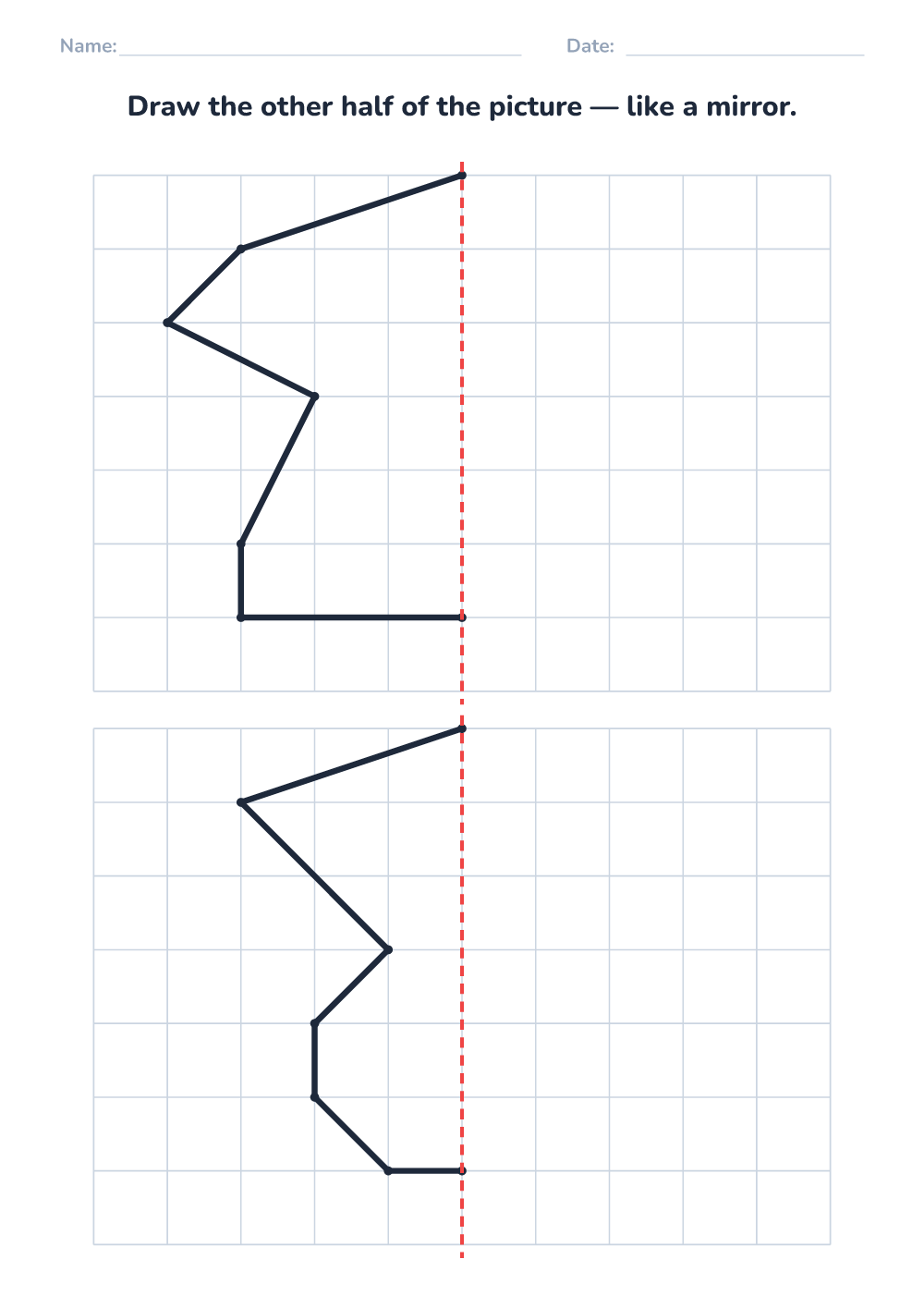
Symmetry drawing worksheet (medium) #850
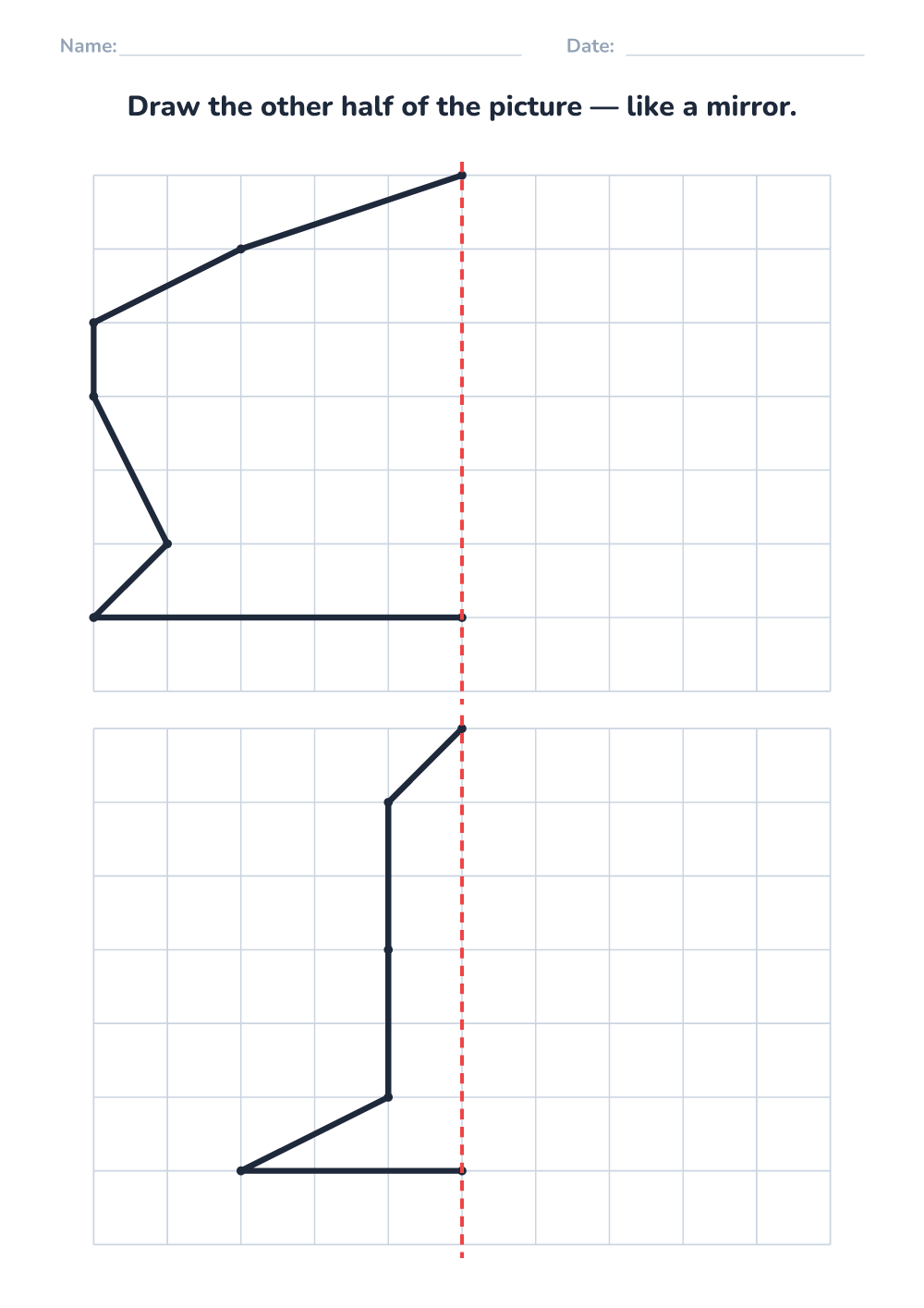
Symmetry drawing worksheet (medium) #477
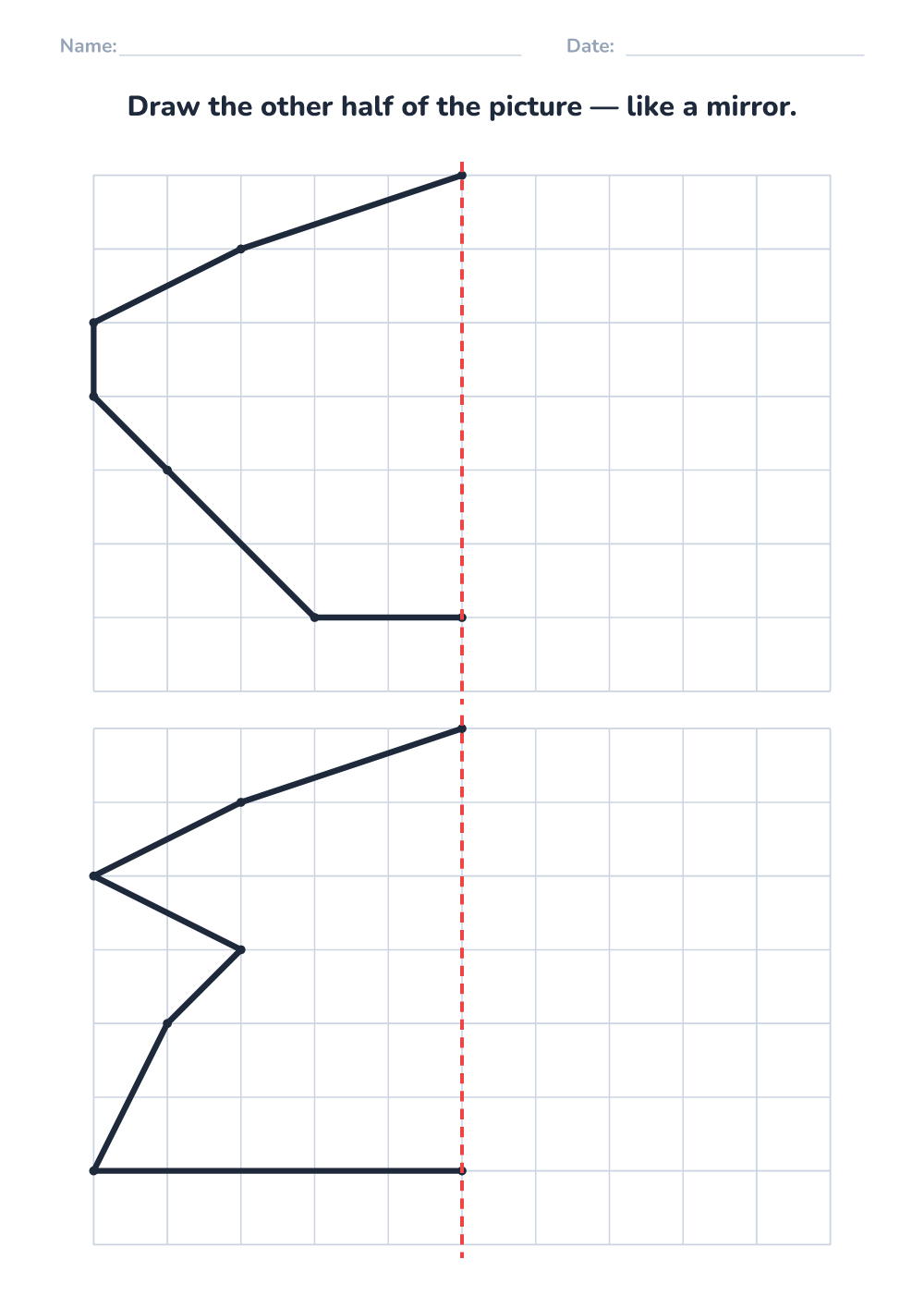
Symmetry drawing worksheet (medium) #149
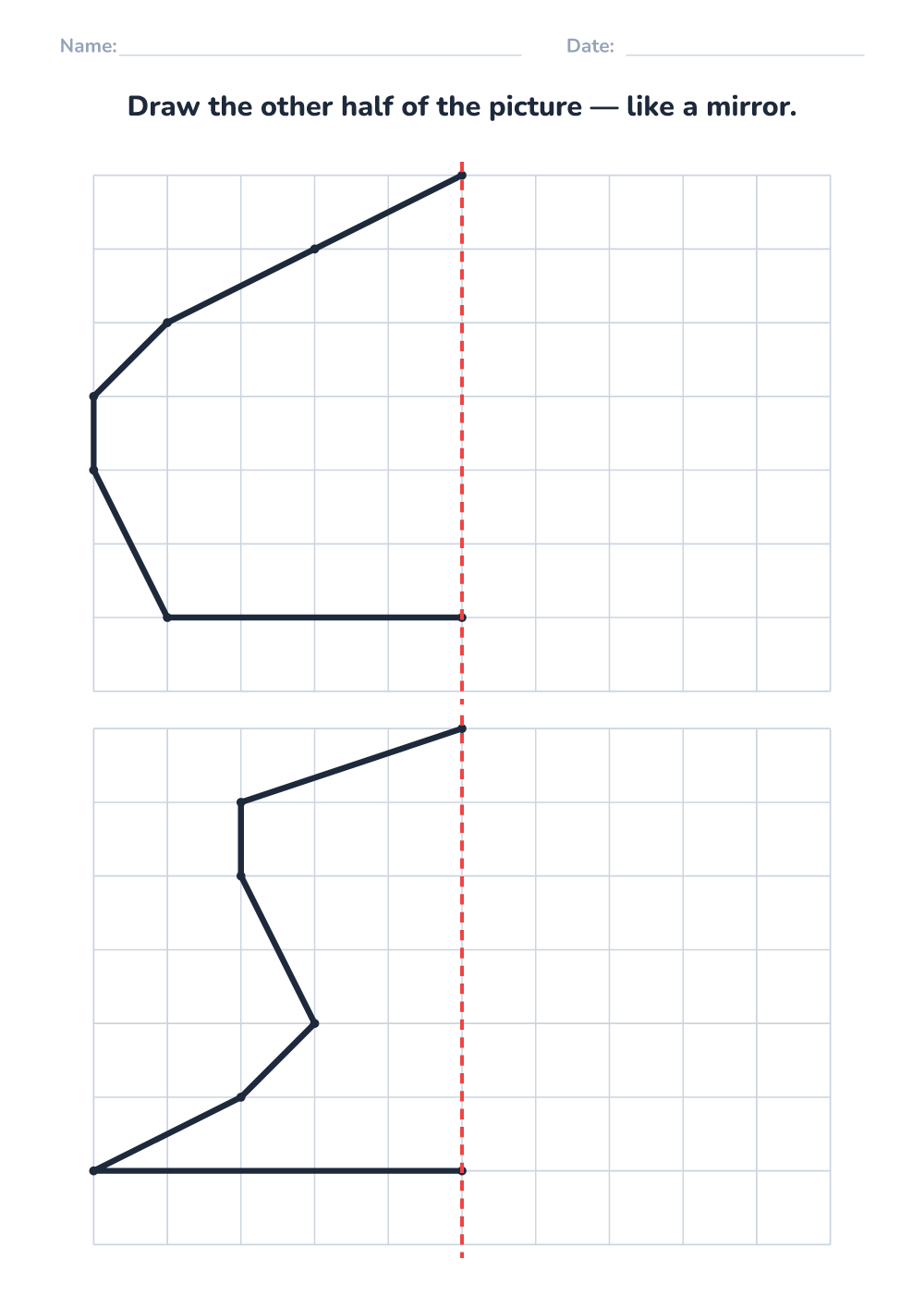
Symmetry drawing worksheet (medium) #736
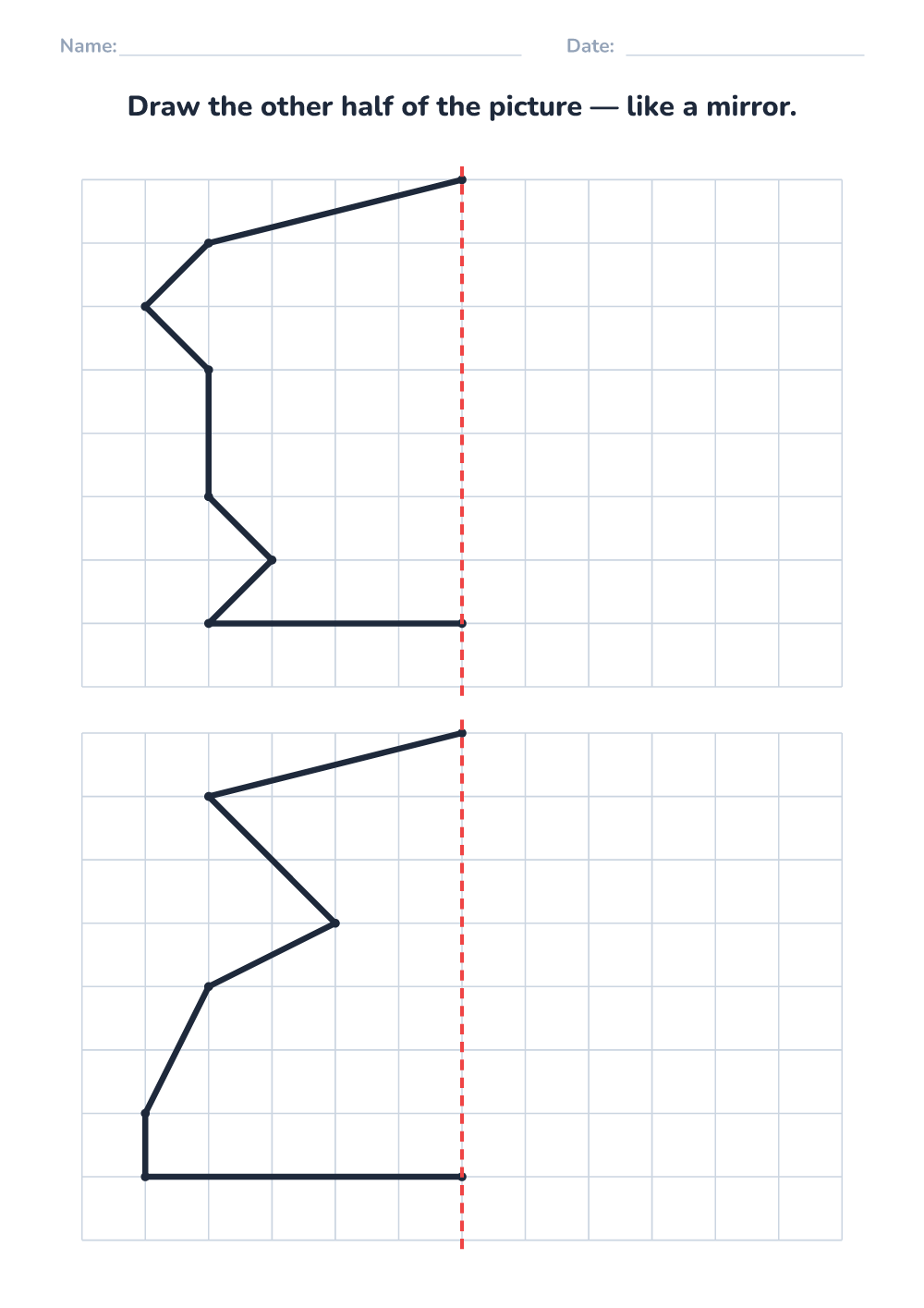
Symmetry drawing worksheet (hard) #240
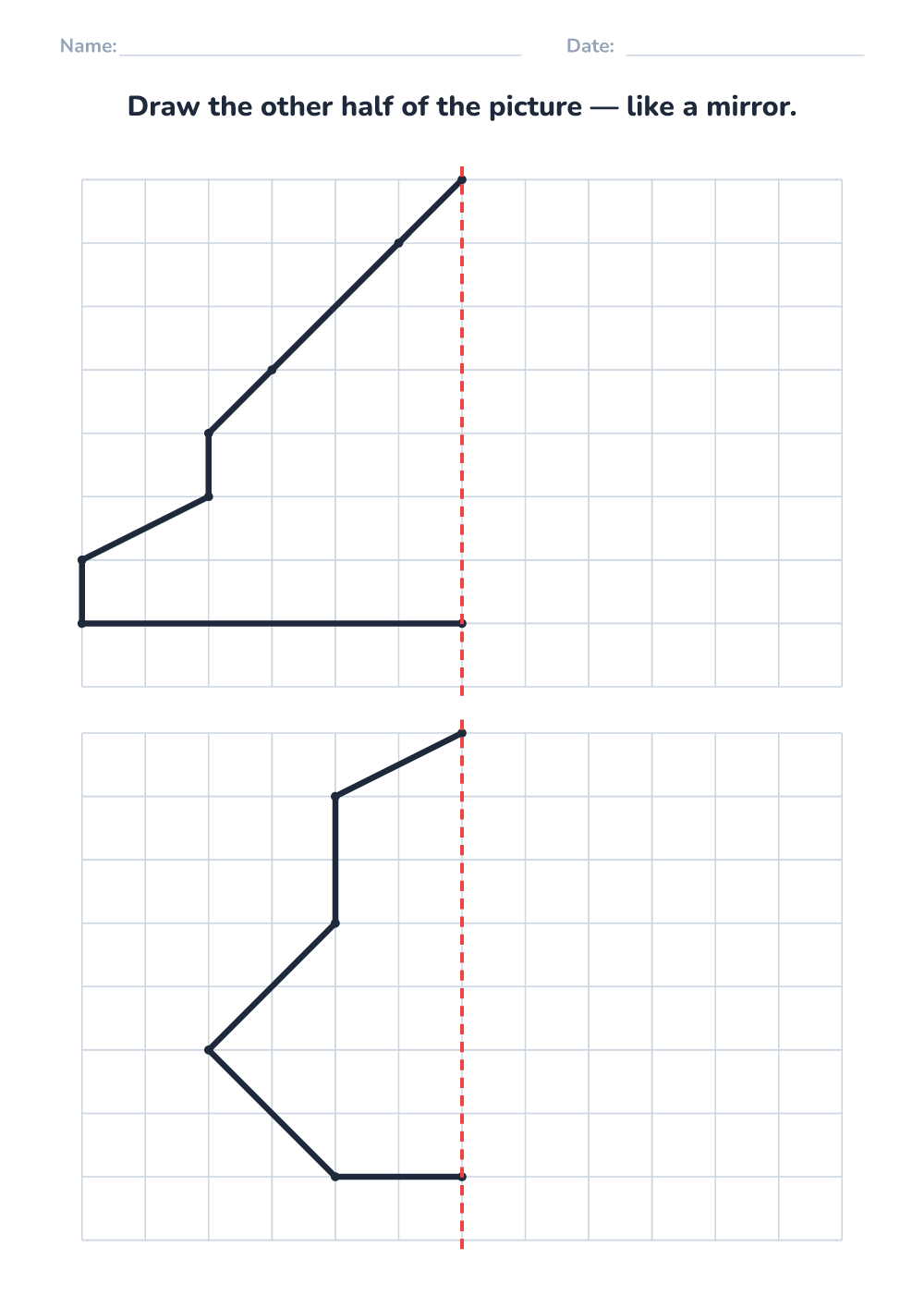
Symmetry drawing worksheet (hard) #282
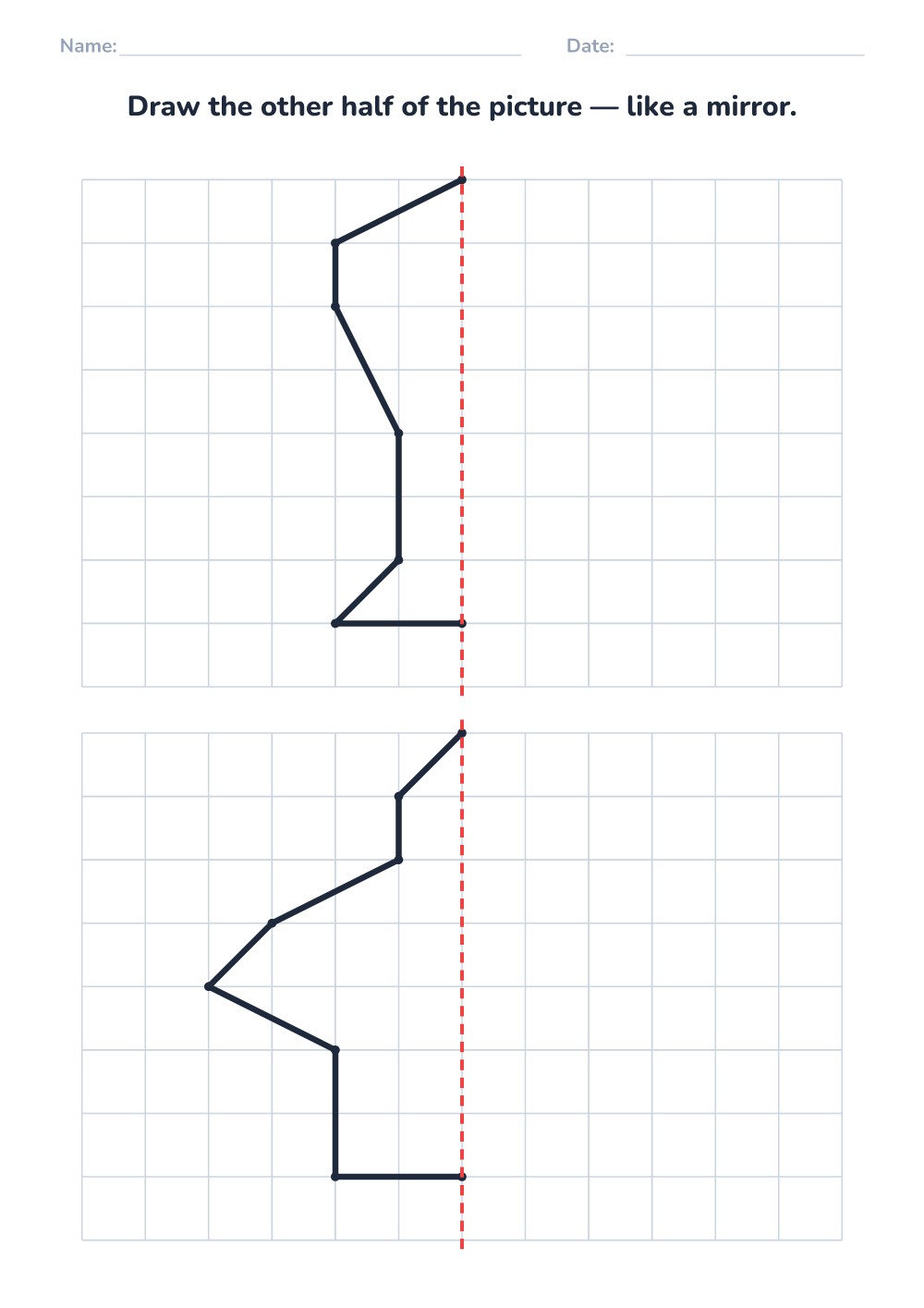
Symmetry drawing worksheet (hard) #396
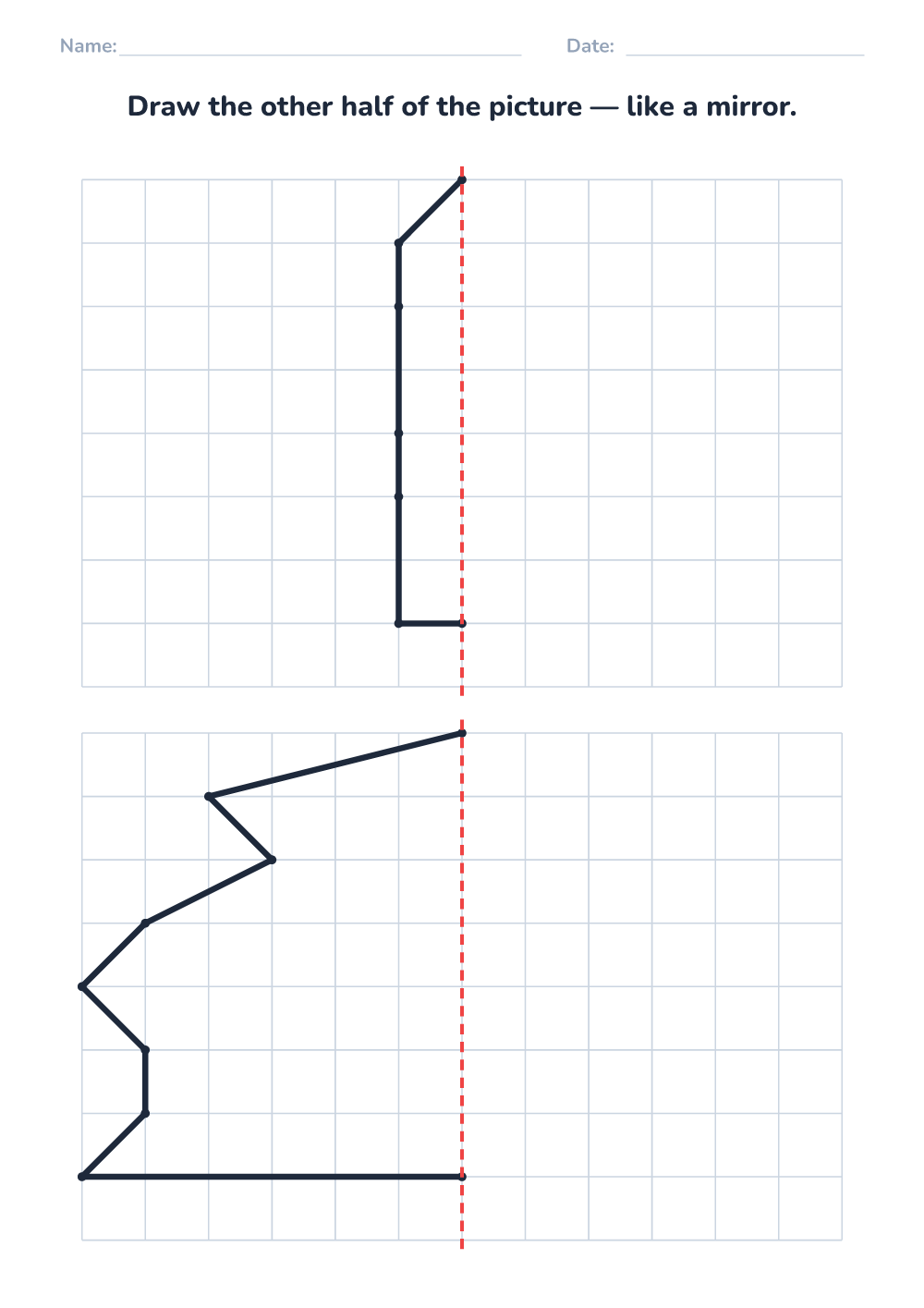
Symmetry drawing worksheet (hard) #458
More about Symmetry drawing worksheet worksheets
These symmetry drawing grid worksheets invite children to finish the missing half of pictures on a square grid, from simple shapes to more detailed scenes. The tasks feel like small drawing puzzles, which many kids enjoy because they blend creativity with problem solving.
Working on symmetry supports concentration, fine motor control and visual logic as children compare lines and mirror shapes. All sheets are free to download and ready to print on A4, and they can support children with special educational needs as practice material that complements, not replaces, work with therapists or teachers.
Tips for parents & teachers
- 1Set your printer to A4 and print at 100% or no scaling for correct grid proportions.
- 2Start with an easy page and demonstrate where the center and axis of symmetry are.
- 3Provide a soft pencil and eraser so the child can correct lines without frustration.
- 4Use these sheets as short focus activities or warm-ups before other tasks.
- 5Increase difficulty gradually by reducing square size or adding more complex shapes.
Frequently asked questions
What age are these worksheets for?
They suit preschool and early primary children, and the different difficulty levels let you adapt to individual skill levels.
How do I print correctly on A4?
Download the PDF and choose A4 paper with 100% scaling or fit-to-page off to preserve the grid size.
My child struggles with mirroring, how can I adapt?
Try simpler patterns, trace the existing half first, or guide the child's hand for the first few strokes to build confidence.
Are these materials free to use?
Yes, all worksheets on the site are free to download and print for home and classroom use.
When should I consult a specialist?
If you notice persistent difficulty with fine motor skills, sustained attention, or visual processing, talk to your child’s teacher and consider consulting a specialist to explore tailored support.