
Letter sequence matching
Compare letter strings and pick the identical one. Practises visual analysis, attention to letter order and observation. A4.
Level
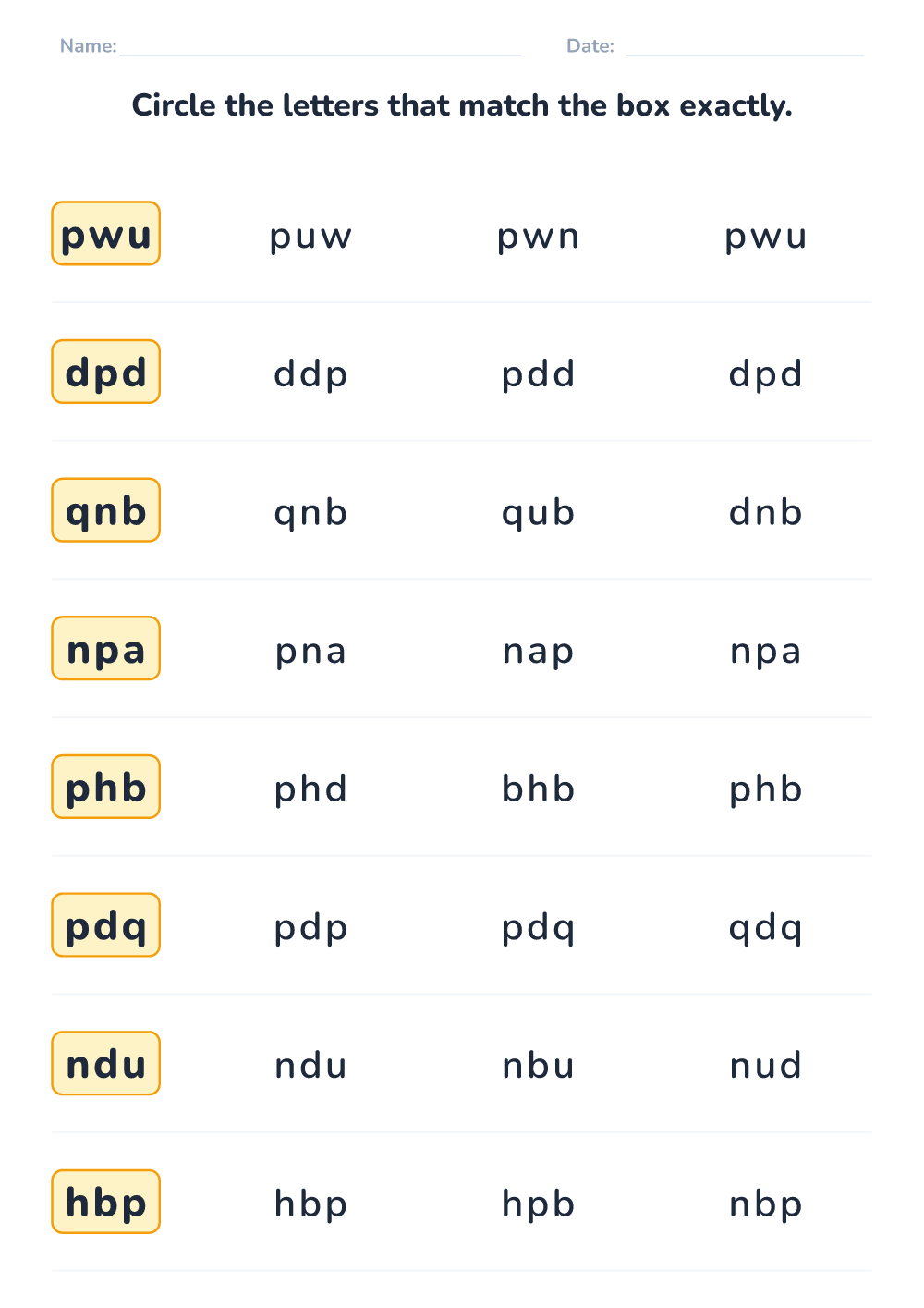
Letter sequence matching (easy) #778
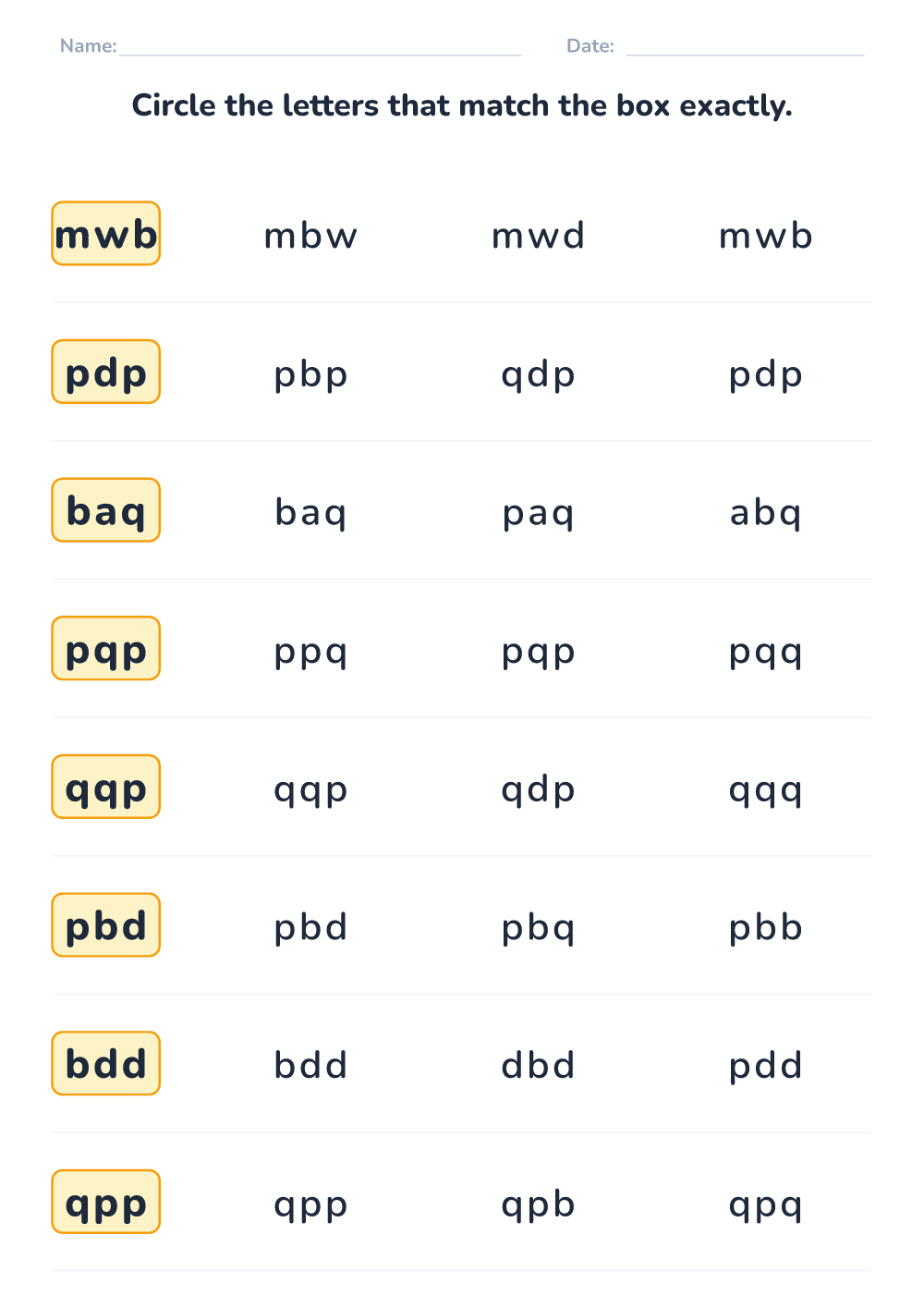
Letter sequence matching (easy) #807
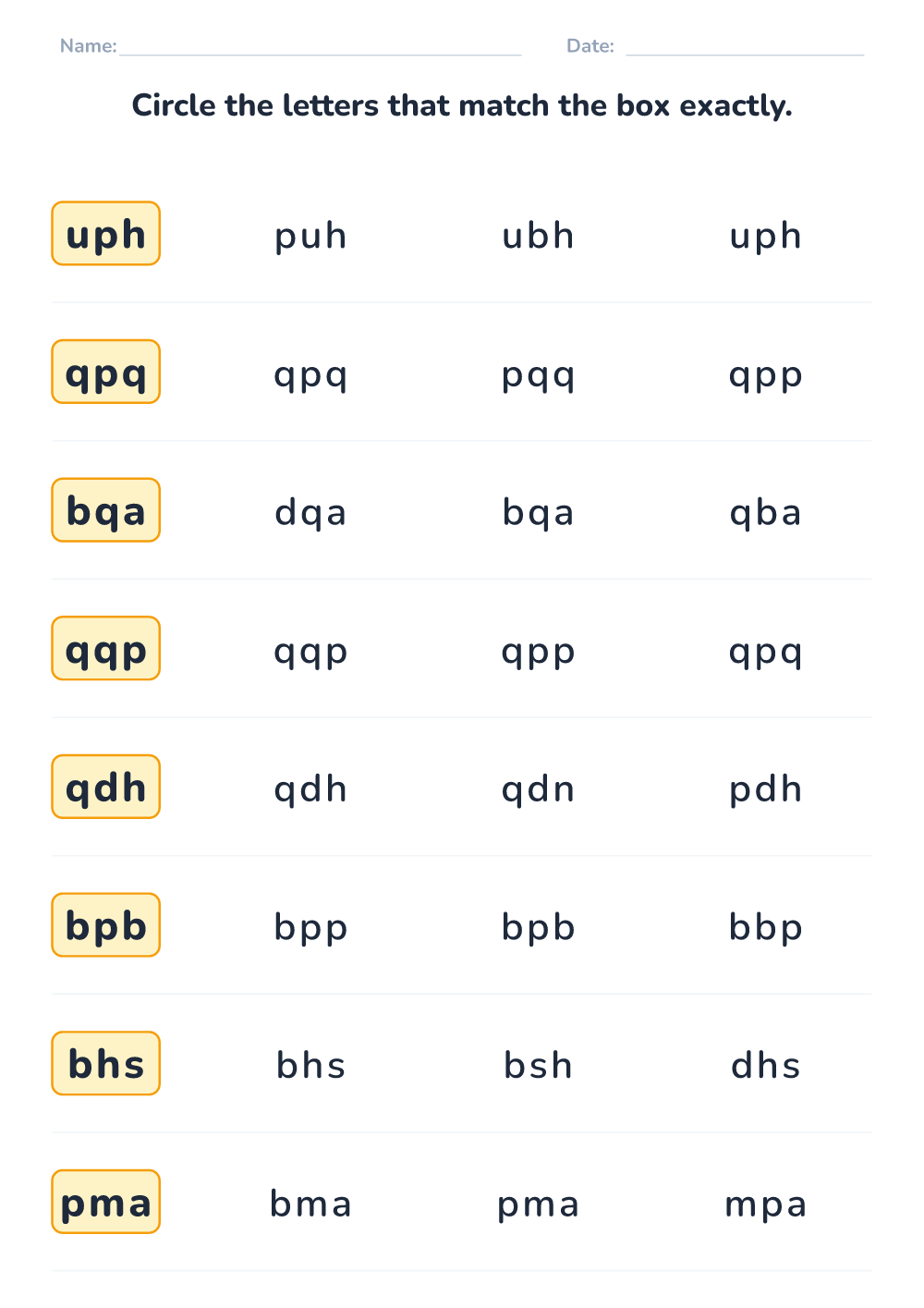
Letter sequence matching (easy) #785
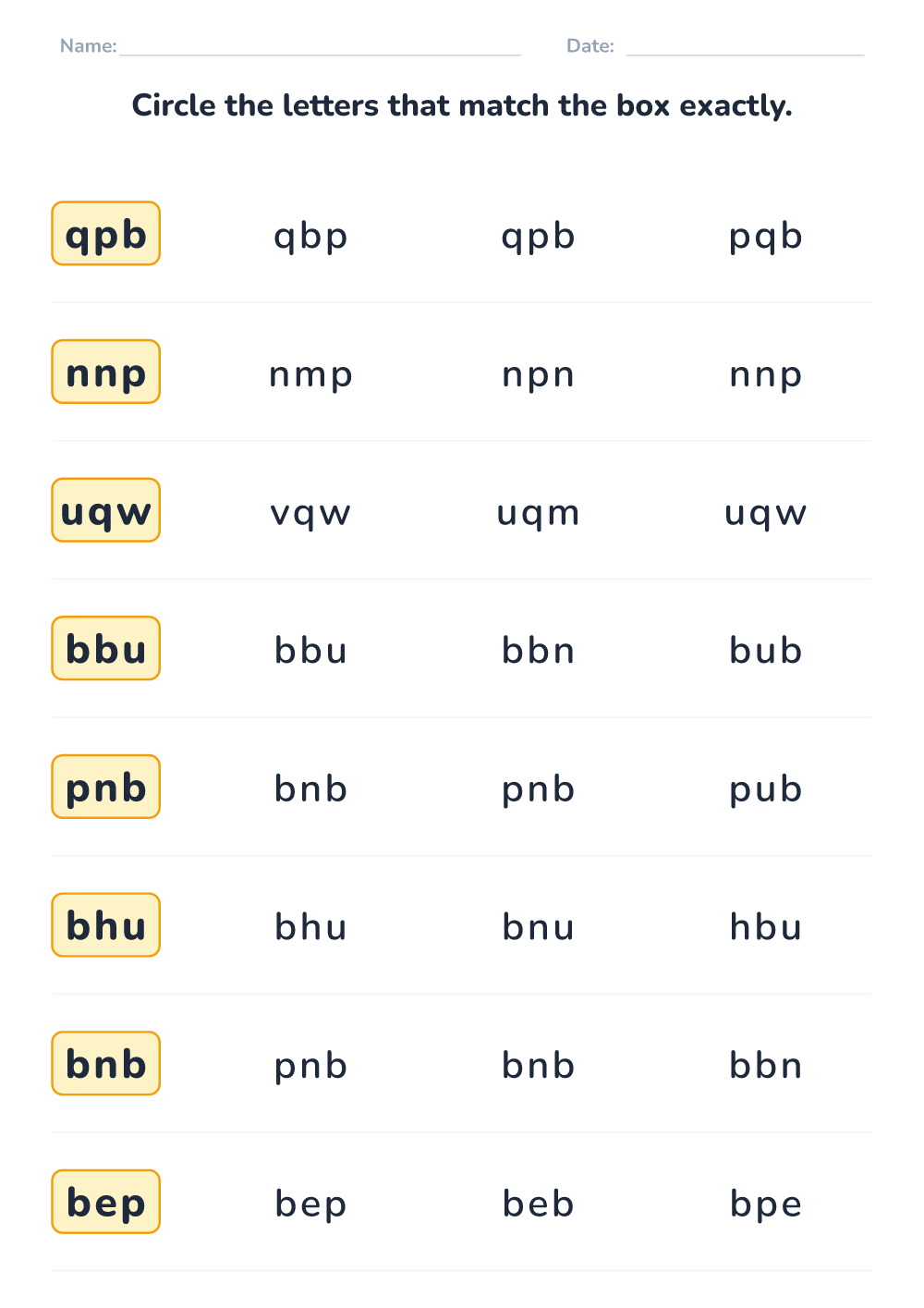
Letter sequence matching (easy) #209
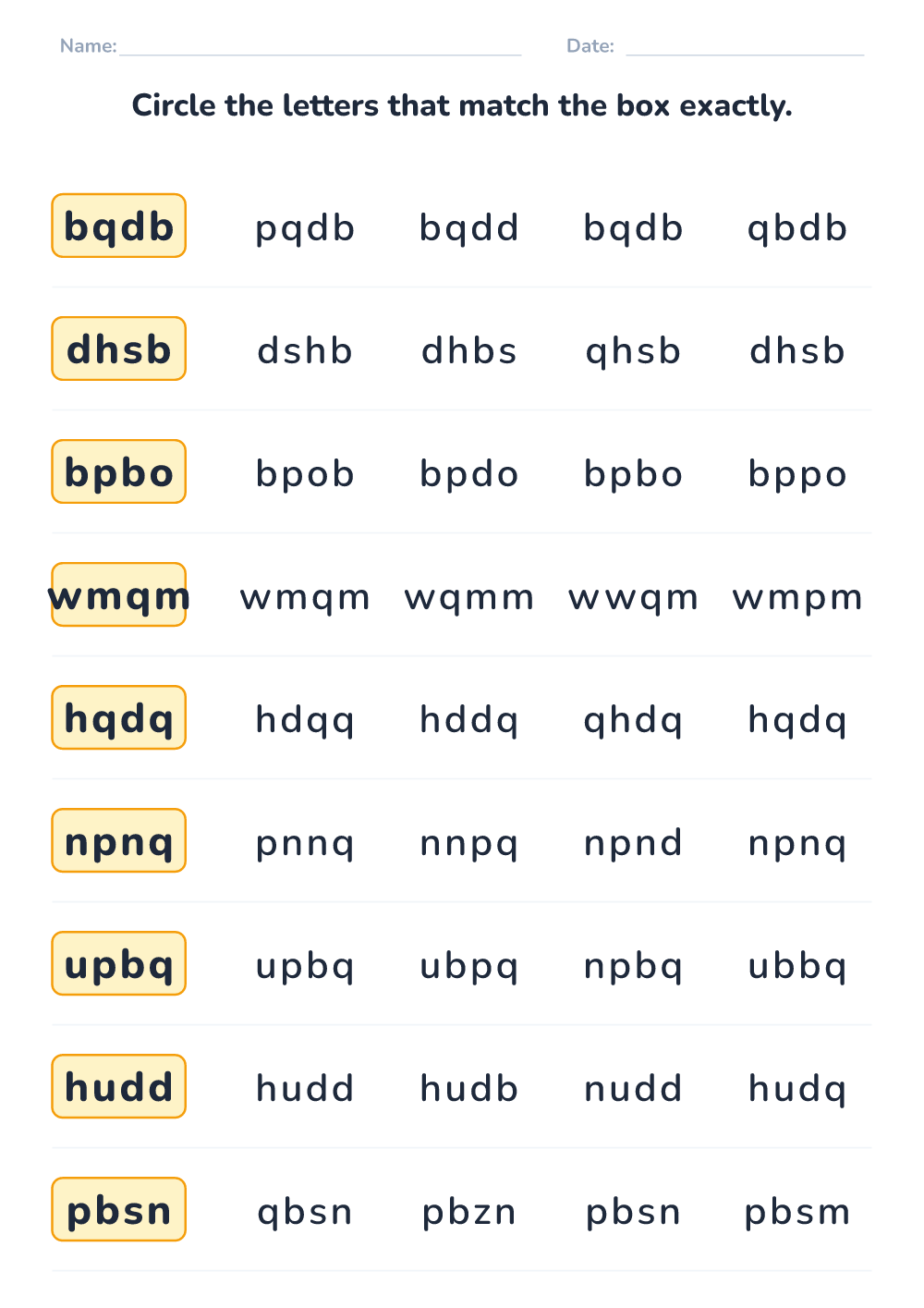
Letter sequence matching (medium) #498
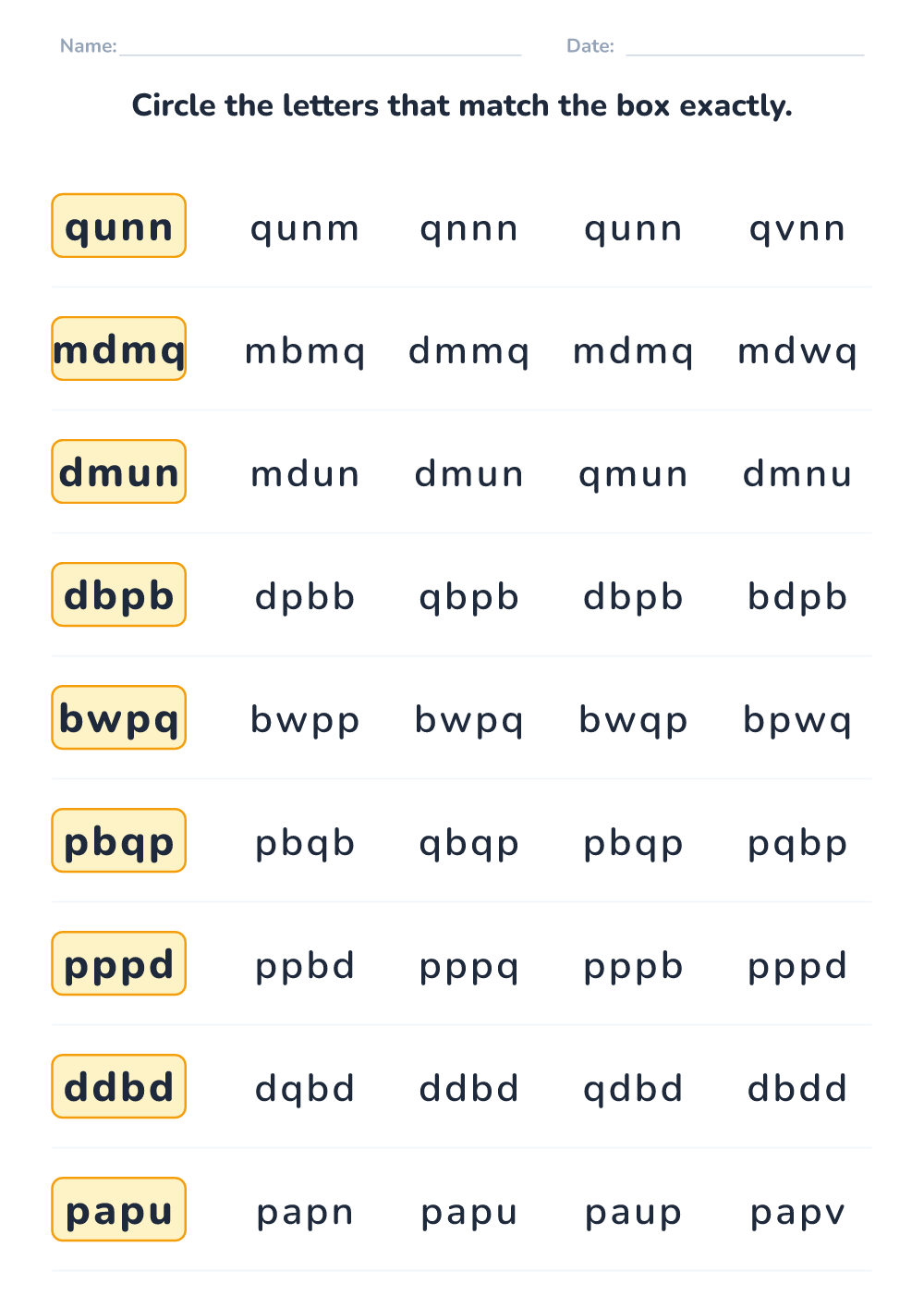
Letter sequence matching (medium) #35
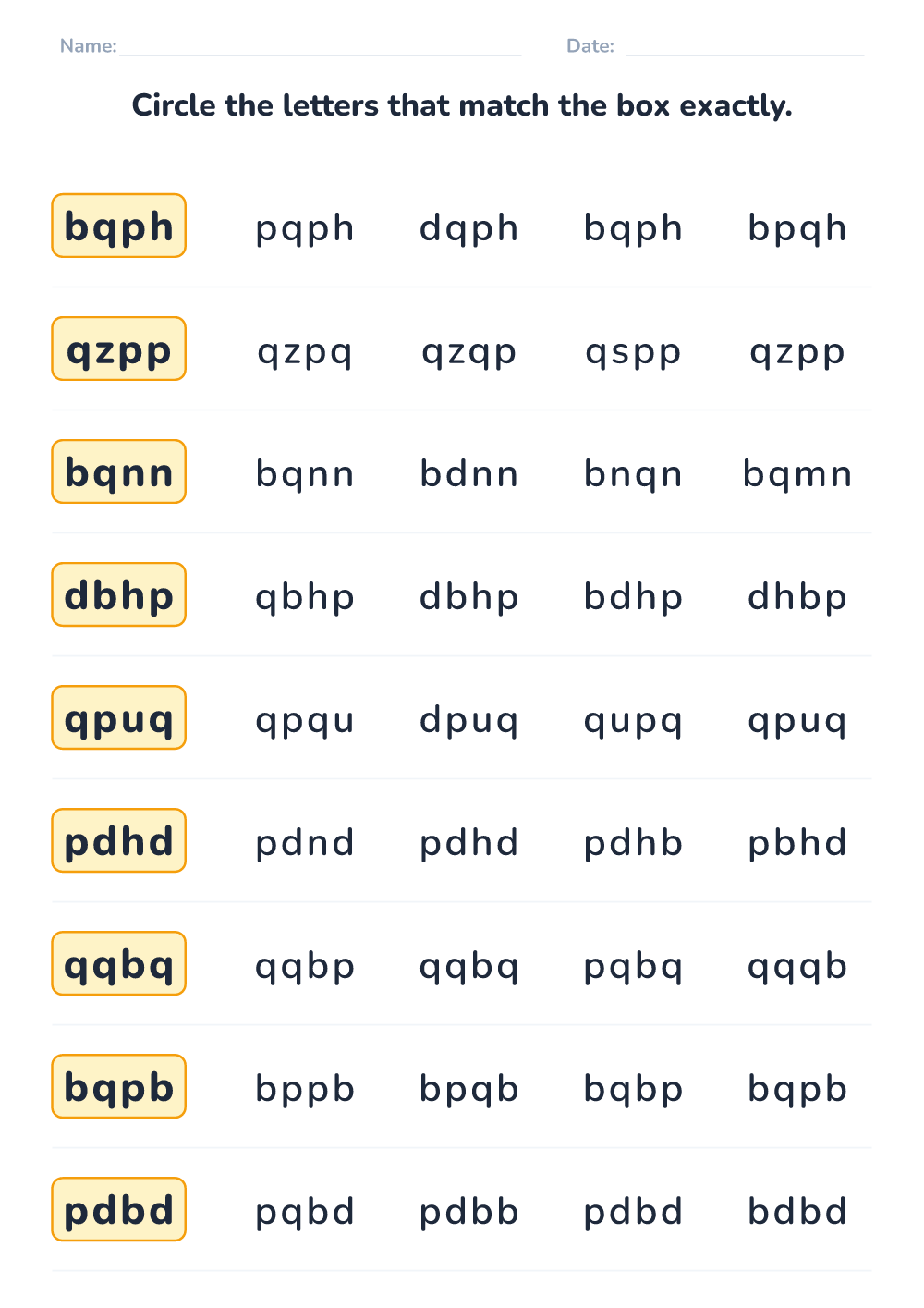
Letter sequence matching (medium) #500
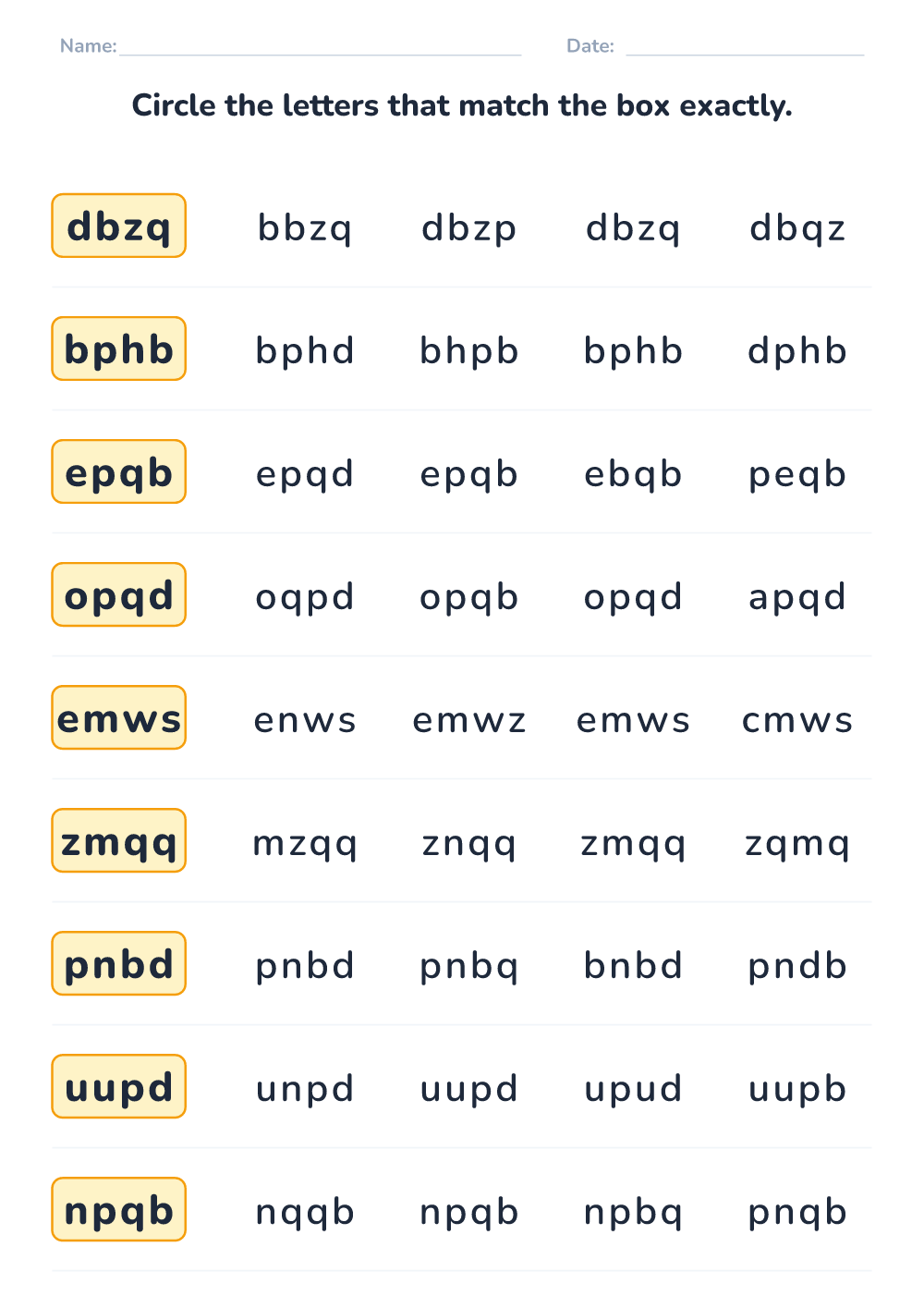
Letter sequence matching (medium) #726
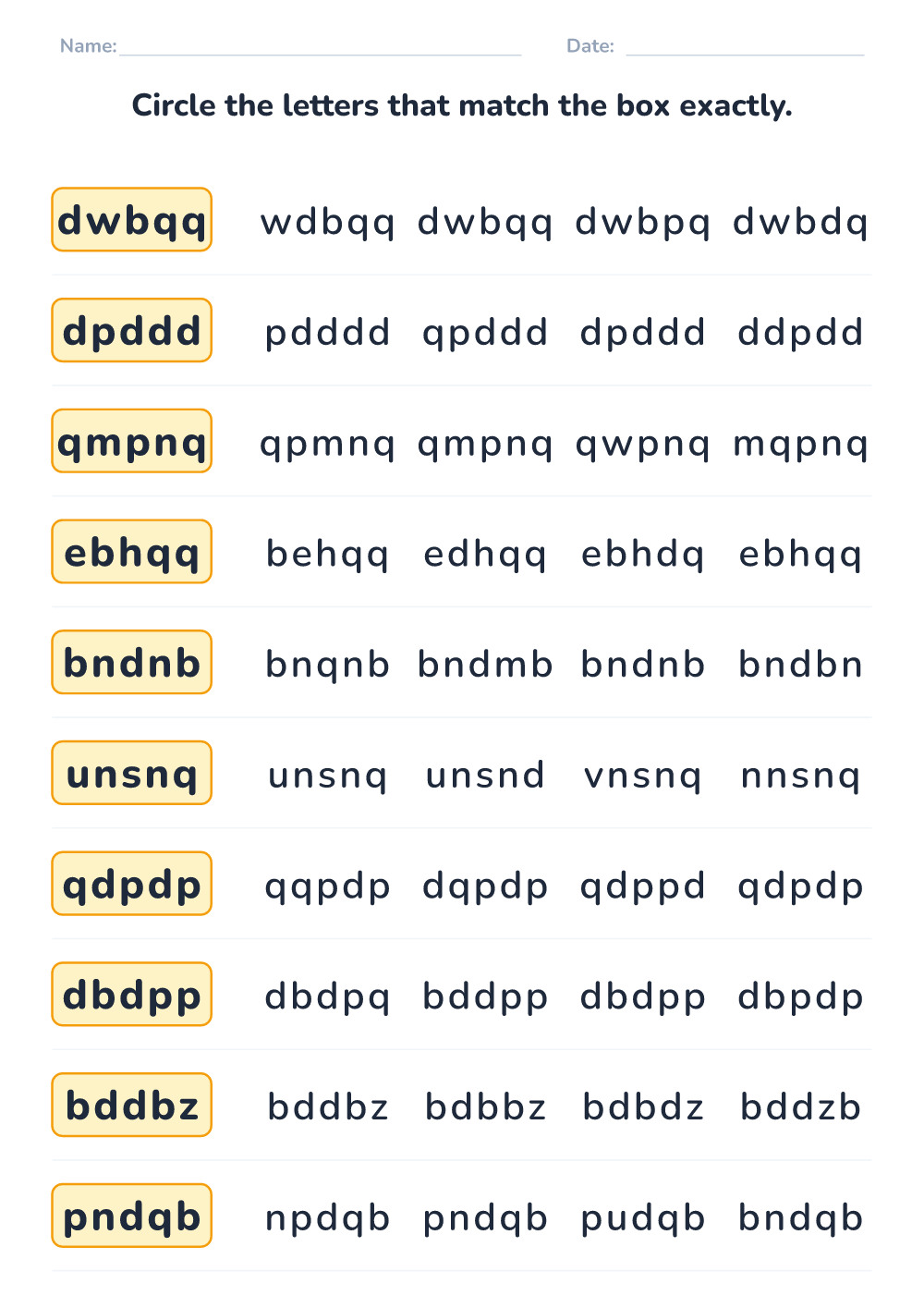
Letter sequence matching (hard) #709
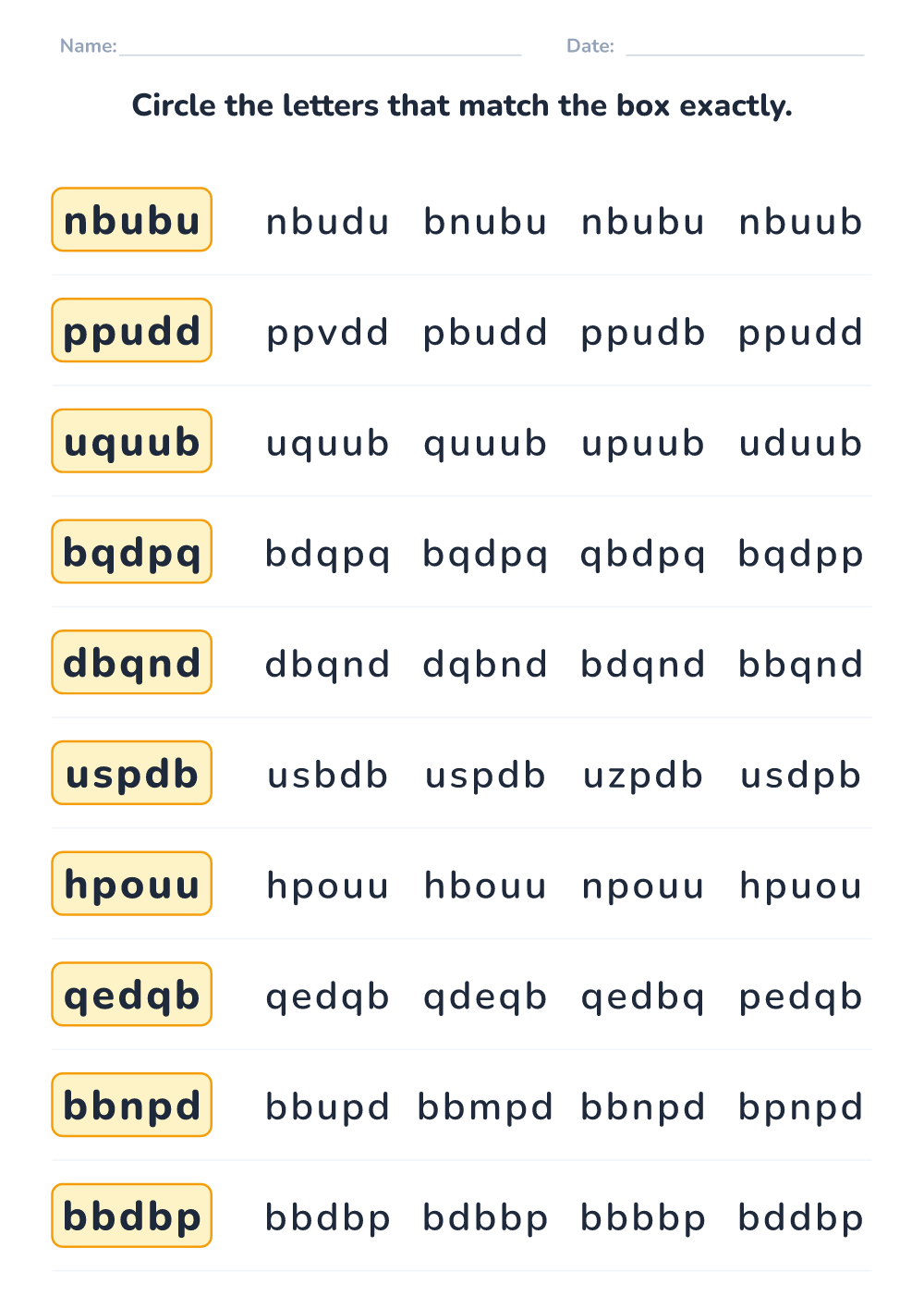
Letter sequence matching (hard) #580
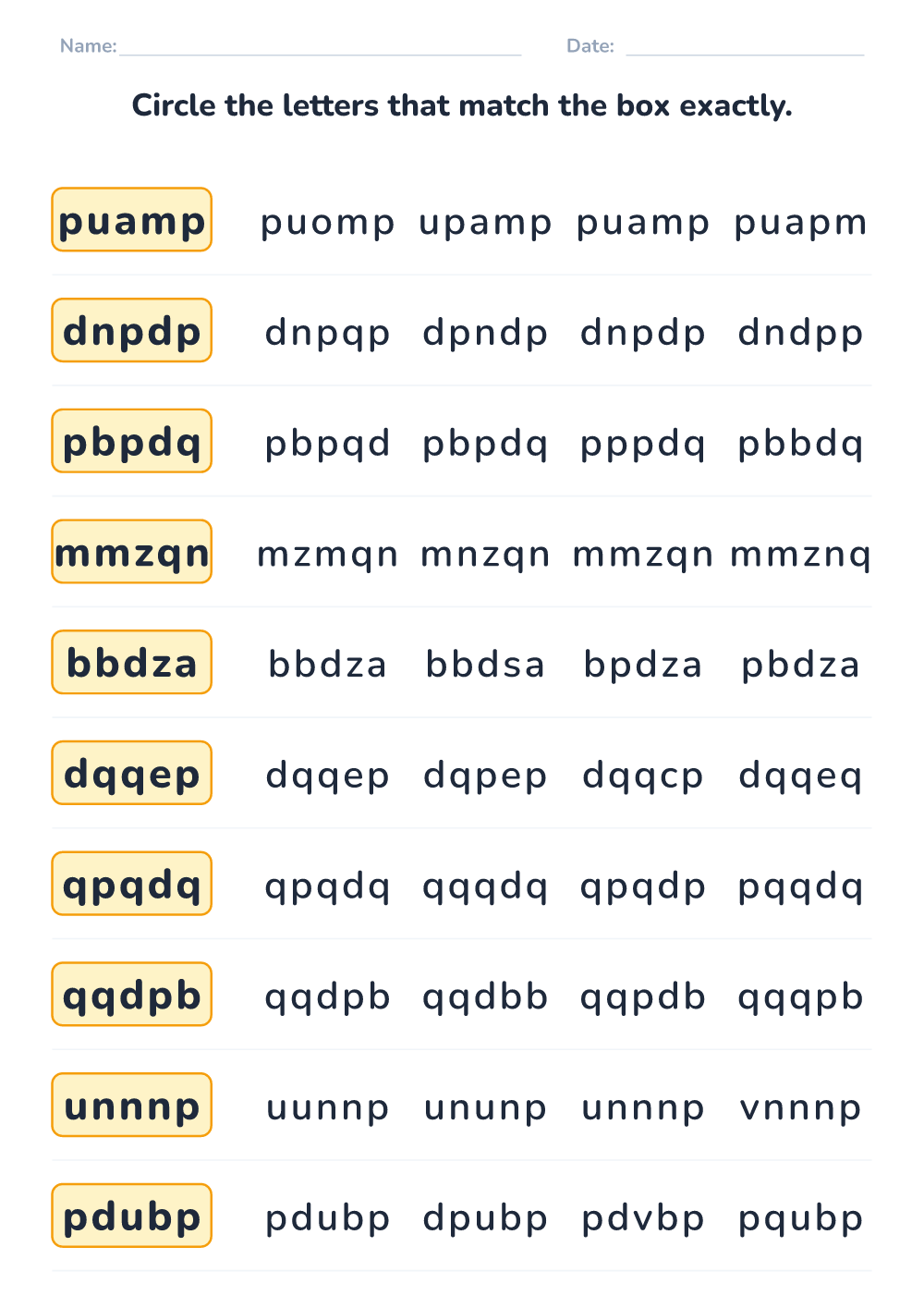
Letter sequence matching (hard) #256
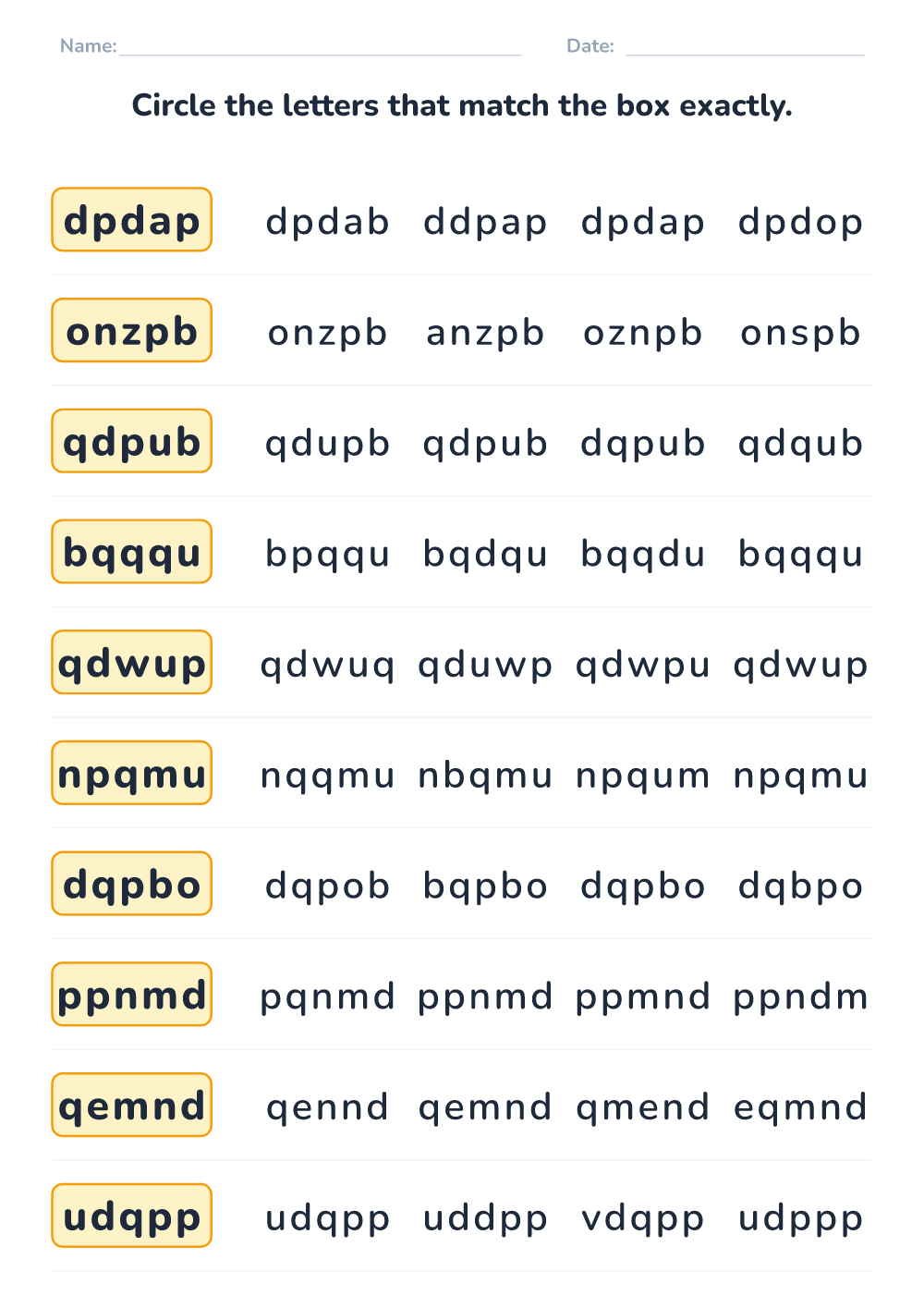
Letter sequence matching (hard) #939
Tips for parents & teachers
- 1Encourage the child to compare letters one by one, pointing with a finger.
- 2Reading the string aloud letter by letter helps notice swapped letters.
- 3At harder levels, cover the model to practise visual memory.
Frequently asked questions
Will these worksheets help with dyslexia?
They are extra practice for visual perception and letter discrimination. The best results come from regular work planned with a teacher or specialist.
Why does my child mix up b and d?
These letters differ only in direction. Such mistakes are common until about age 7–8; if they persist or come with other reading and writing difficulties, ask your school about an assessment.
How often should we practise?
Little and often: 5–10 minutes a few times a week works better than long, tiring sessions.