
Which is more?
Compare amounts and numbers: circle the bigger group or write >, < or =. Answer key included. A4.
Level
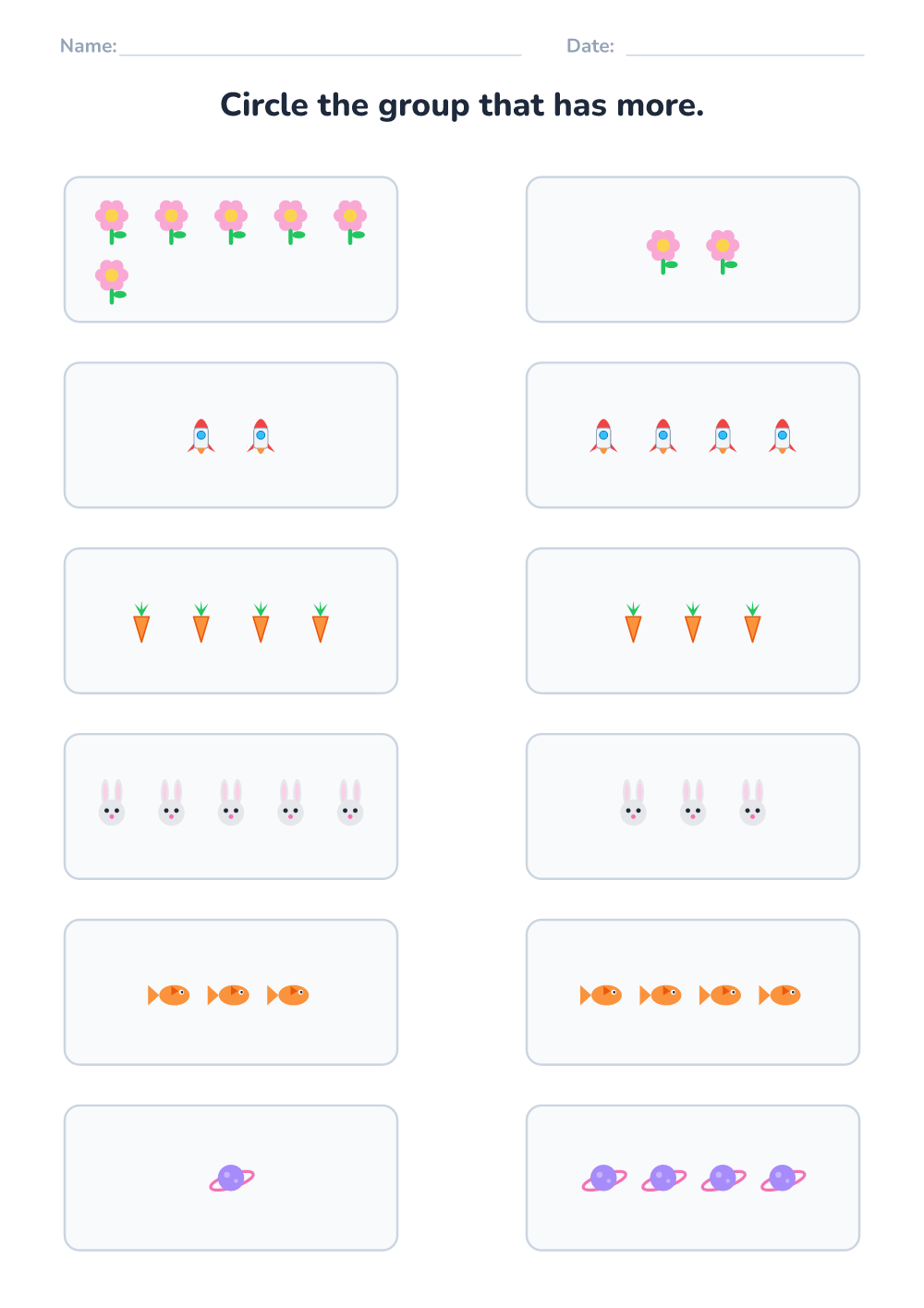
Which is more? (easy) #118
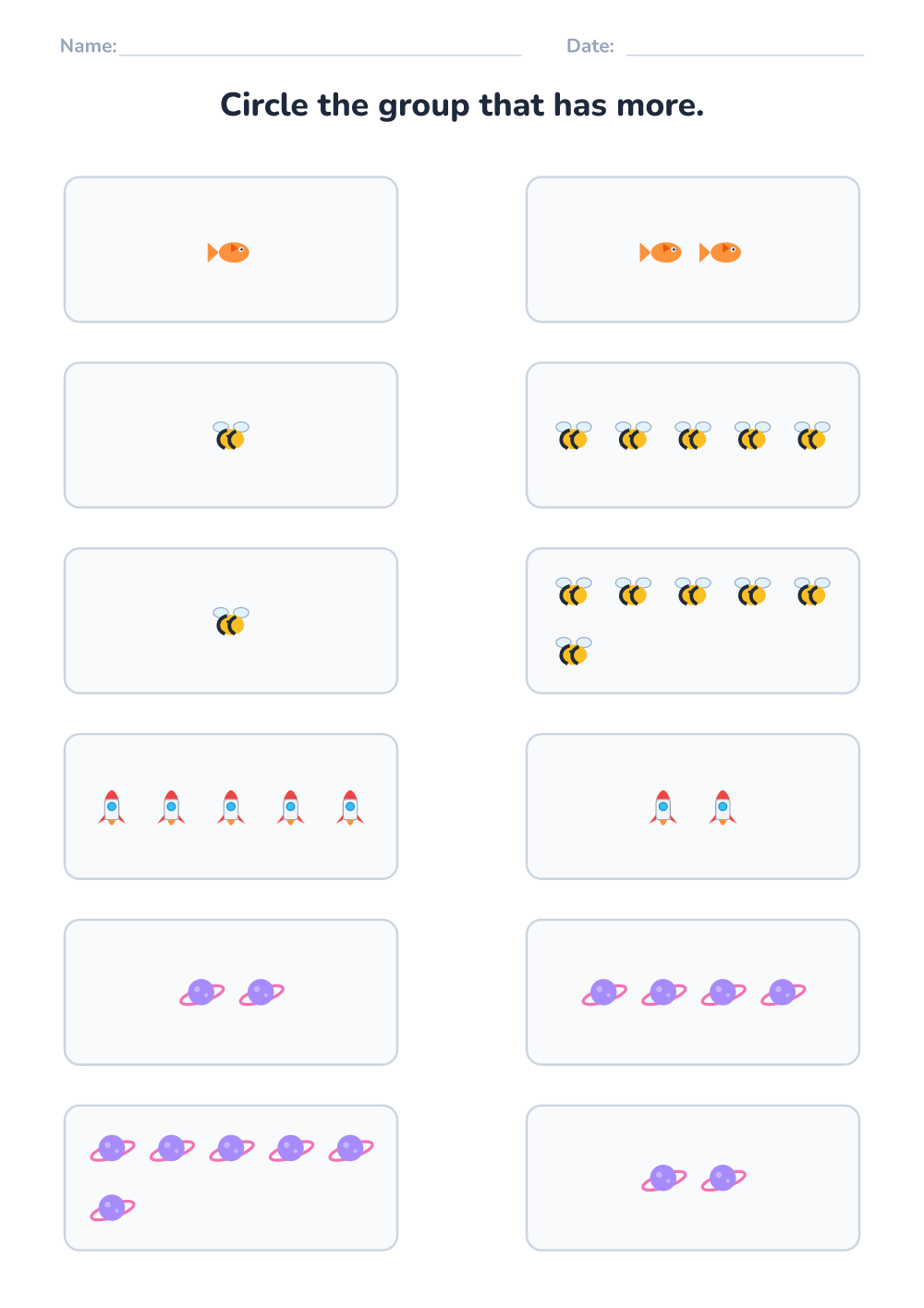
Which is more? (easy) #75
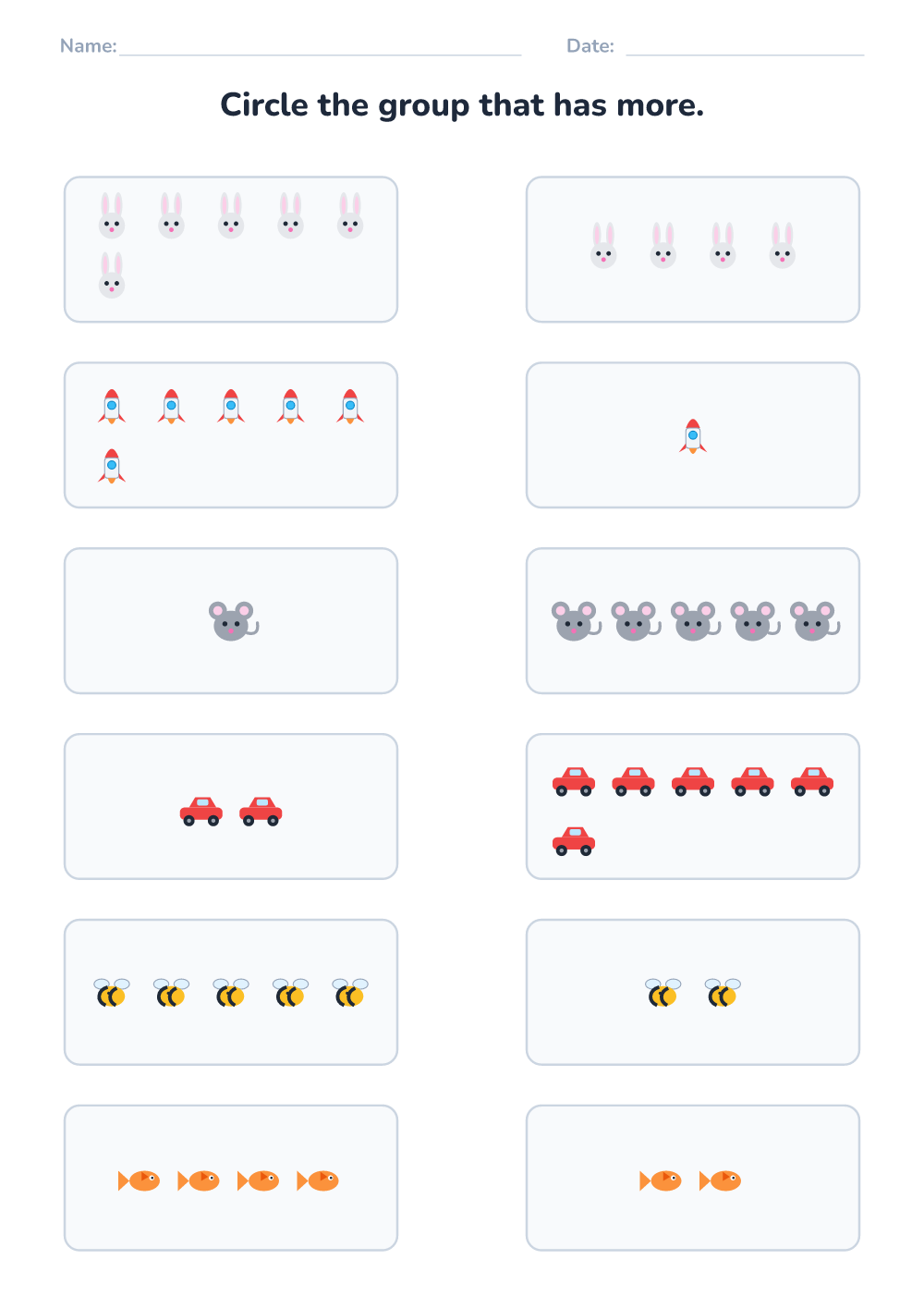
Which is more? (easy) #341
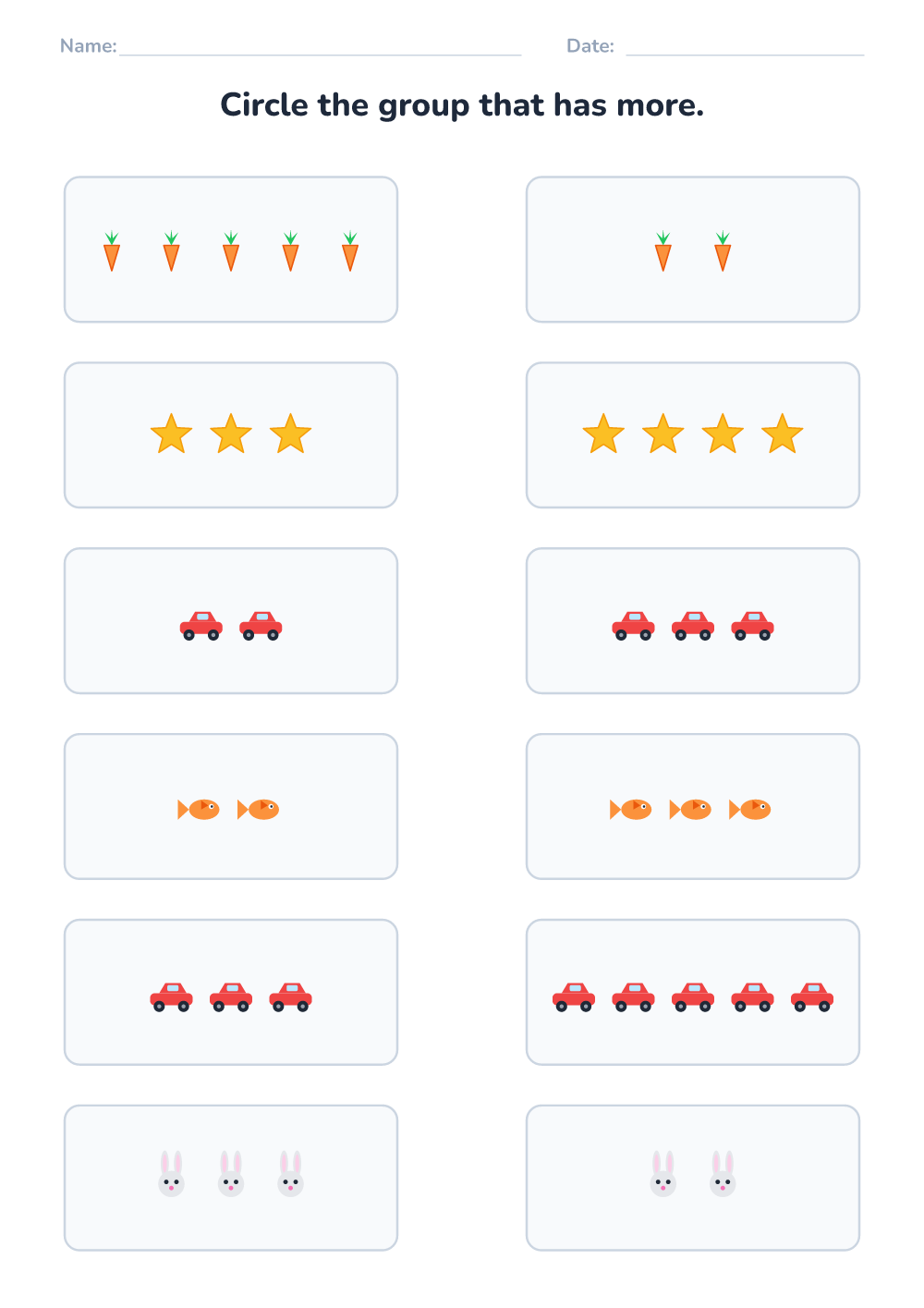
Which is more? (easy) #113
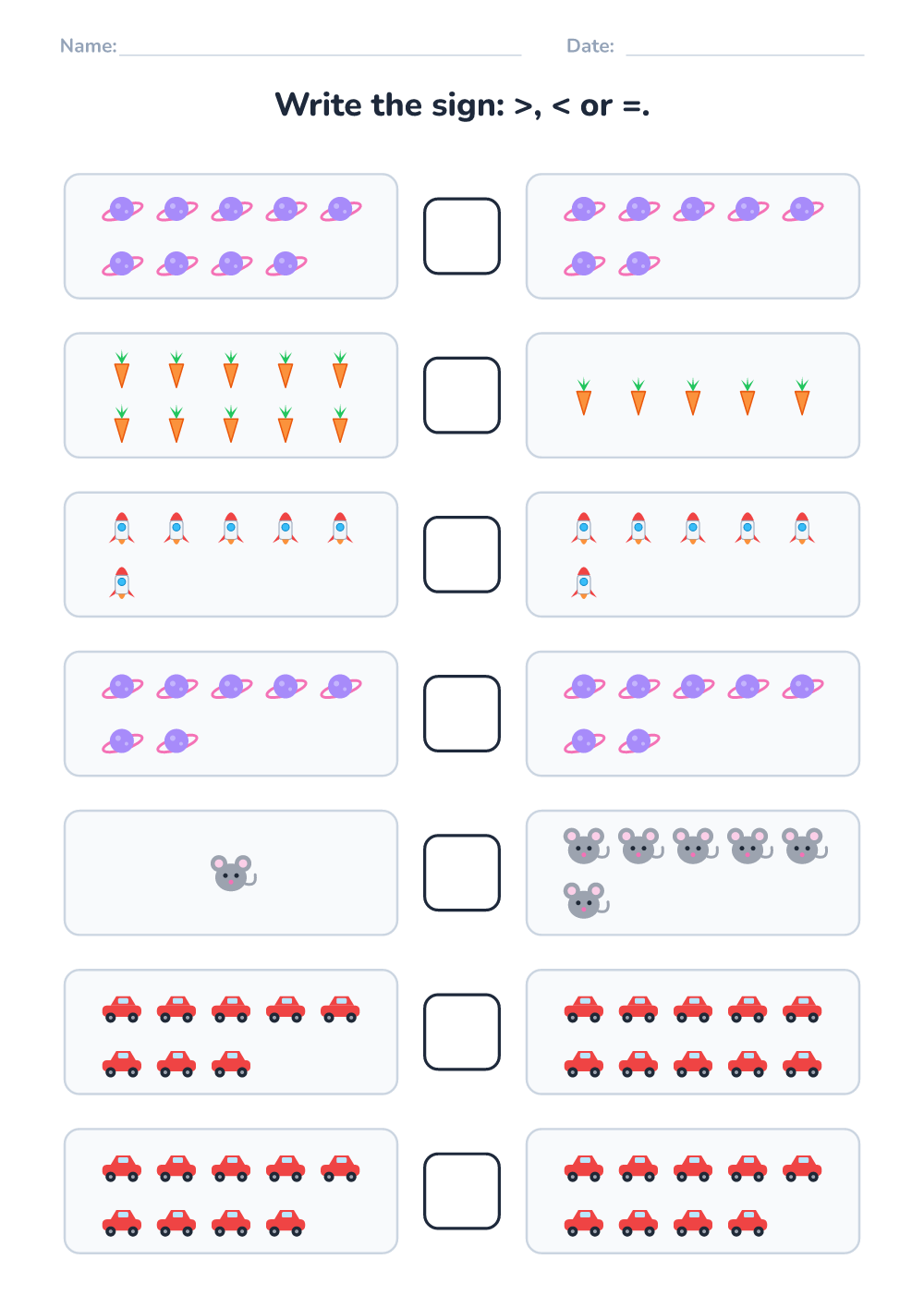
Which is more? (medium) #671
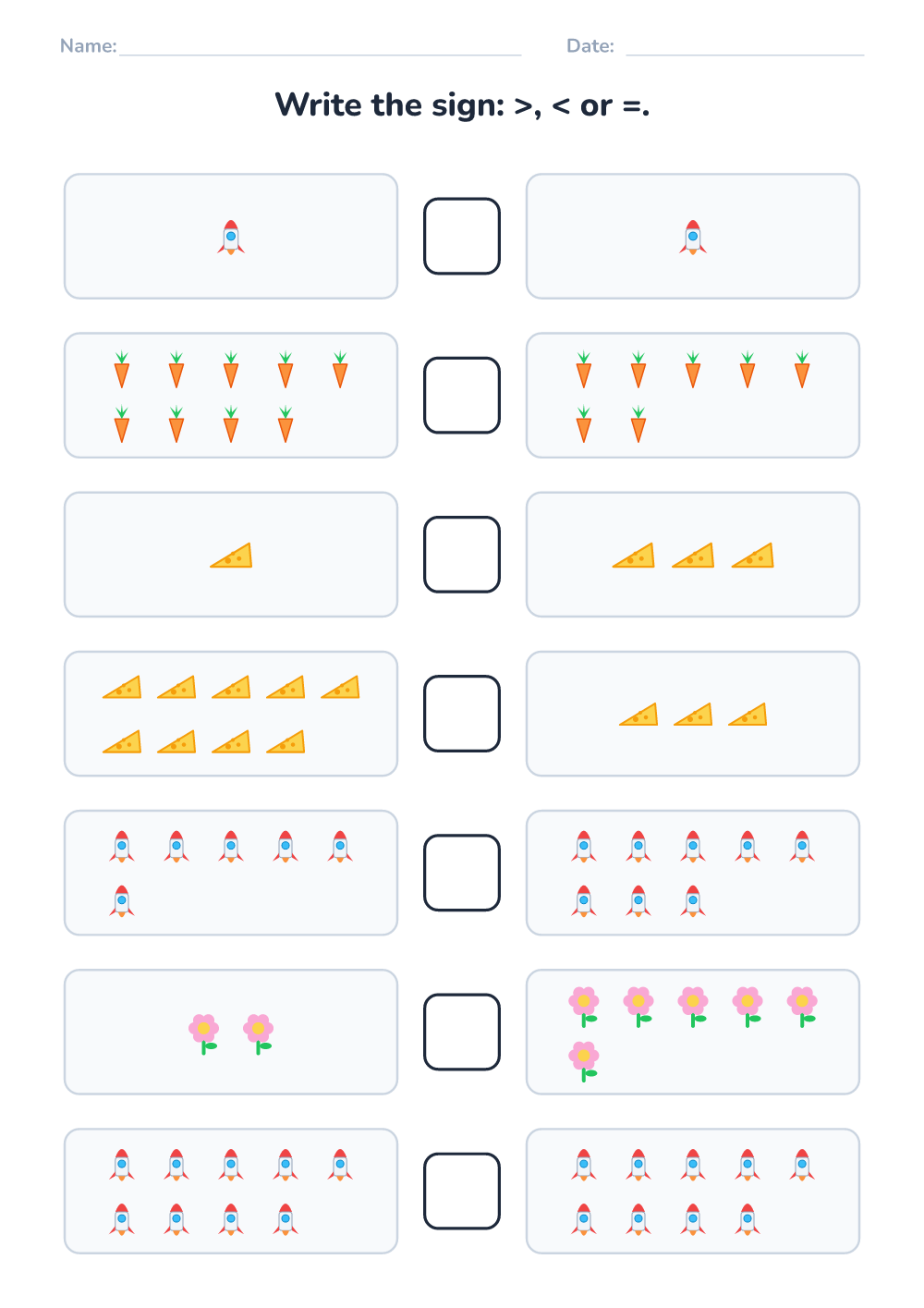
Which is more? (medium) #537
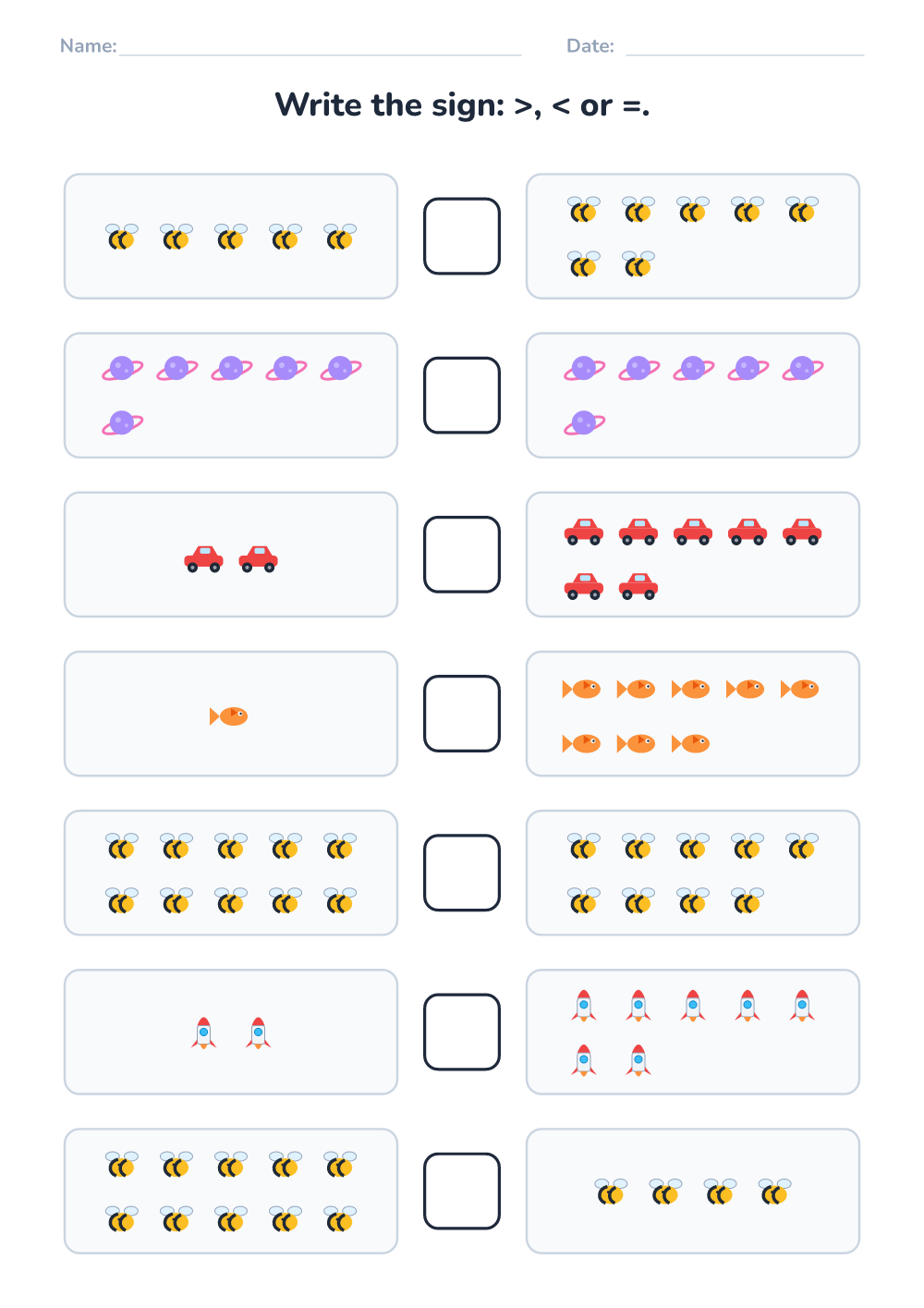
Which is more? (medium) #364
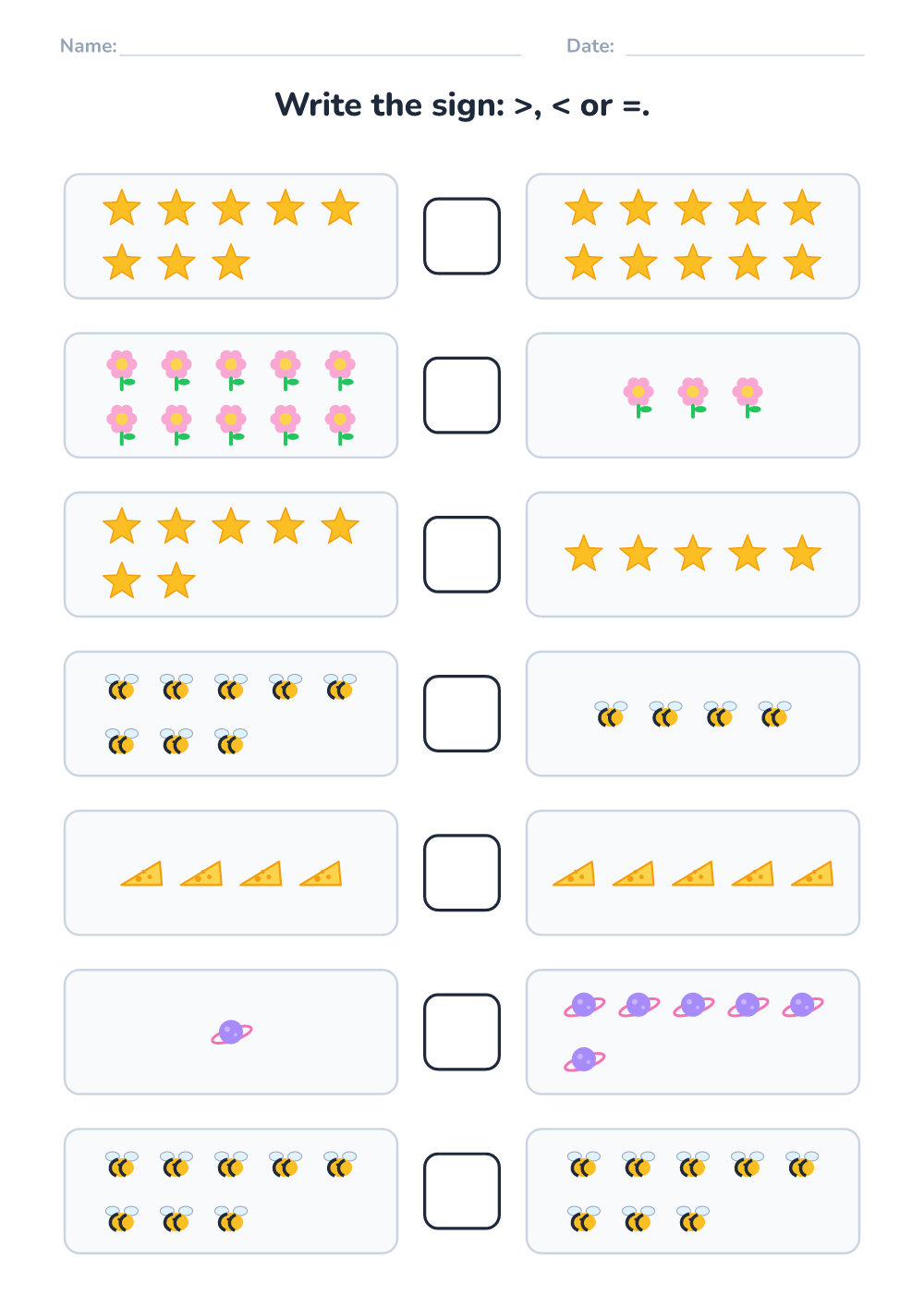
Which is more? (medium) #61
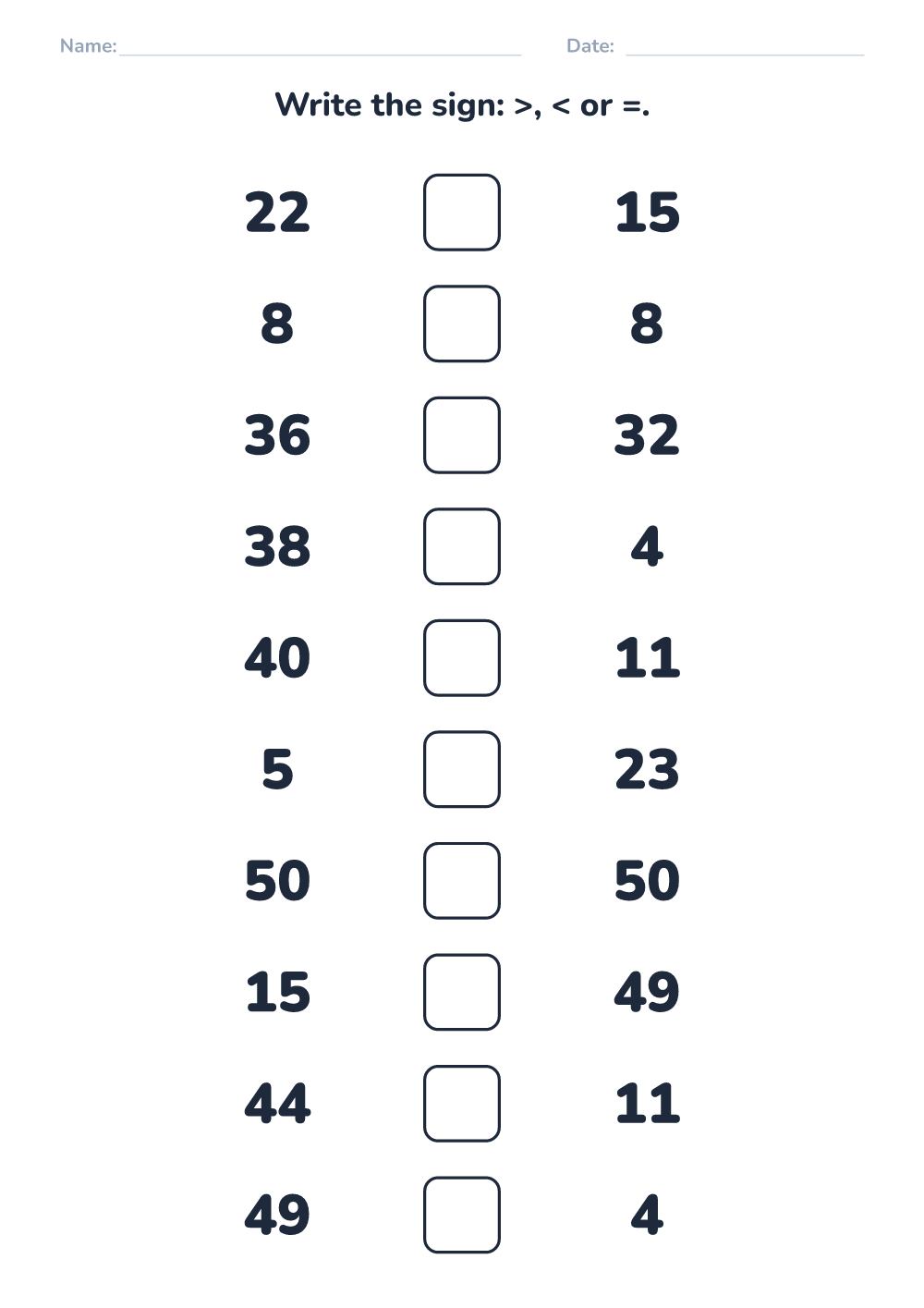
Which is more? (hard) #1
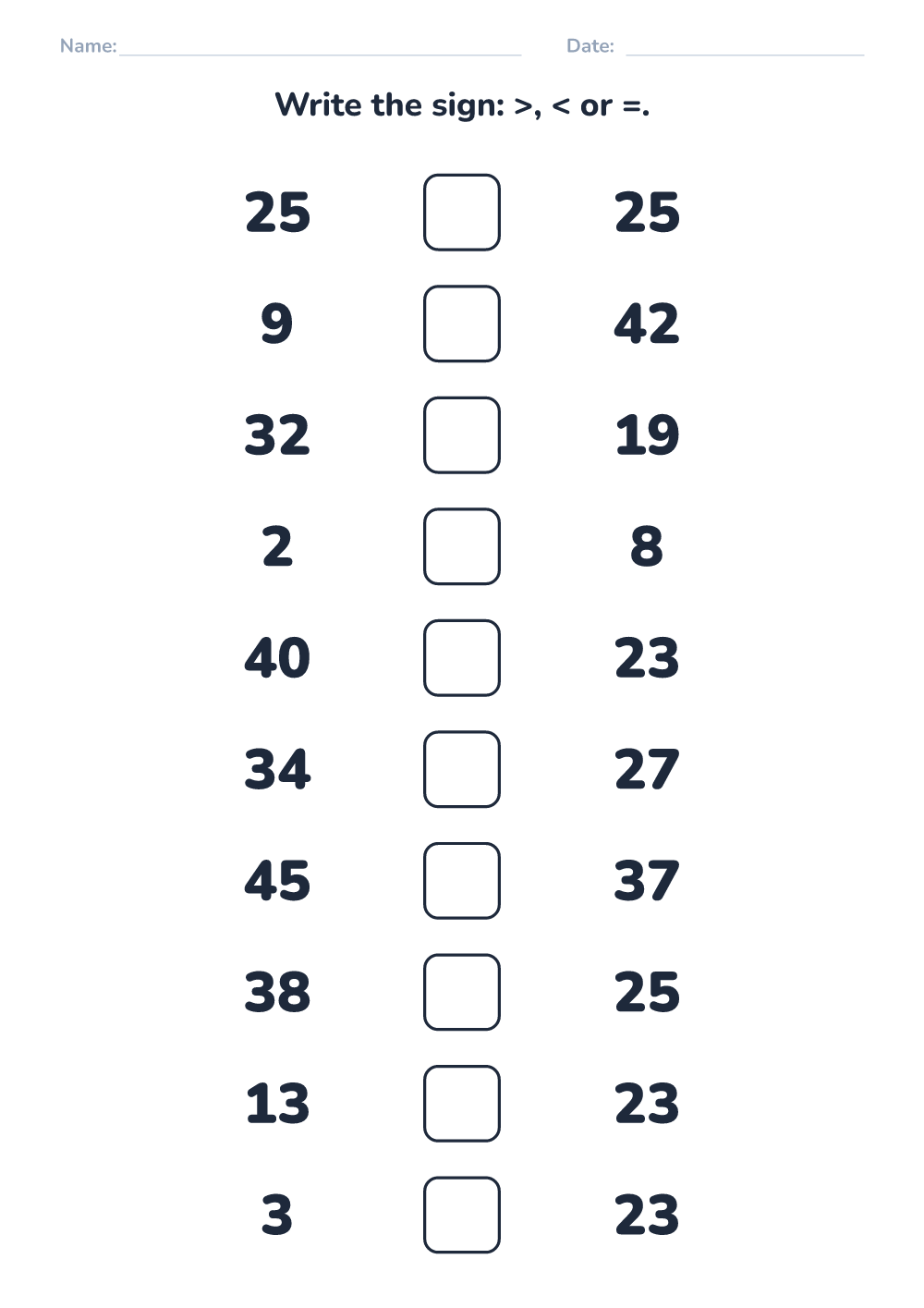
Which is more? (hard) #112
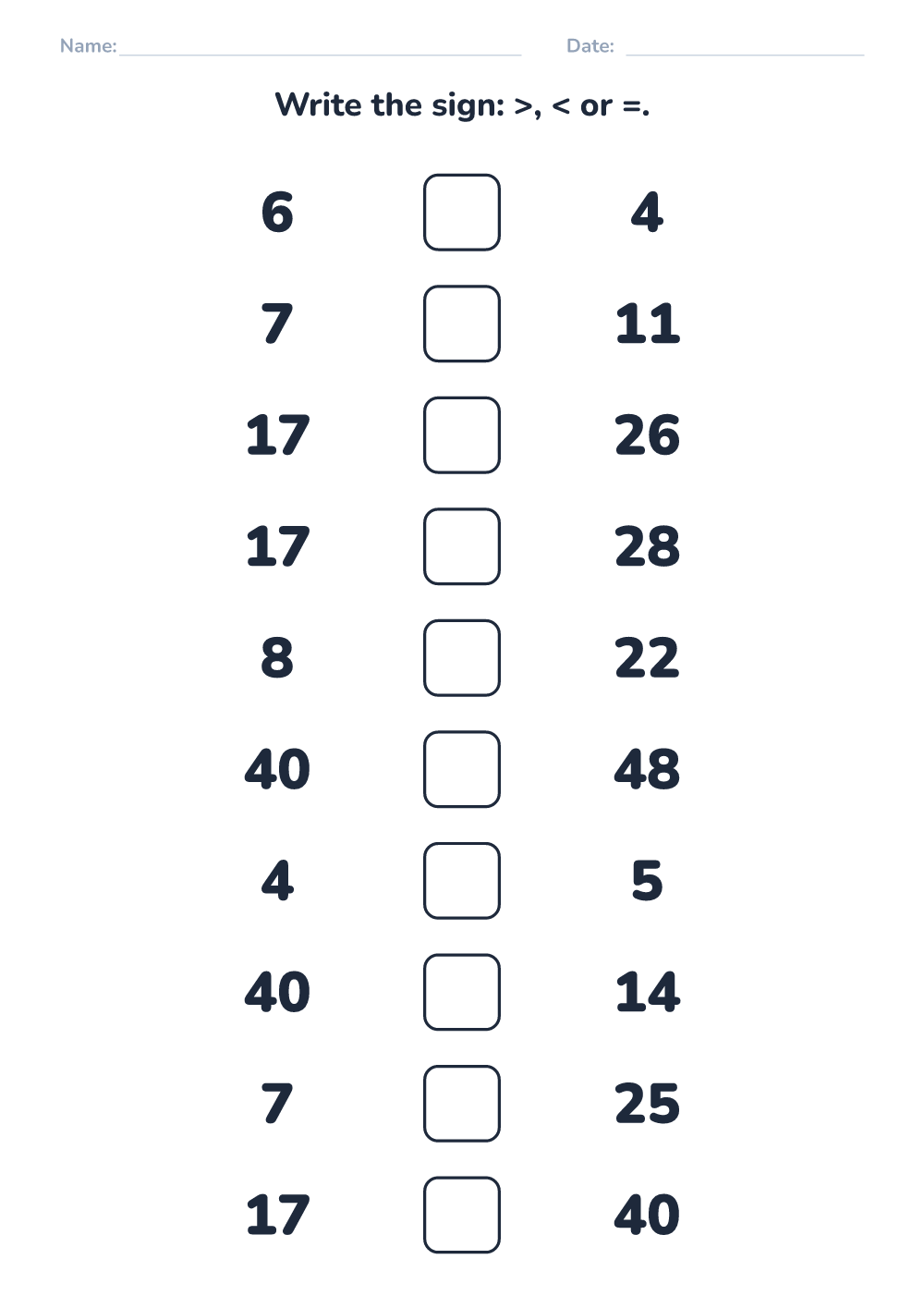
Which is more? (hard) #300
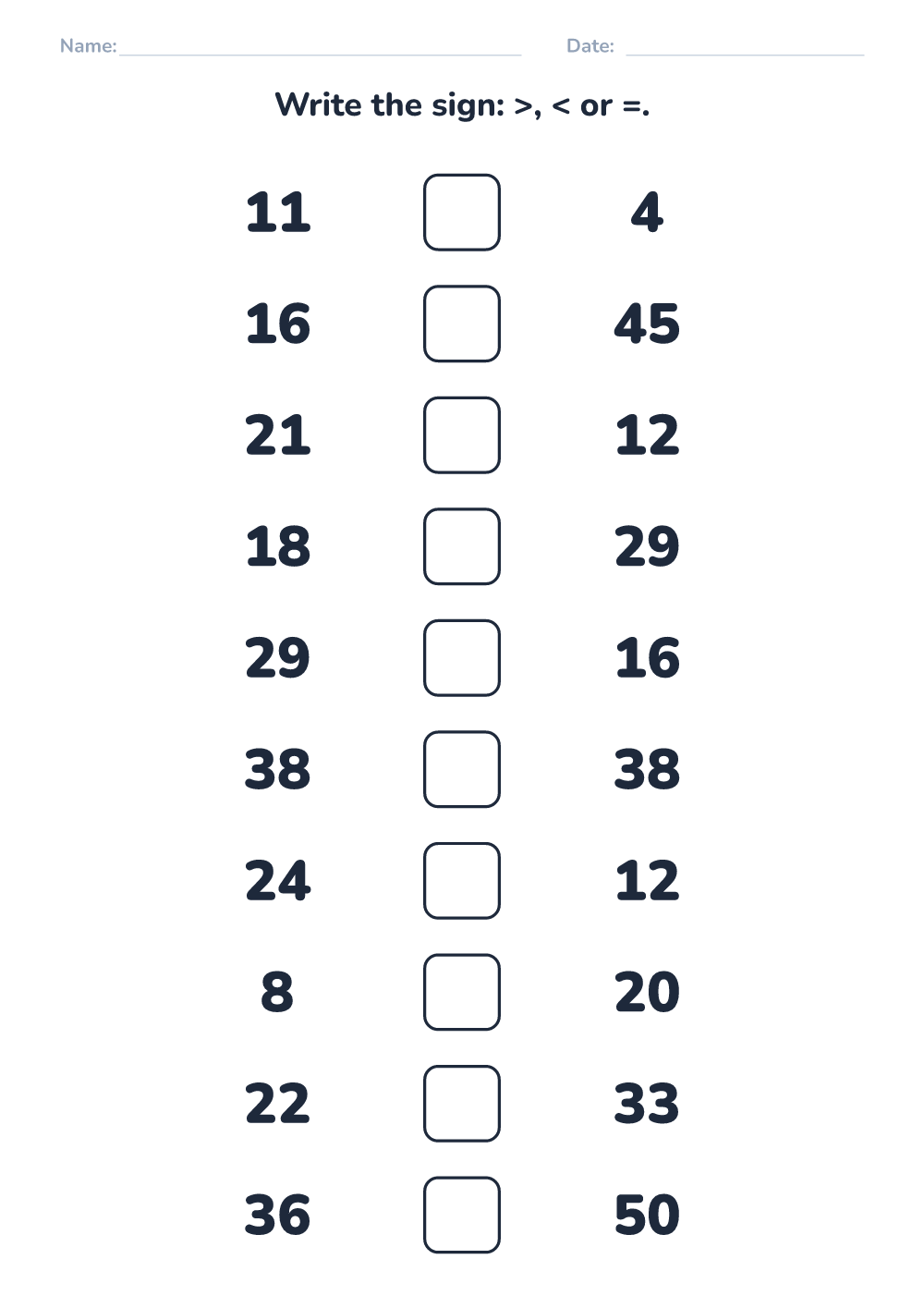
Which is more? (hard) #465
Tips for parents & teachers
- 1Before writing a sign ask “which is more?” and let the child point.
- 2The > and < signs are a beak that always opens towards the bigger number.
Frequently asked questions
What is dyscalculia?
A specific learning difficulty with numbers and maths, despite typical overall development. It is assessed by an educational psychologist or specialist, usually once a child has had some years of schooling.
Can my child count on their fingers?
Yes. Fingers, blocks and counters are natural tools. As understanding grows, children drop them on their own.
How often should we practise?
Short and daily (5–10 minutes) works better than long and weekly. Bring counting into daily life: stairs, shopping, laying the table.